Tag Archives: sue stone

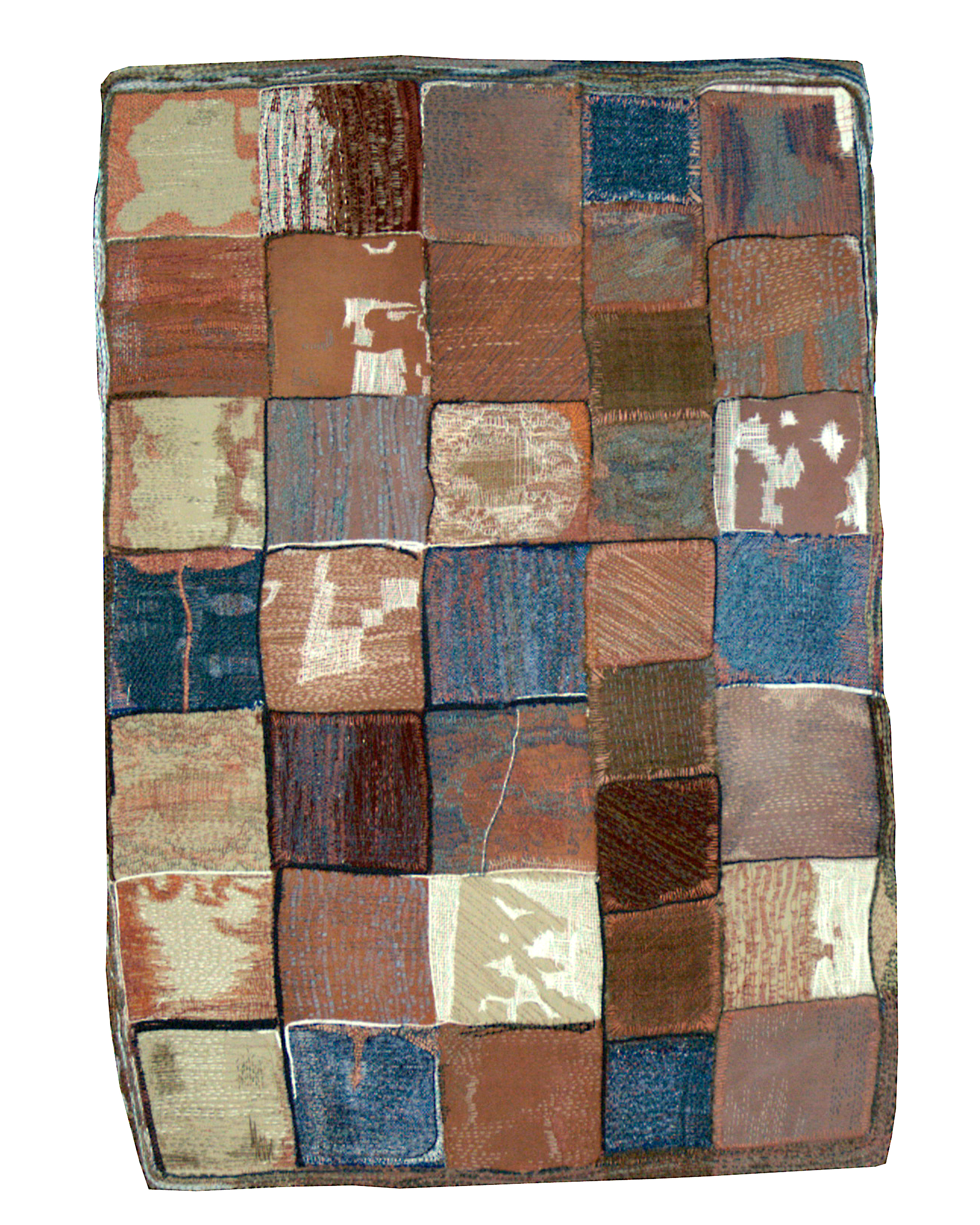
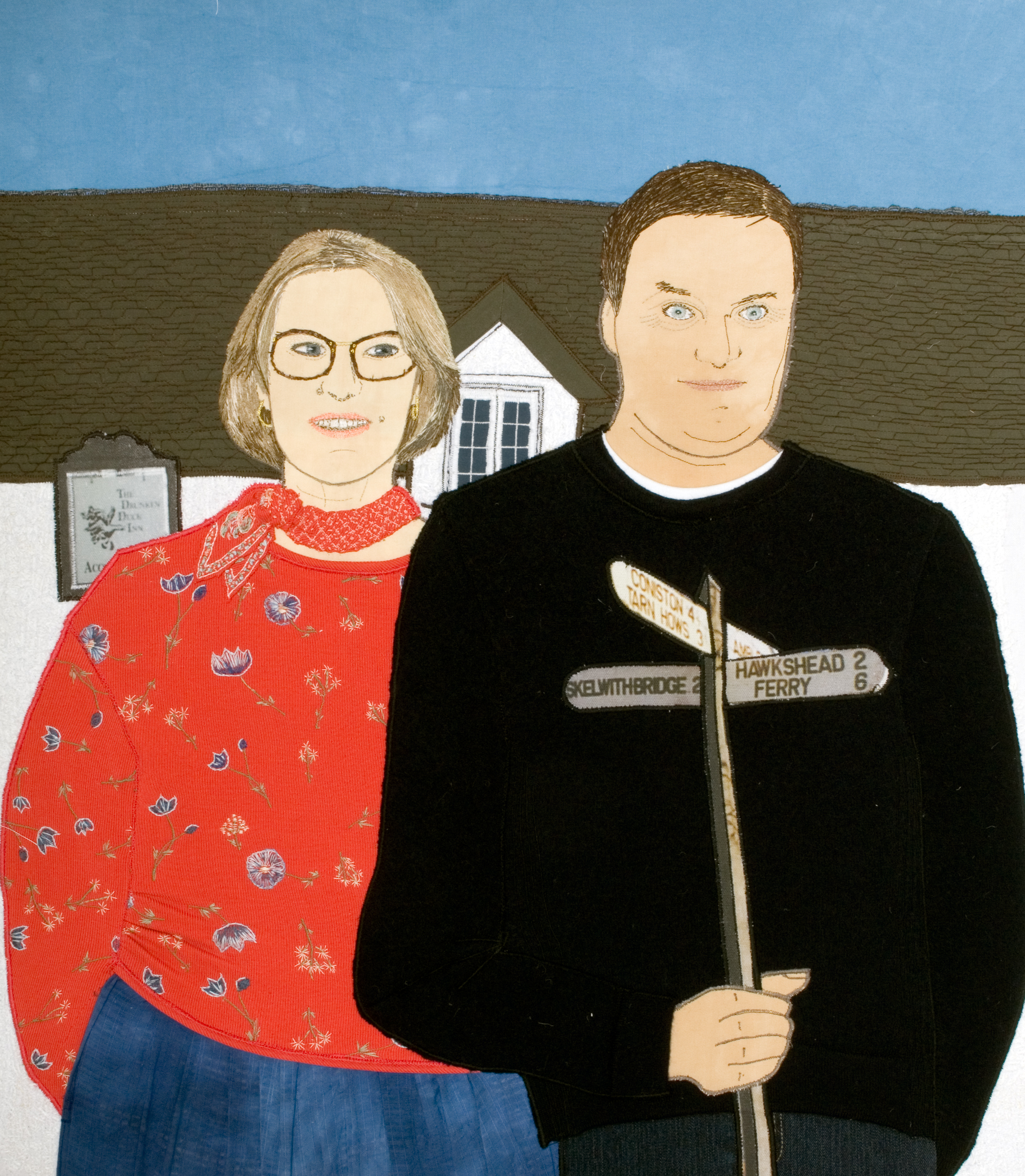
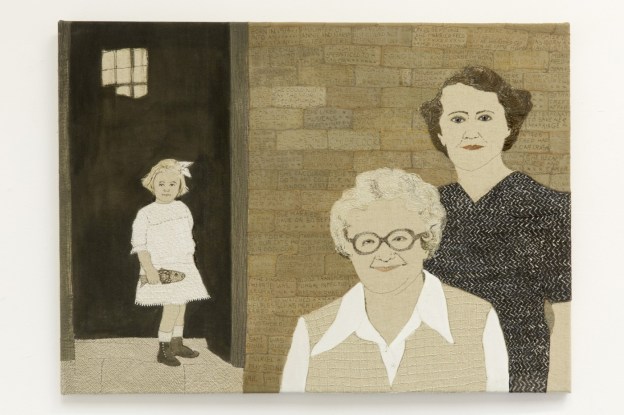
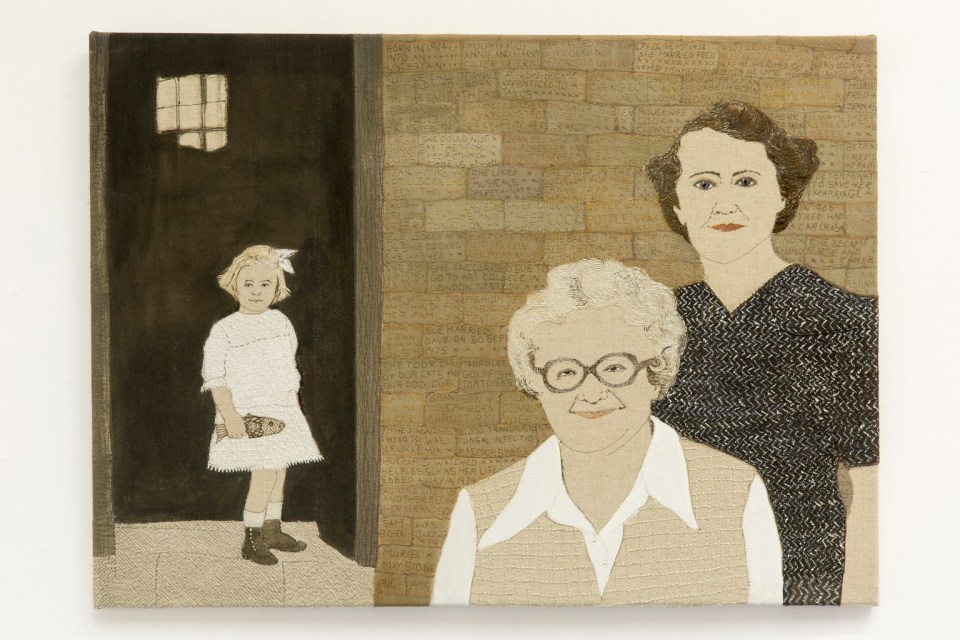
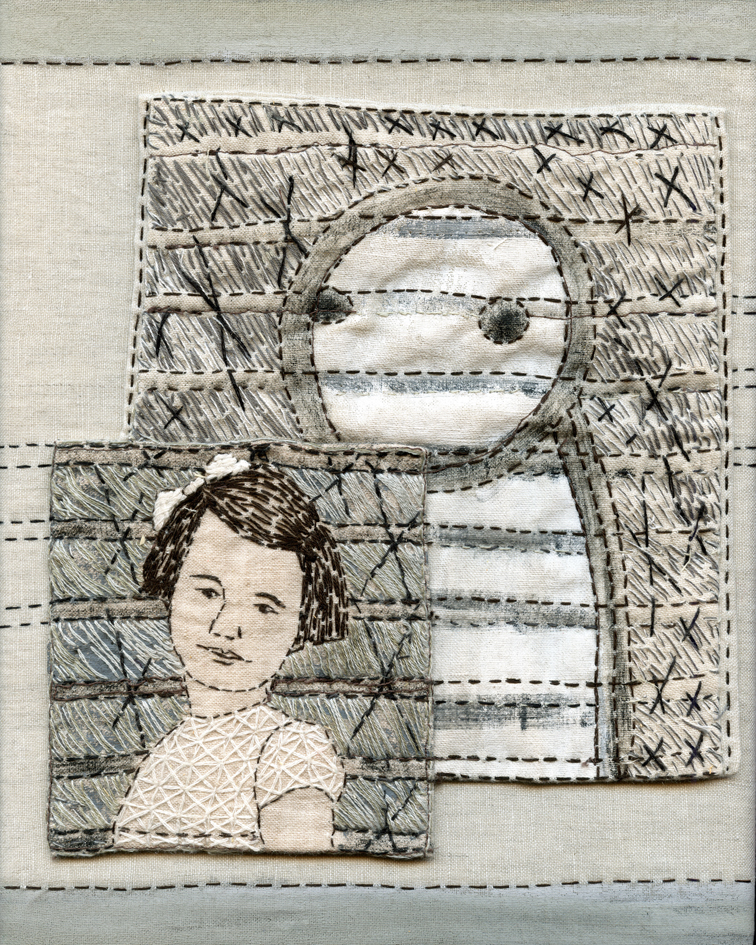
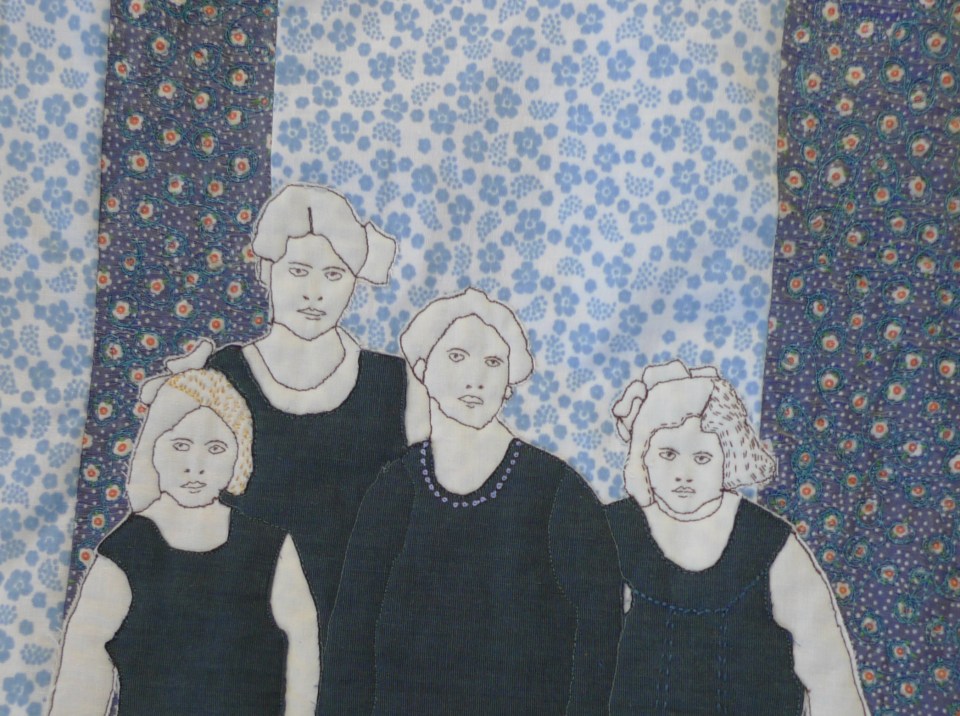
Image of The Unknown Statistic

From Conception to Creation

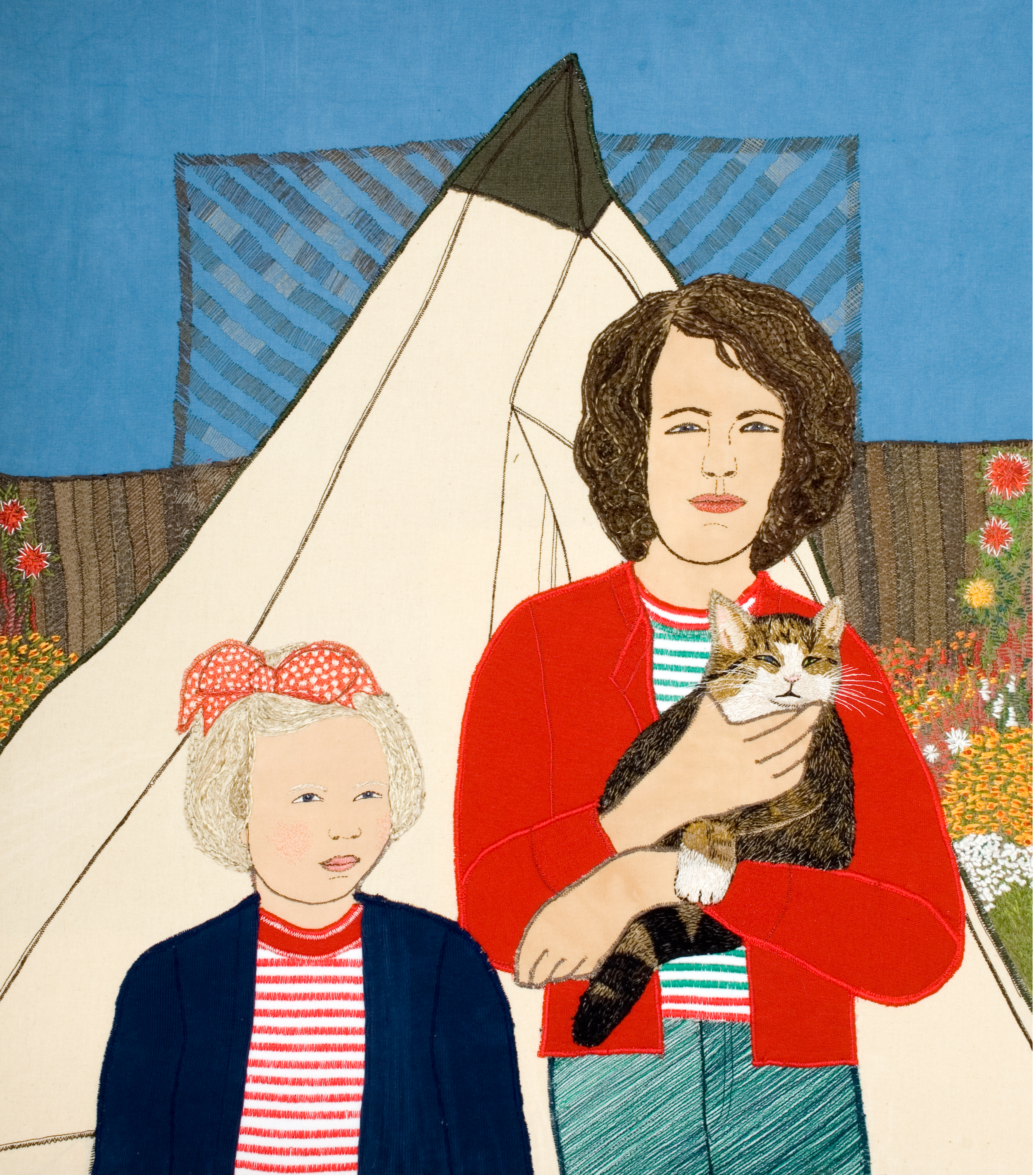
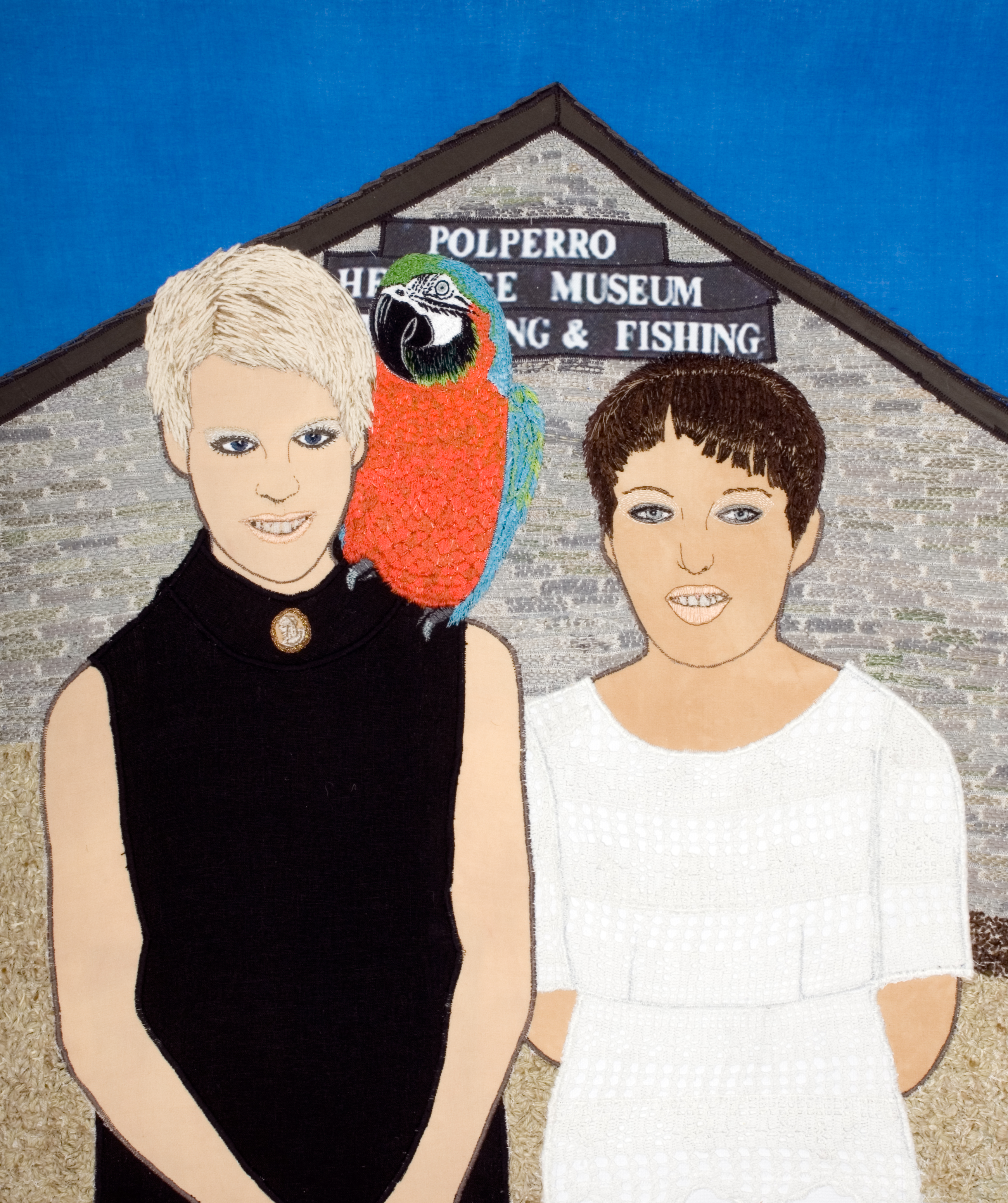
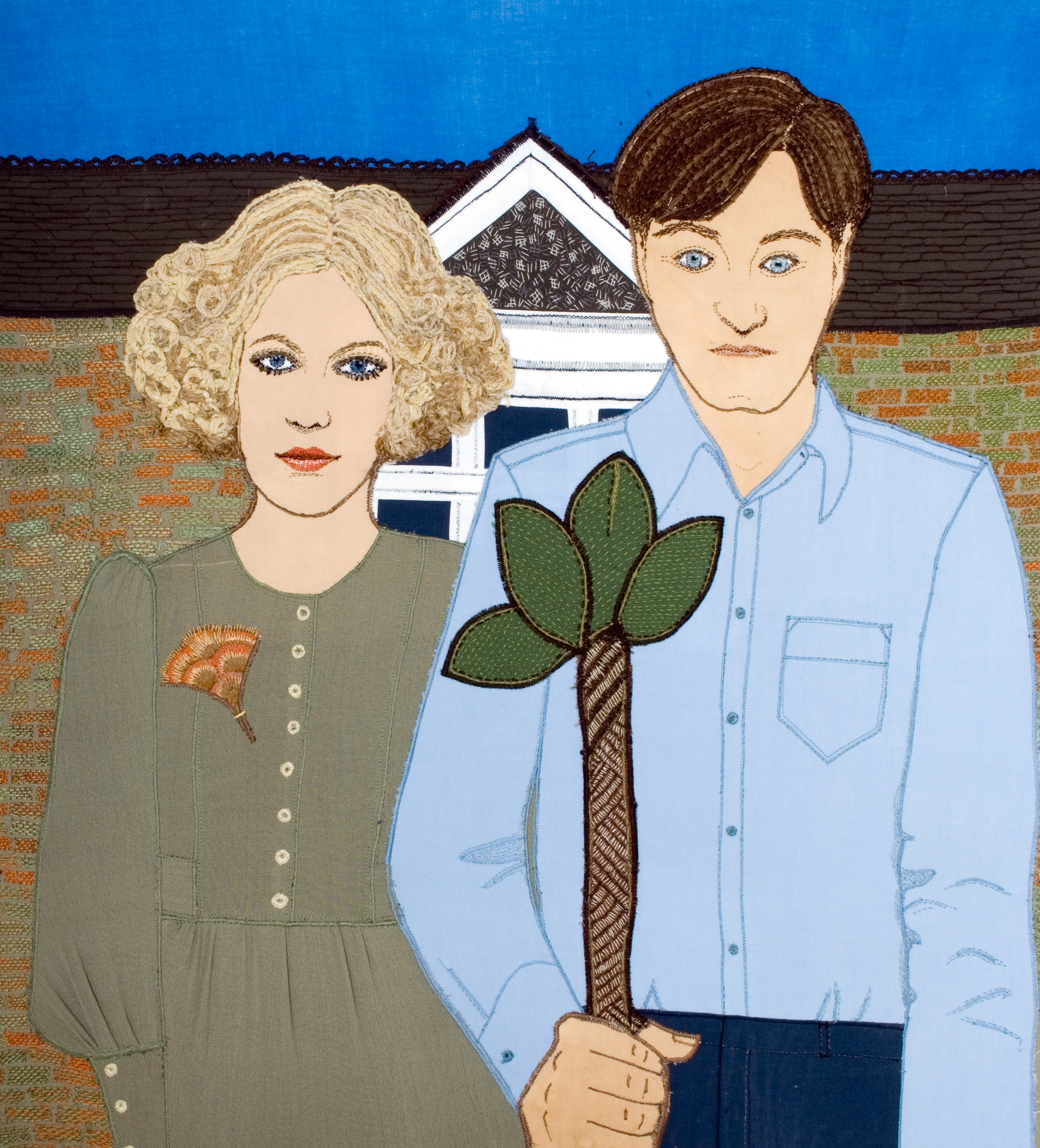
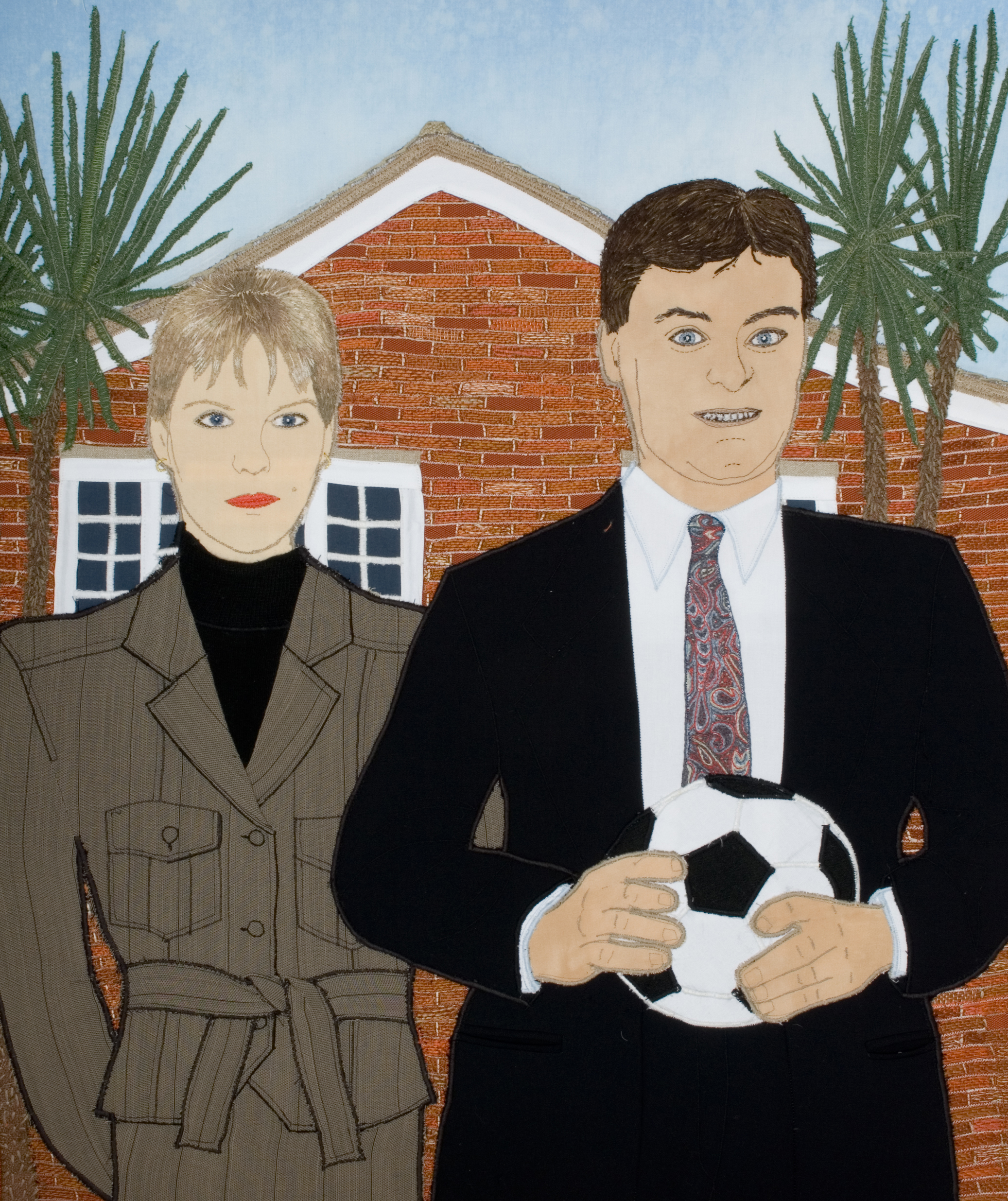
Read about the making of my piece ‘The Unknown Statistic’ at Textileartist.org

detail of the Unknown Statistic

Detail of the Unknown Statistic

63 - 16
63 – A Self-Portrait – Work in Progress

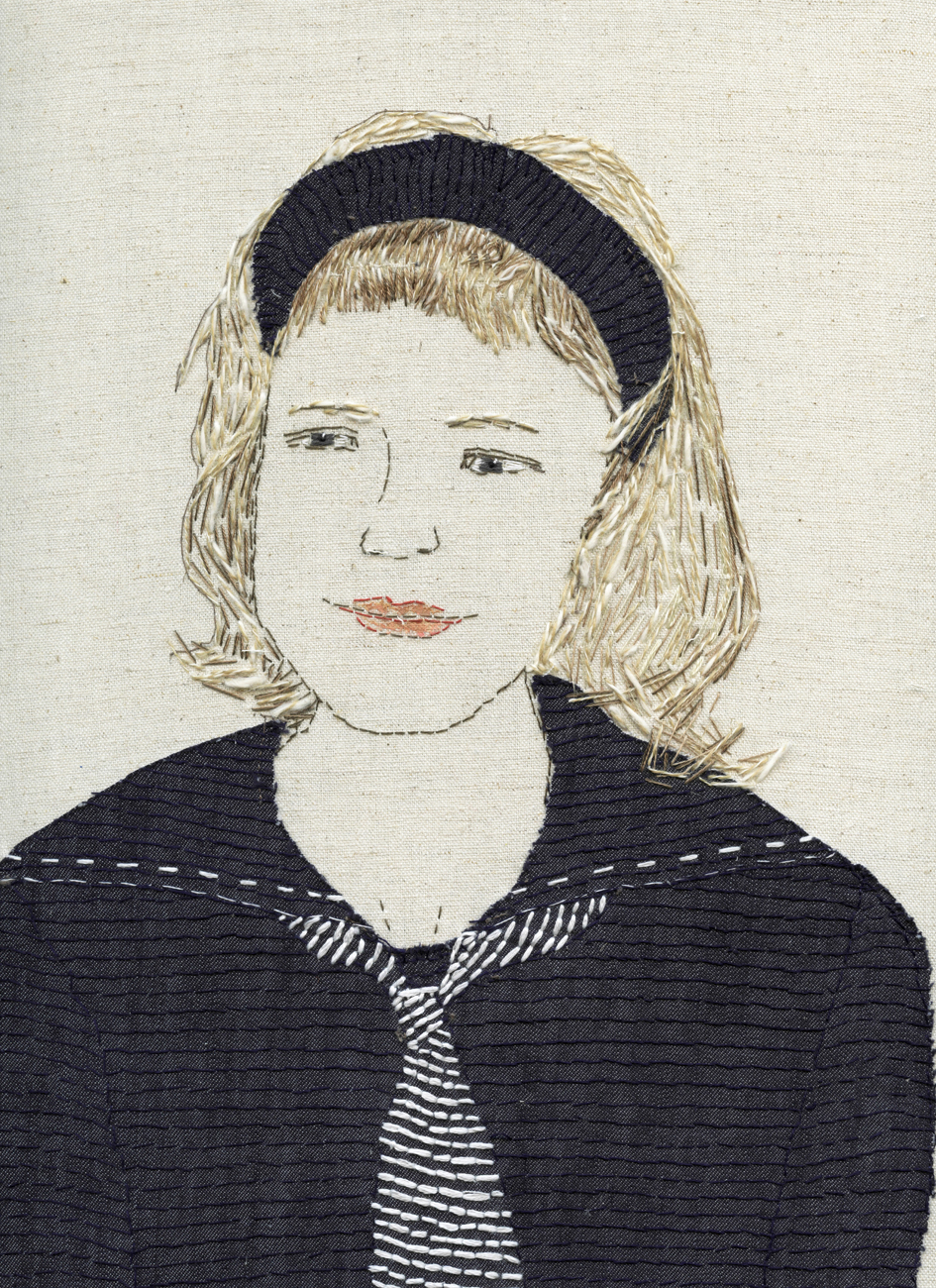
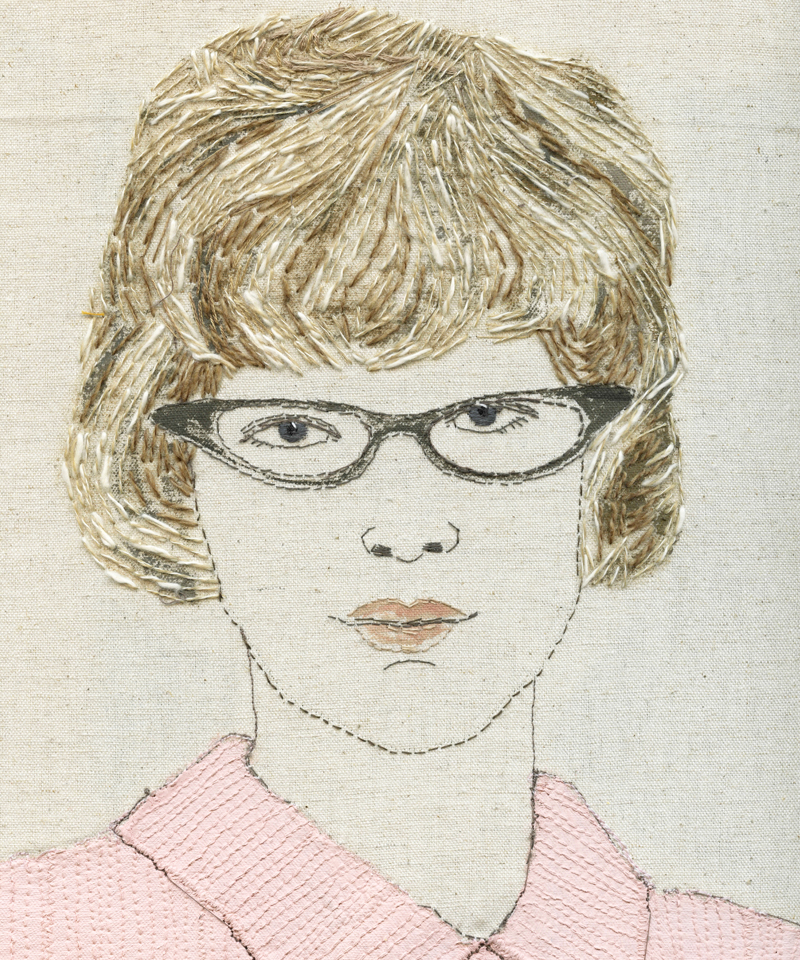
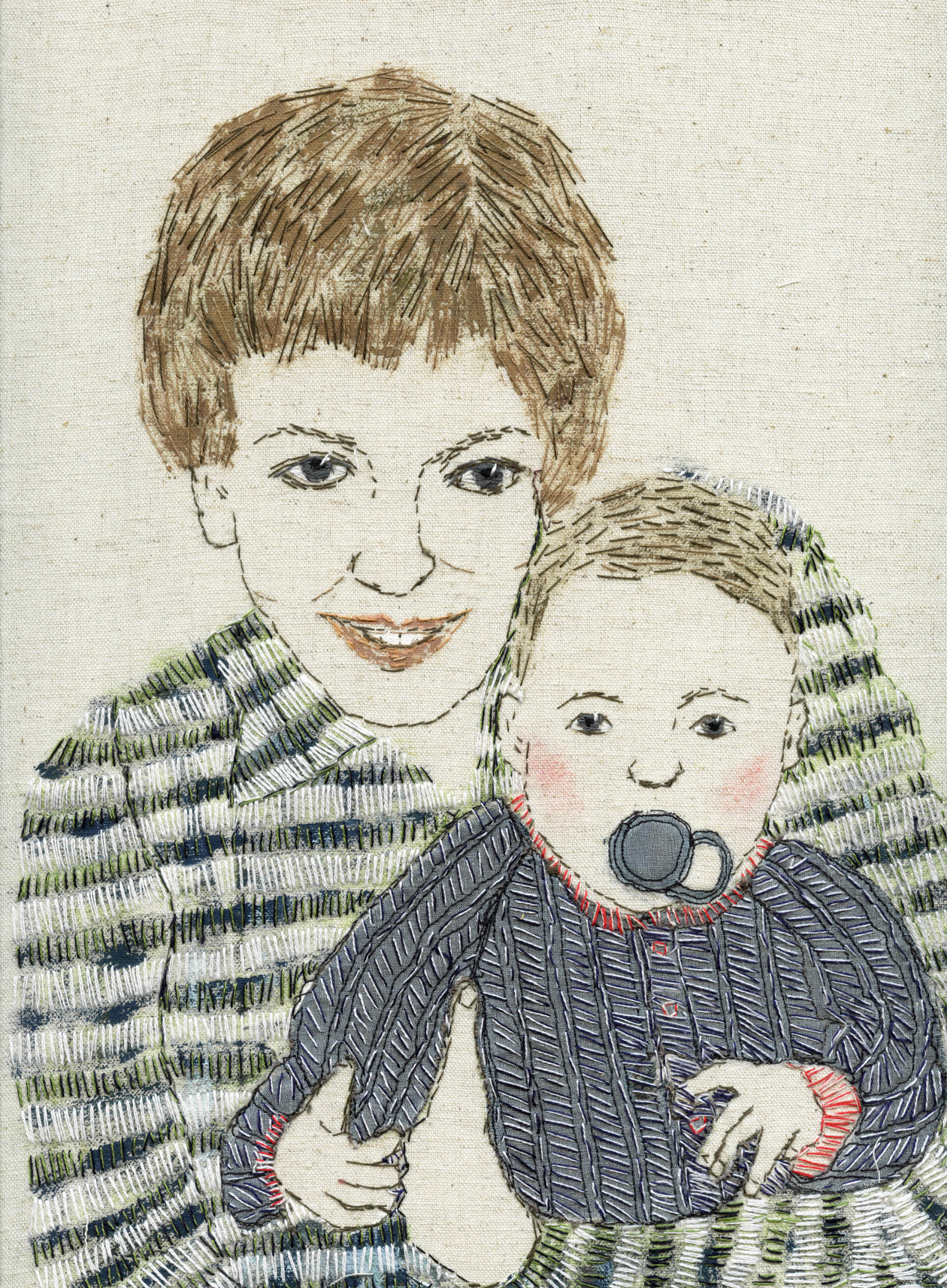
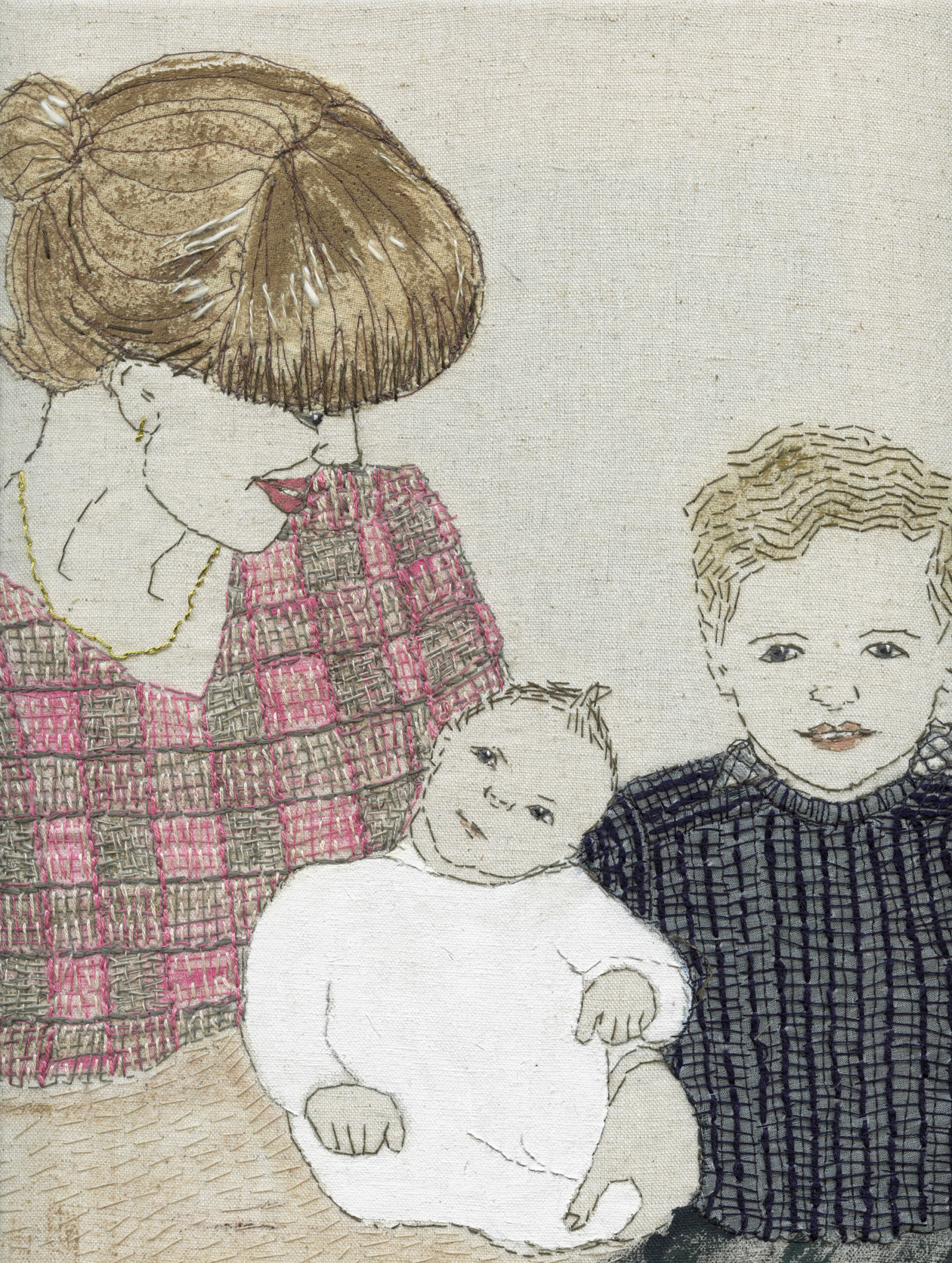
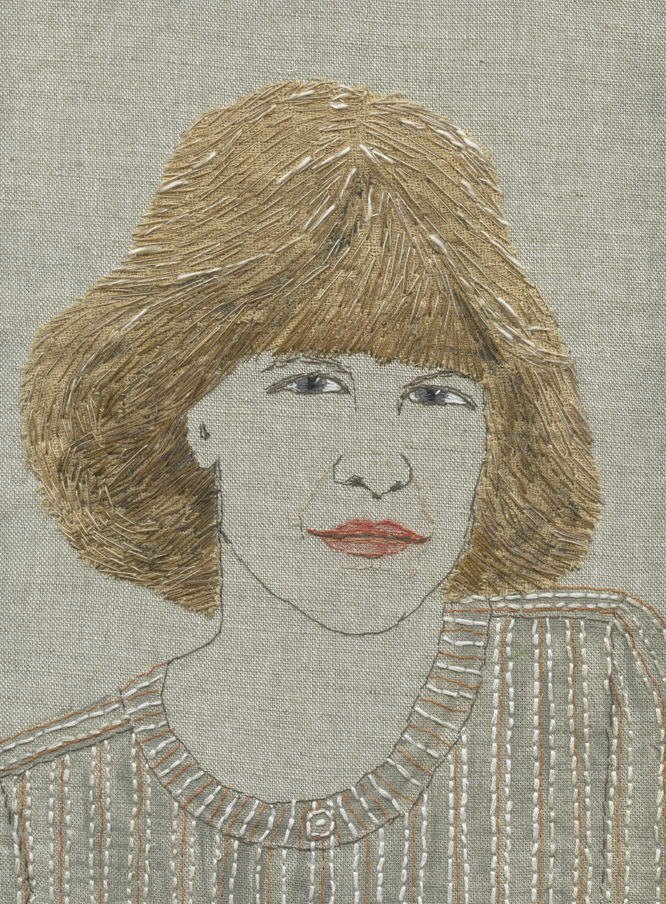
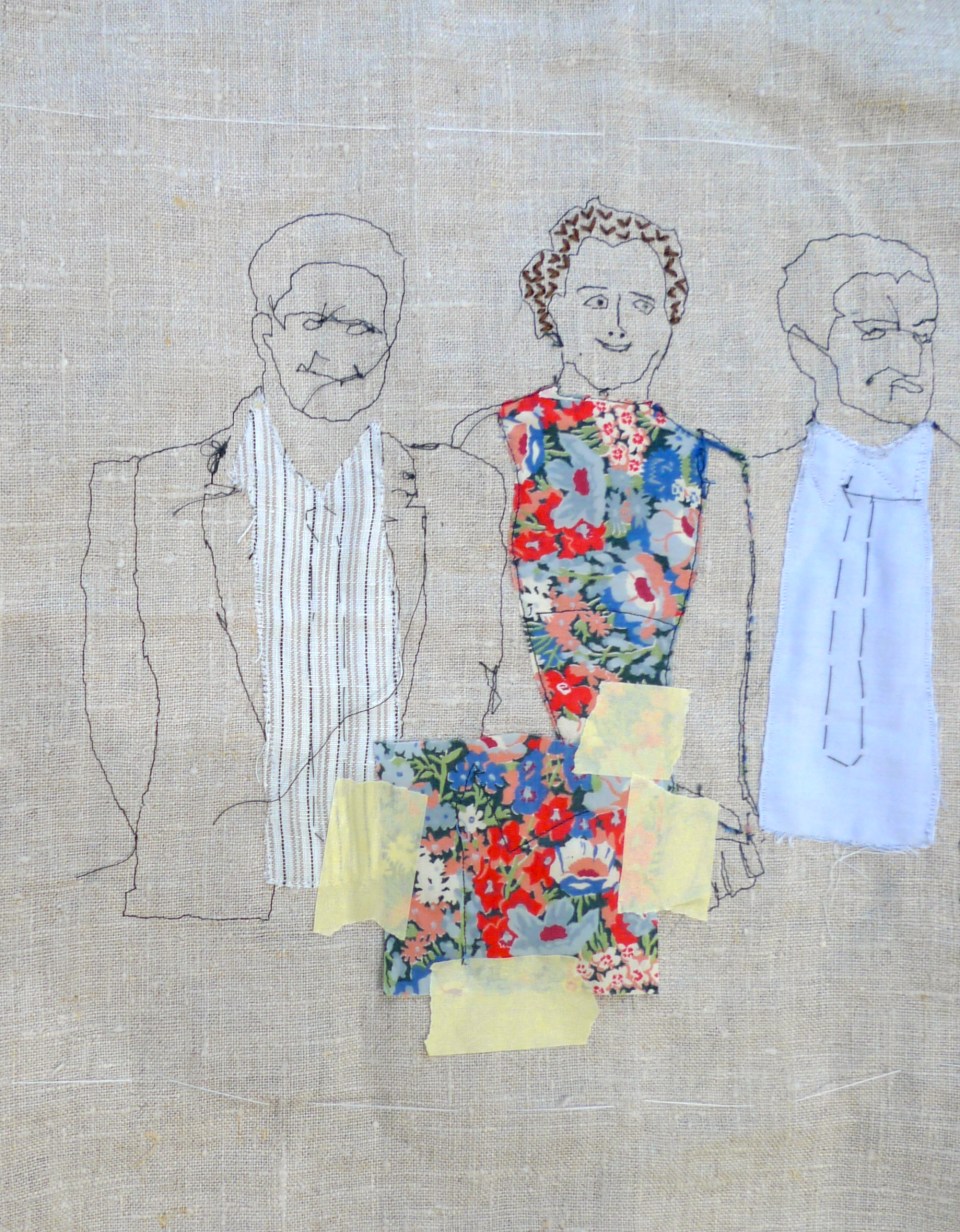
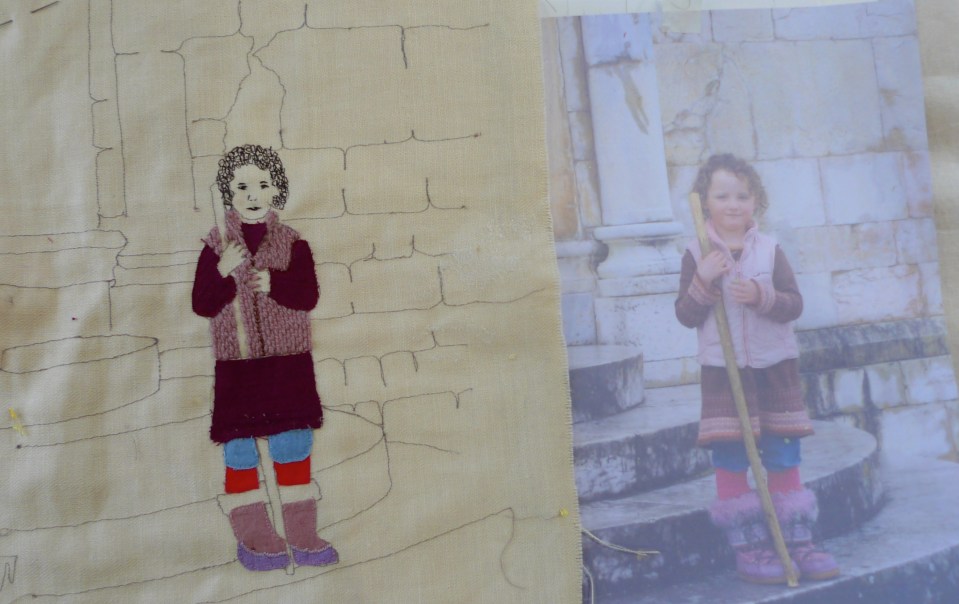
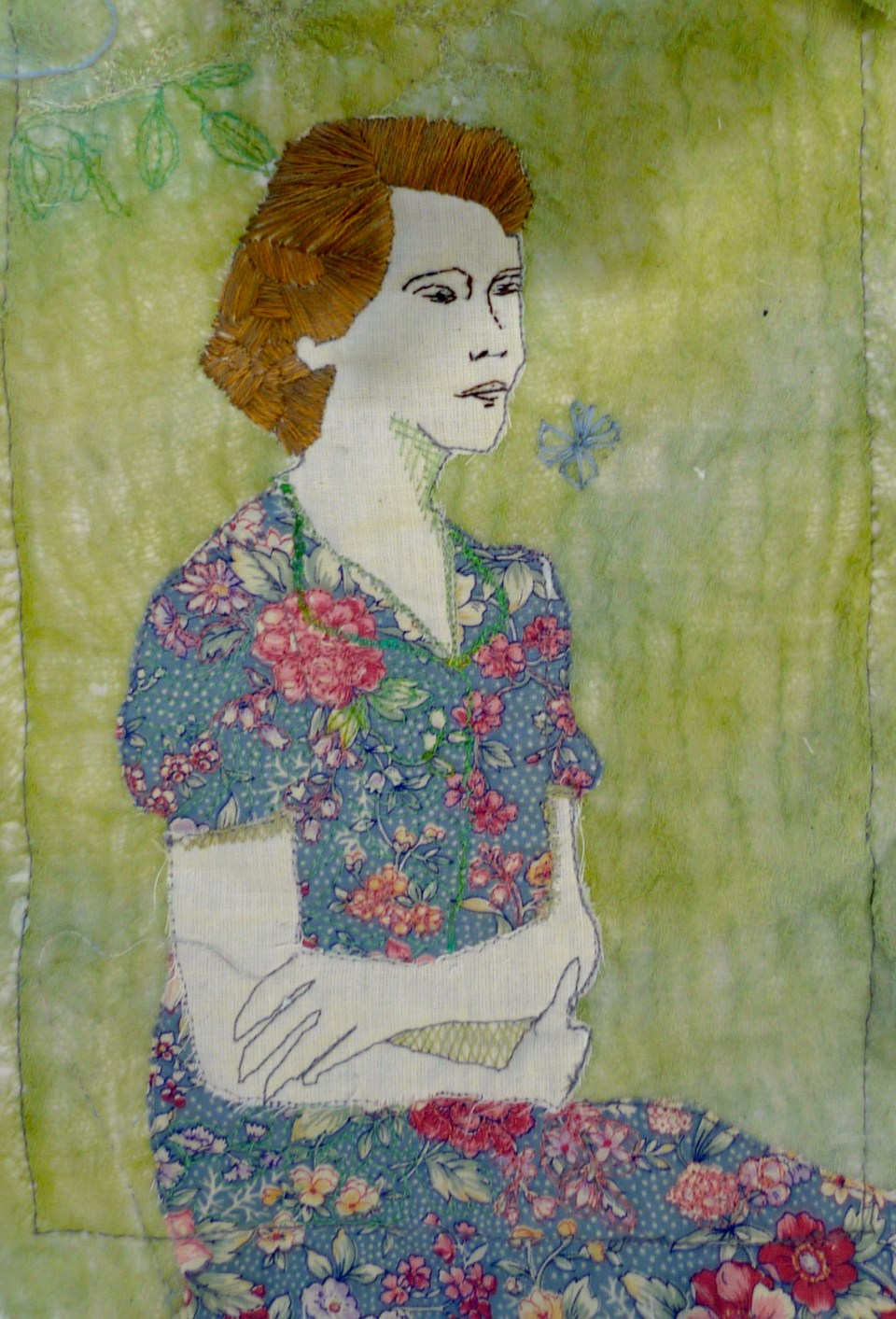
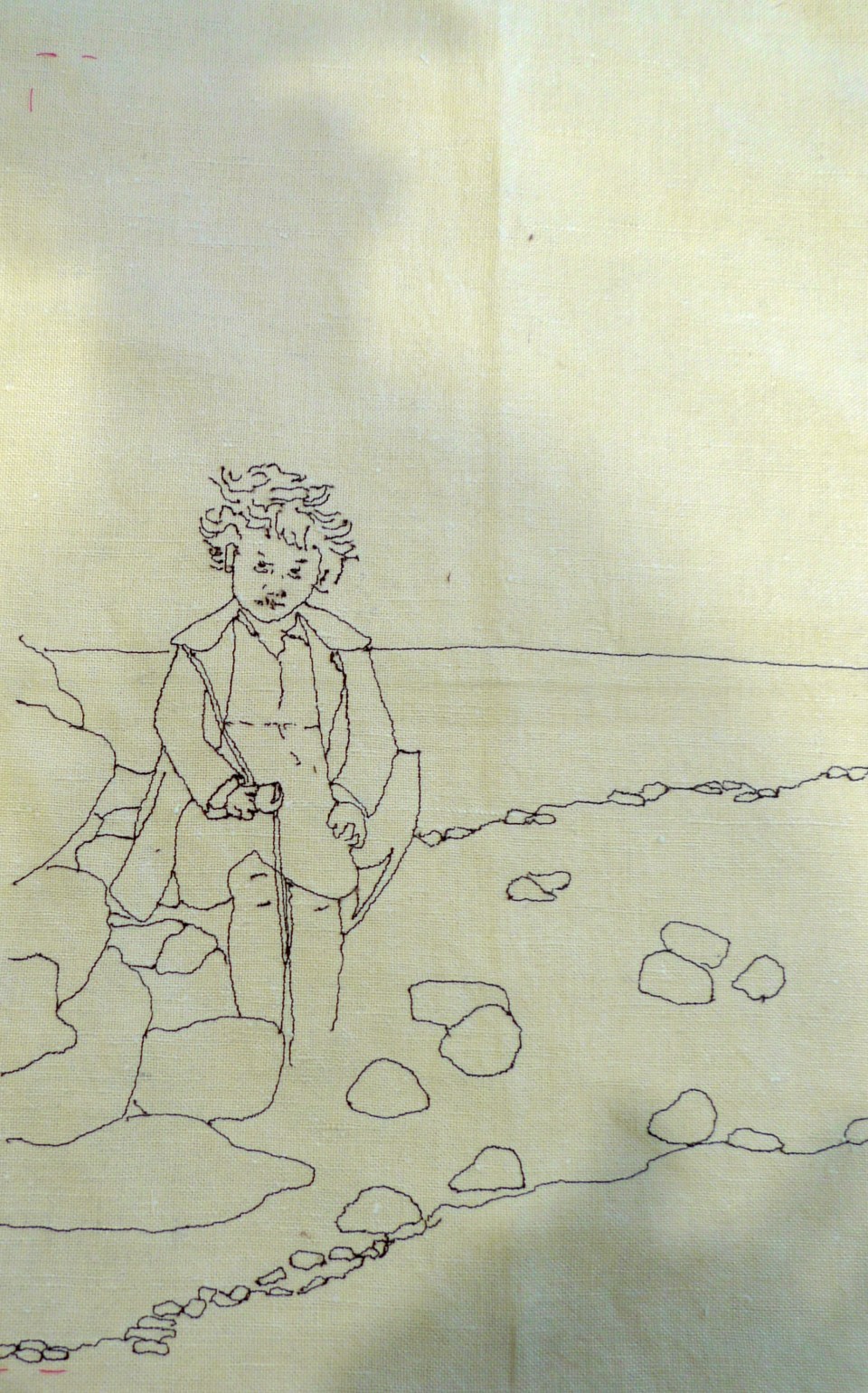
63 is a self-portrait which, when complete, will be made up of 63 images, one for each year of my life so far. So why put myself through all this work, and, to be perfectly honest, the angst of self examination, a replaying of all the ups and downs of life?
Well, there were several reasons, but the main one was that I was asked by Alf Ludlam, the curator of Shifting Images an exhibition of self-portraits at the Muriel Barker Gallery at Grimsby’s Fishing Heritage Centre, to produce something other than a straight forward self-portrait and this was the idea I came up with. I also thought it would benefit me personally because I would be working to a deadline which, in itself, would force me to look at the way I work and help me find a simplification of my mark-making.

63 - 2

63 work in progress 2

63 - 4

63 work in progress – 4

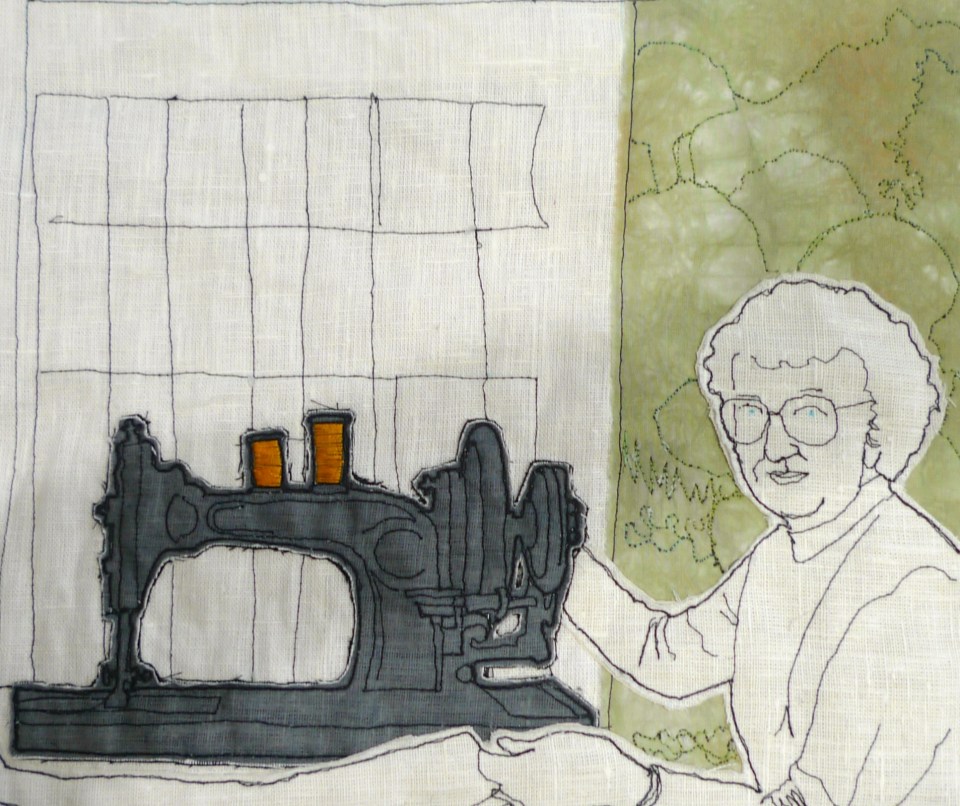
Although I work in mixed media I consider myself primarily an embroiderer, more specifically a hand embroiderer and because I find hand stitching a therapeutic process, I have a tendency to overstitch. I’m hoping that, in this piece, the viewer will find that my stitching have been given more breathing space and as a result more status. My stitch vocabulary is considered and limited. I don’t use many different types of stitches and but I try to get the most out of those stitches by using them in an original way. I was once given some advice by Constance Howard, when I was studying at Goldsmith’s College in London who said that “you don’t need to know a vast array of stitches but you need to know how use the ones you do know well” so that’s what I try to do.

63 - 7

63 work in progress -7

63 - 12

63 a work in progress – 12

I don’t really look at the work of other embroiderers in an inquisitorial way. This is deliberate, an attempt to keep my own work fresh. One of the ways I do this is by mixing different colours and different weights of threads in the needle leaving the eye to mix the colour. You can read about my favourite stitches  here.
I have deliberately tried to be sparing with my stitching of the faces in this piece to produce a more illustrative style. Mood, quality, expression, character can all be changed by the position of each stitch and a lot of drawing and re-drawing, stitching, unpicking and restitching has been done before moving on.

63 -25

63 a work in progress -25

63 -27

63 a work in progress – 27

I am a ‘glass half full’ sort of person but the process of making this piece has, so far, and I am only just over half way there, been an convergence of mixed emotion. The process has, at times, evoked difficult and even desperately unhappy emotions, the reliving of all that teenage angst, hurt, heartbreak, and loss, the business problems and burglaries, but alongside that the uplifting and happy memories of friends and family and an optimism for the future.

Overall it is proving to be a quite cathartic process.

63 - 32

63 a work in progress – 32

63 will be shown as a ‘work in progress’ in Shifting Images from 8 September 2015 to 6 March 2016. – contemporary self portraiture
Working in partnership with Abbey Walk Gallery the Muriel Barker Gallery at the Grimsby Fishing Heritage Centre will host an Exhibition of of self – portraiture by Lincolnshire Artists past and present.

Inspiration for Stitch – Part 2 – The East End of London

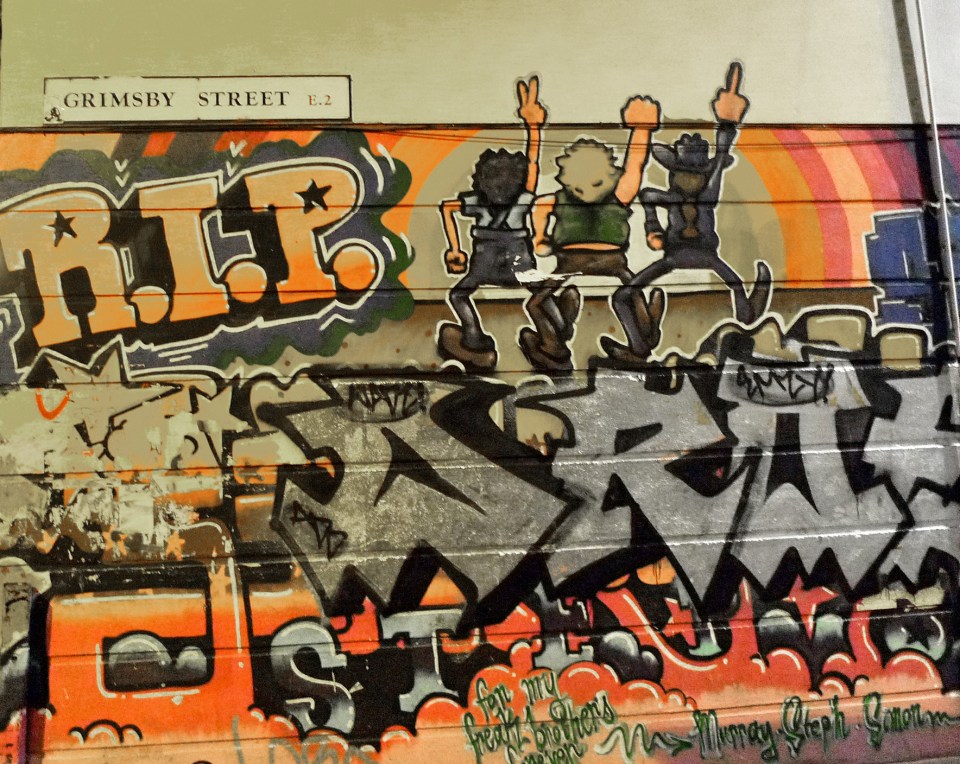
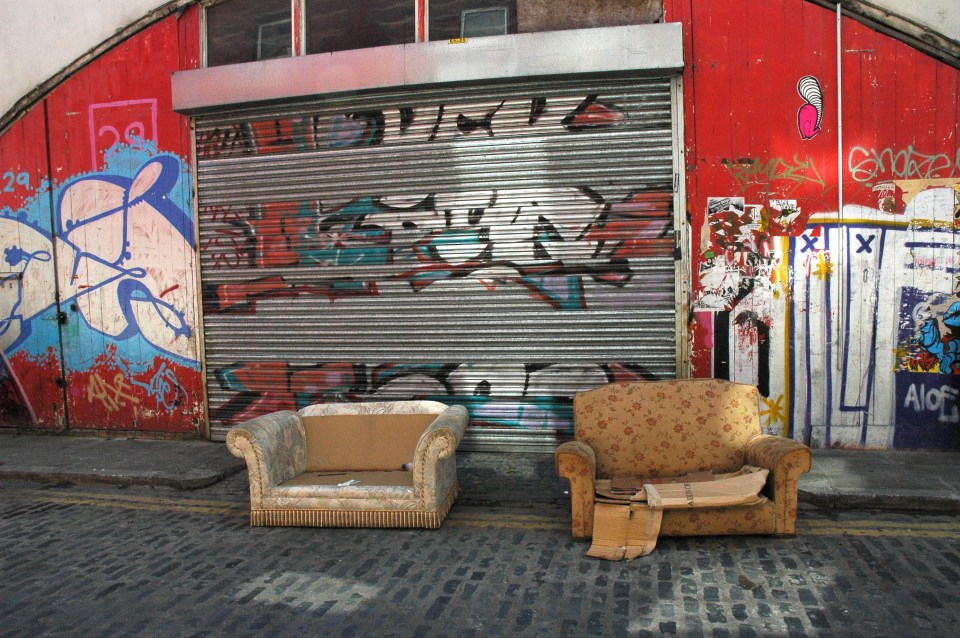
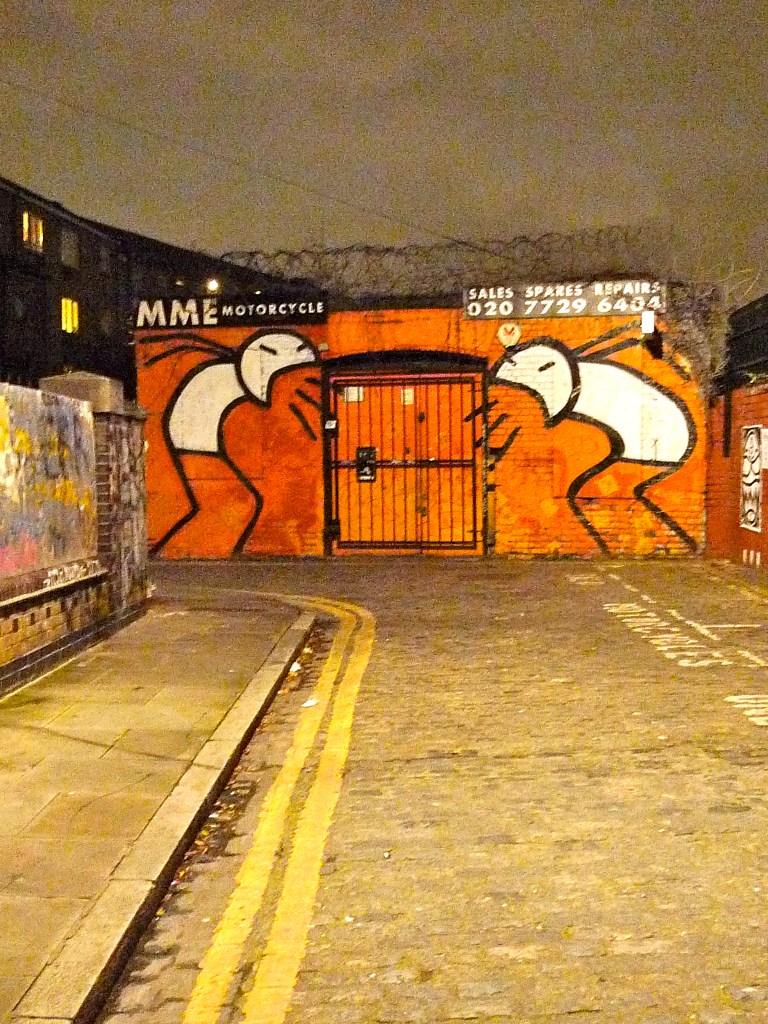
In this second post about my inspiration I take a look at the East End of London, and my love affair with the Grimsby Street area. The street is situated in E2 and shares its name with my hometown. In the early 2000s both my sons lived in London so I was a regular visitor. My younger son, Sam lived in Hackney at that time and had come across Grimsby Street E2 when visiting a friend nearby. The next time I visited he took me there and it was love at first sight.

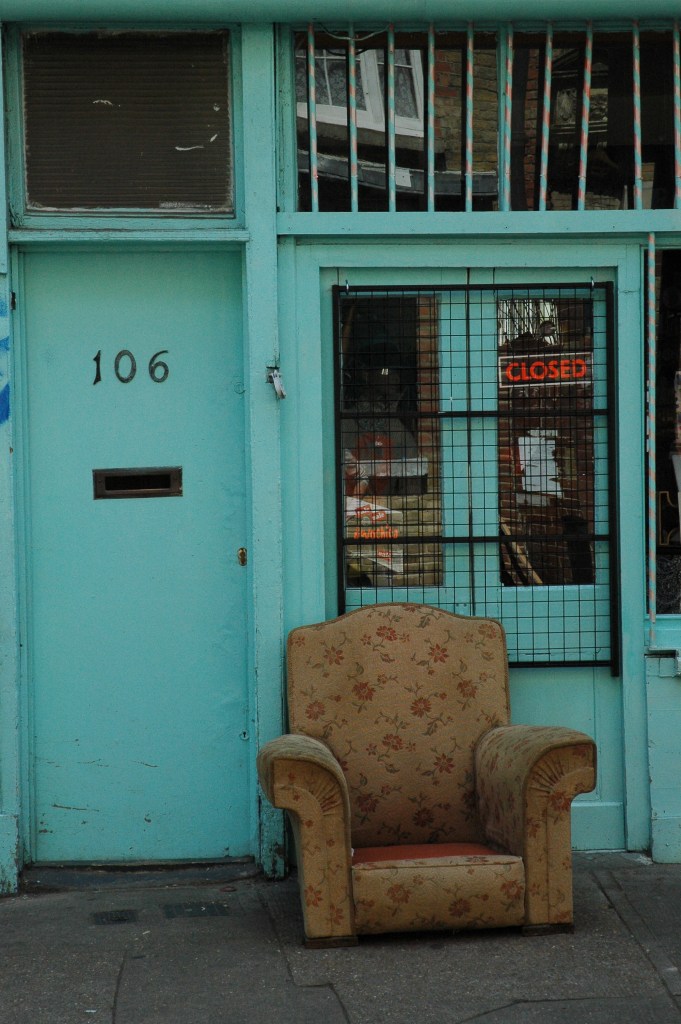
Here are some of the images I fell in love with. They may seem strange. It’s quite rundown, but an art school education taught me to look and to see beauty in the smallest detail and to enjoy the ‘out of place’. When I look at these vistas I see my next piece of work.

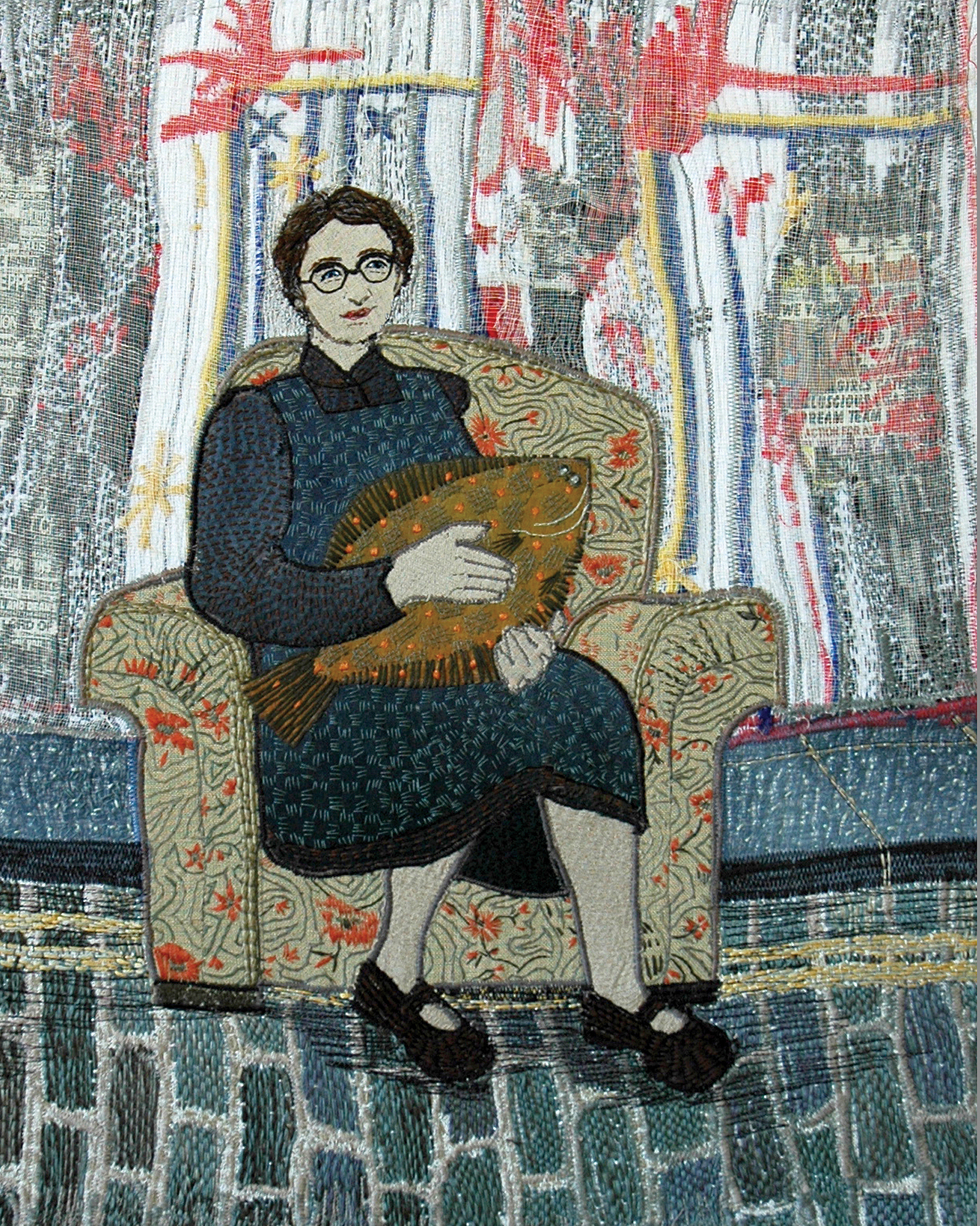
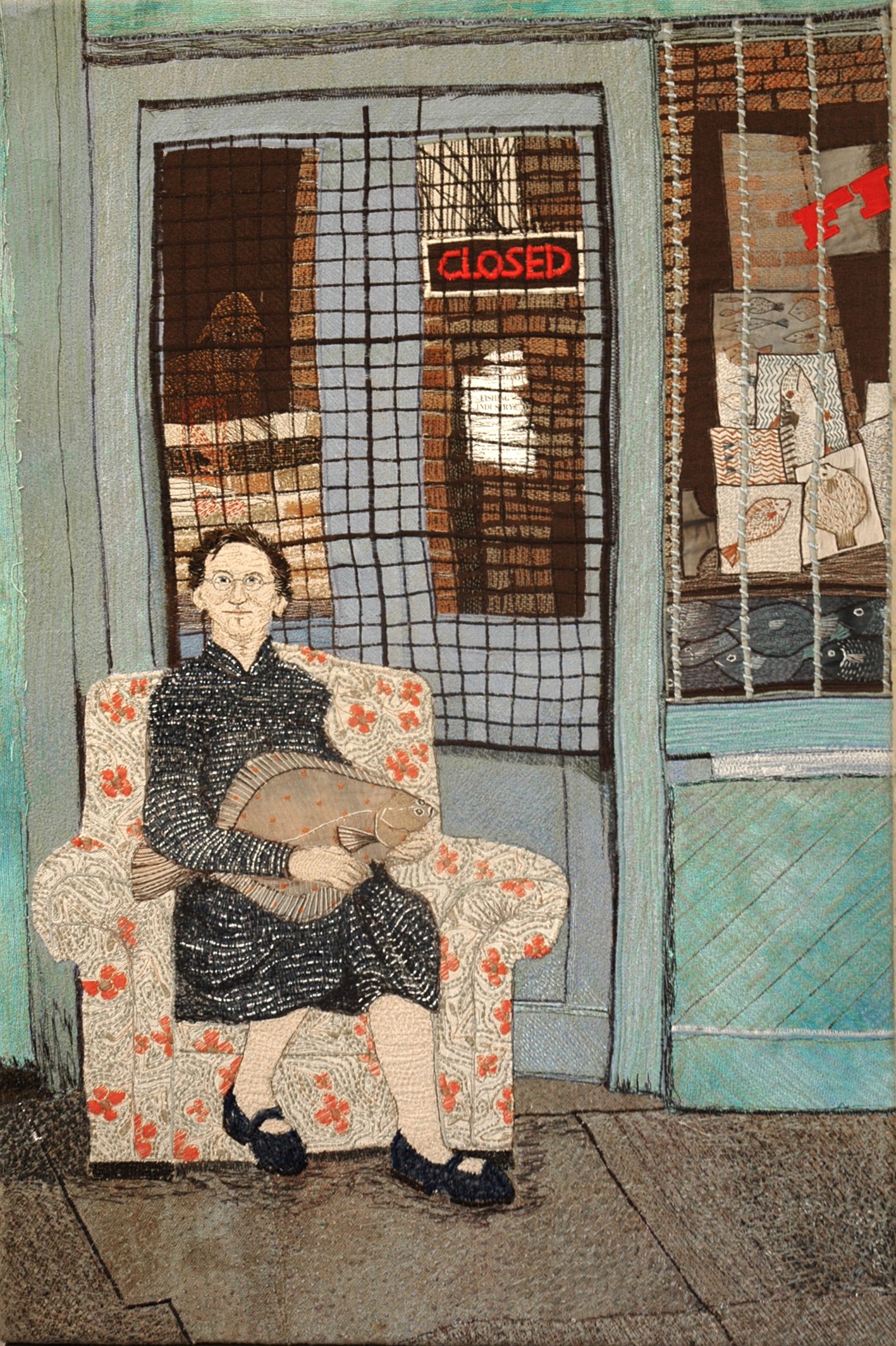
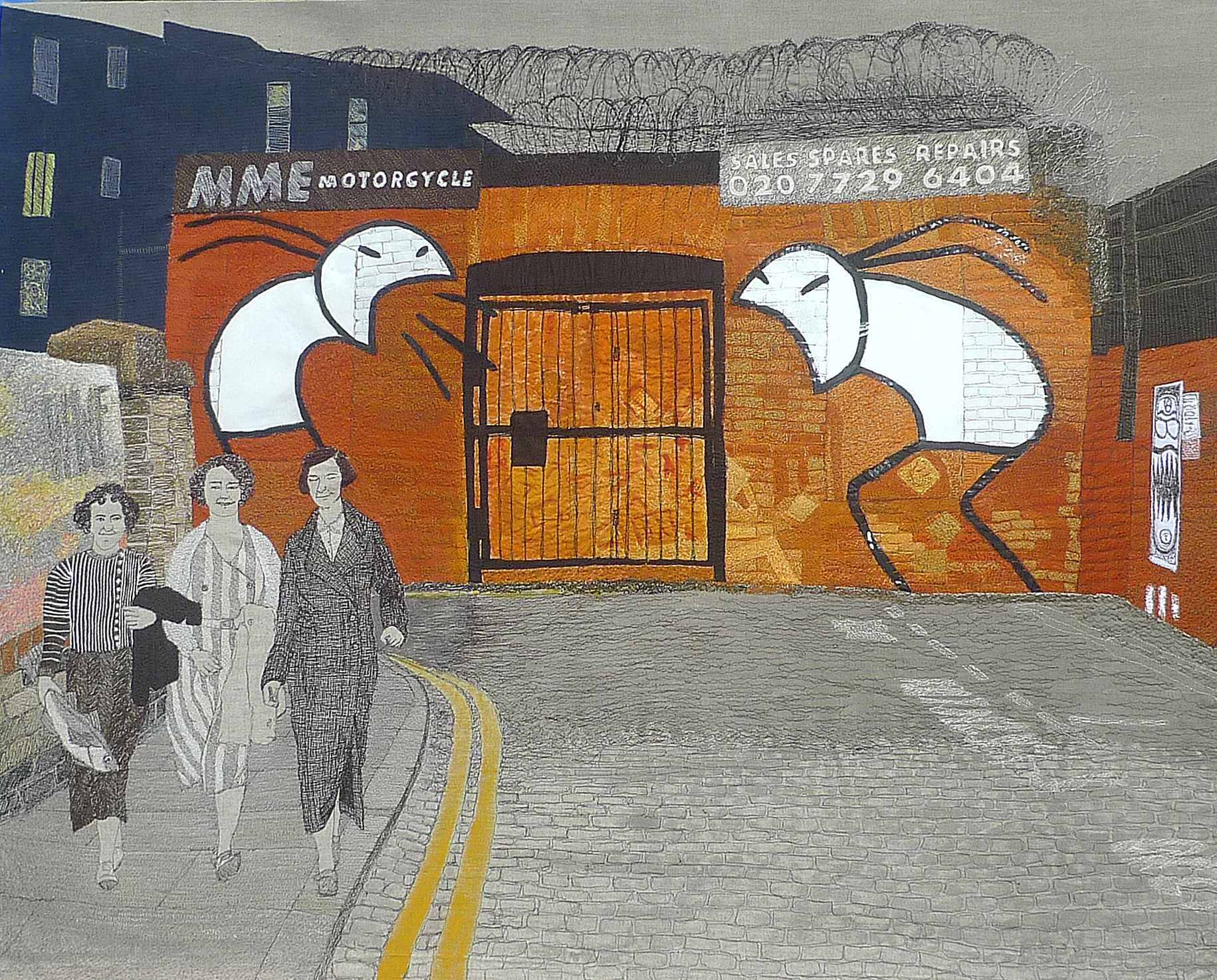
The images above inspired pieces that depict the then, the now and the journey in-between. The first pieces I made were East End Chair and Closed pictured below.

East End Chair is a portrait of my Grandmother Annie Jane Smith sat in an abandoned armchair nursing a fish. My hometown of Grimsby is best known for its connection with the fishing industry and the fish represents the prosperity the fishing industry brought to the town.

Closed depicts the demise of the Grimsby fishing industry. The closed shop sign represents the end of the town’s prosperity after the Cod Wars in the 1950s and 60s.

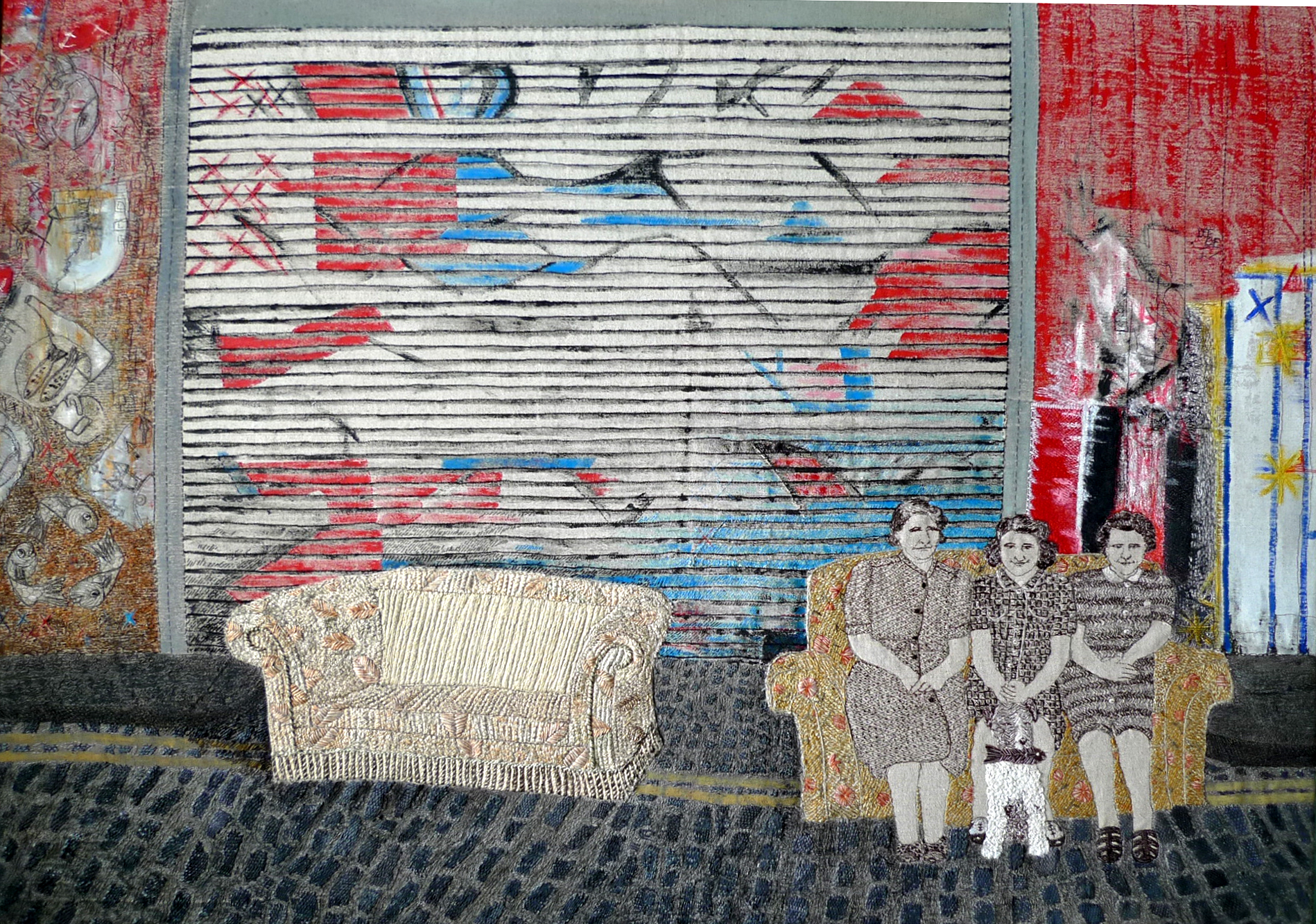
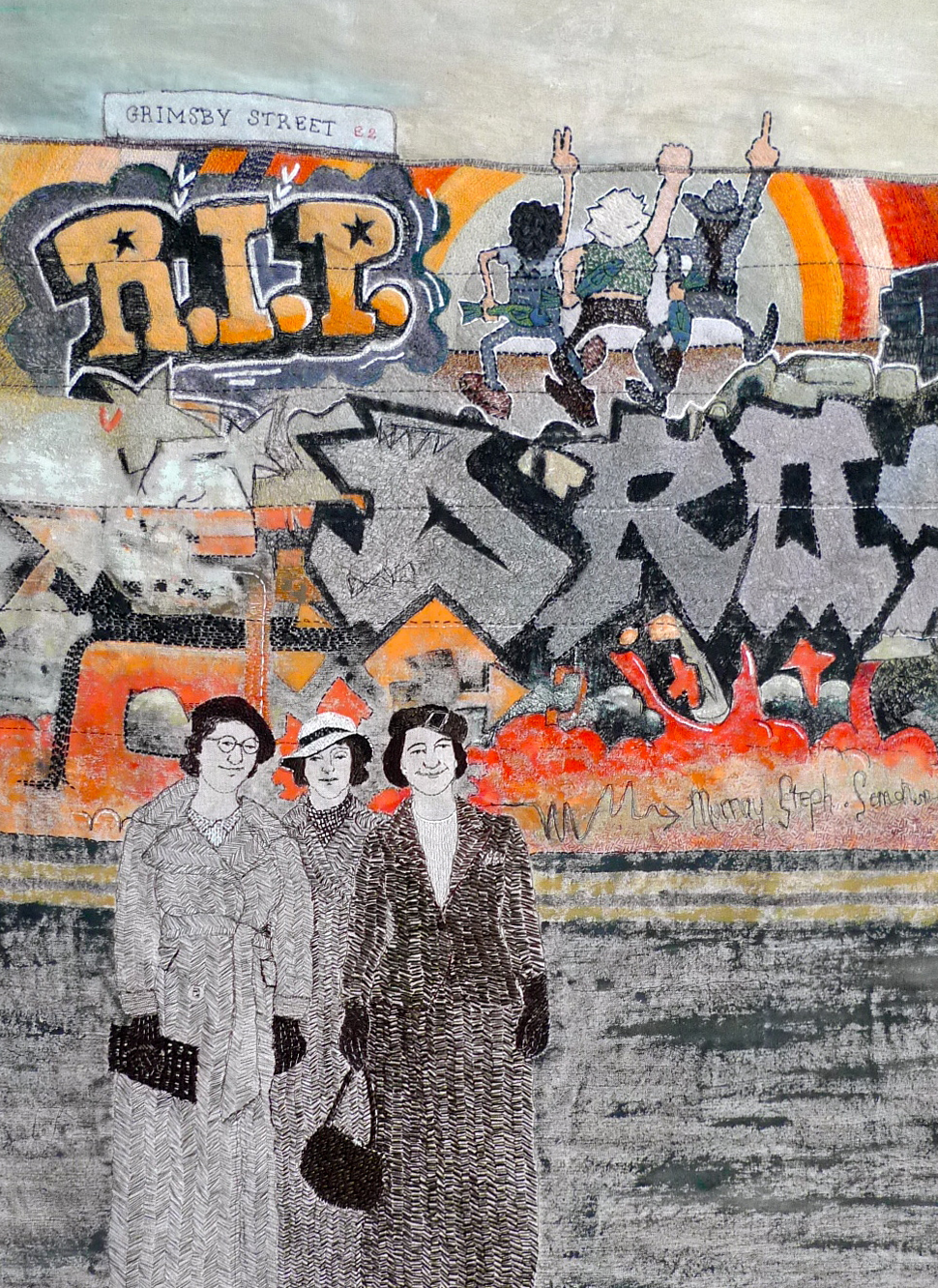
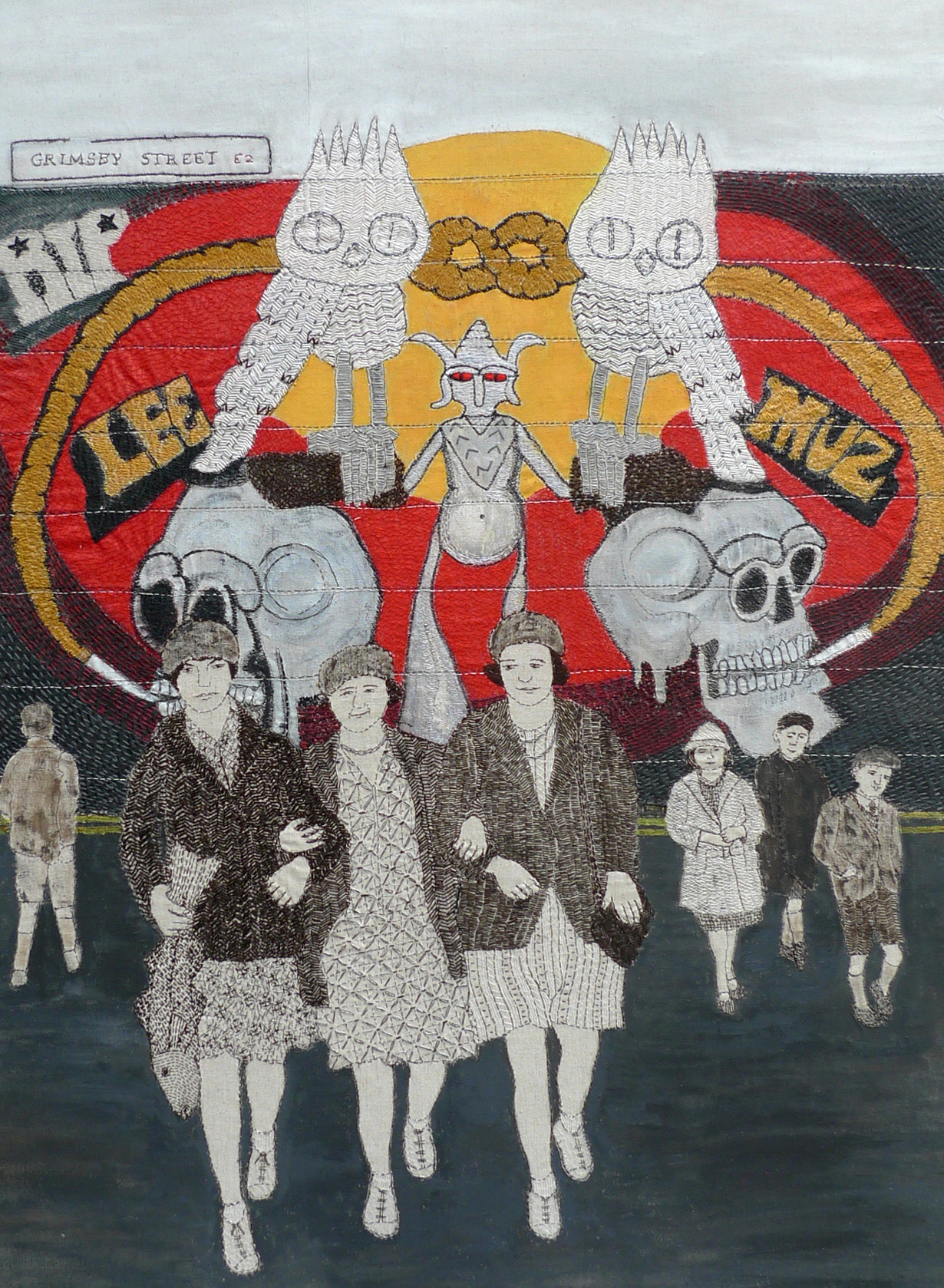
This series made in 2012 combine 2 or more images to represent the passing of time and the transience of life. A Girls Day Out, East End Girls and RIP Grimsby St E2 version 1 & 2.

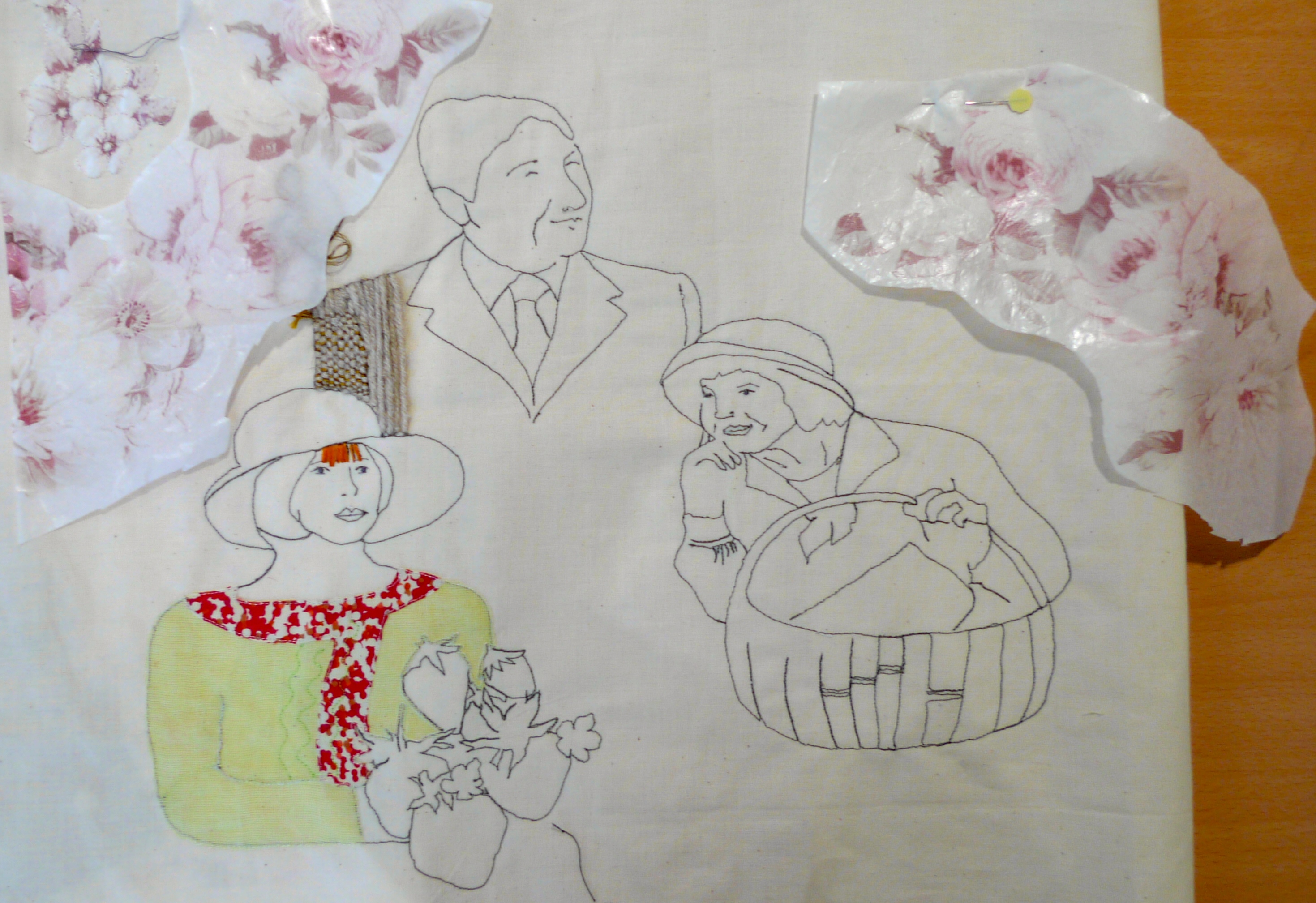
East End Girls combines an image of my grandmother, Alice Ann Stone, her daughter Madge and my Mum Muriel May Sone with an image of 2 abandoned east end sofas. It’s 128 cms wide x 104 cms high.

A Girl’s Day Out for Hilda, Nellie and Ida combines an image of 3 Grimsby sisters Hilda, Nellie and Ida with an image of Grimsby Street E2 graffiti by graffiti artist Stik.

RIP Grimsby Street E2 versions 1 & 2 chronicle the knocking down of part of Grimsby Street E2 in the run up to the 2012 London Olympics. An analogy between 2 different eras and 2 different environments .1930s Grimsby girls meet London 2012

The ever changing images of street art are fascinating. I have now been documenting the area for more than 10 years. Part 3 of the inspiration for Stitch posts will look at my documentation of the South Bank and more recent pieces inspired by the East End.

Inspiration for Stitch – Part 1 – The Family Album

Inspiration can come from anywhere and everywhere • the usual • the unusual • the intimate • the familiar • the obscure • the unexpected • the exotic • the bizarre • the world within or the world without. Inspiration for Stitch has proved to be a popular choice as a subject for groups booking my talks so I thought I would let you take a look at where I find my inspiration in a series of blog posts.

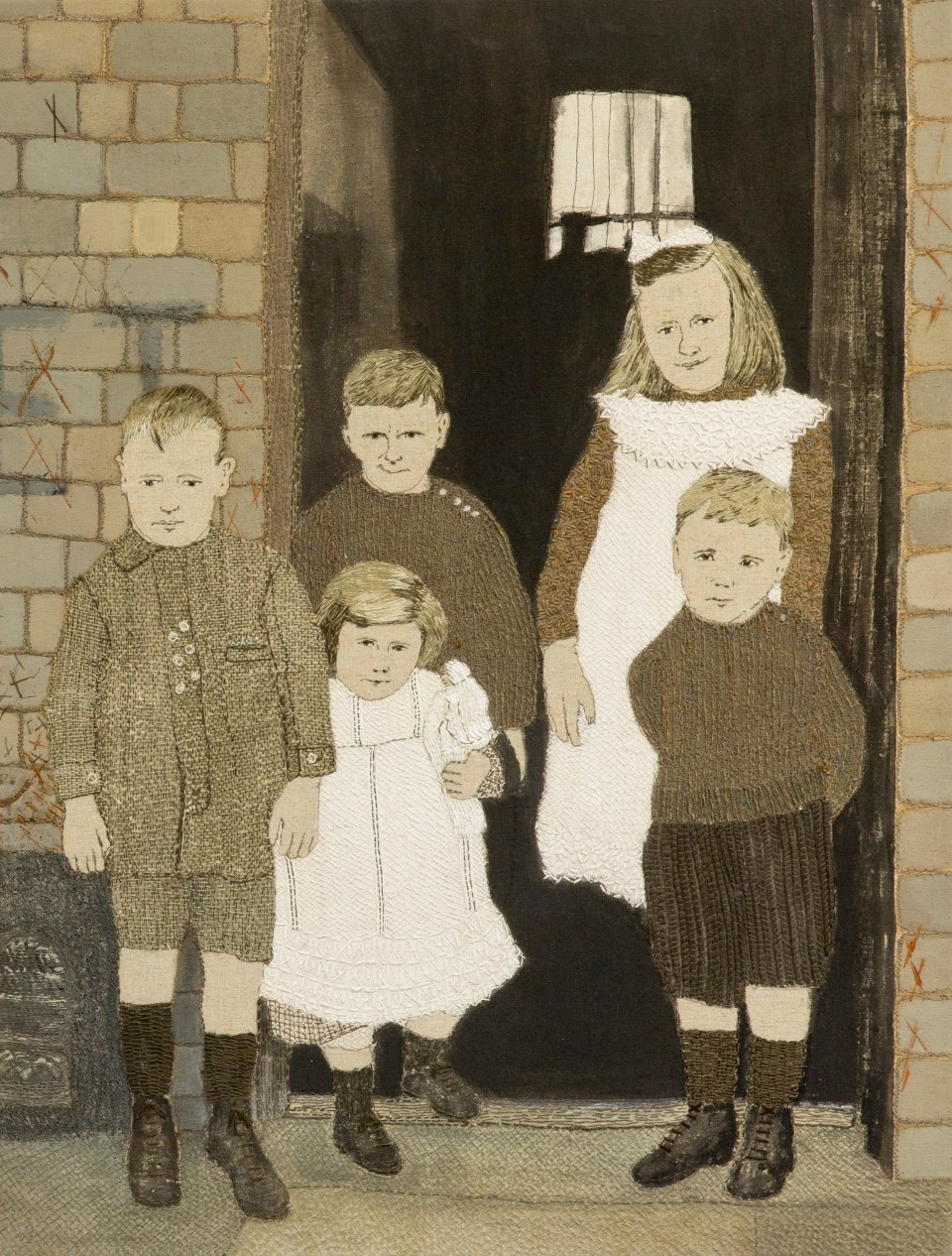
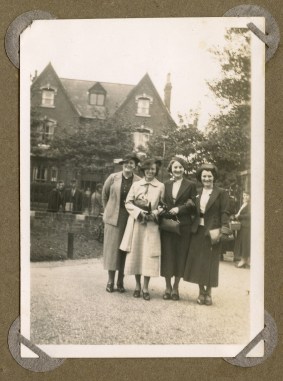
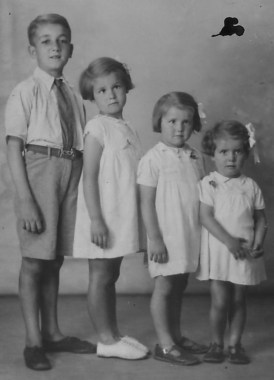
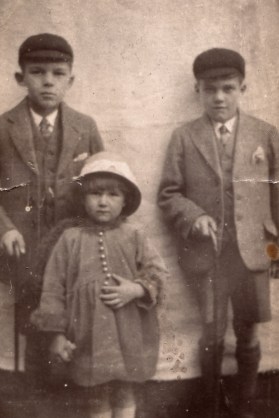
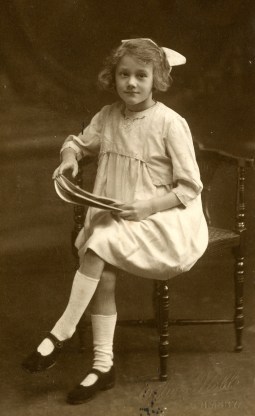
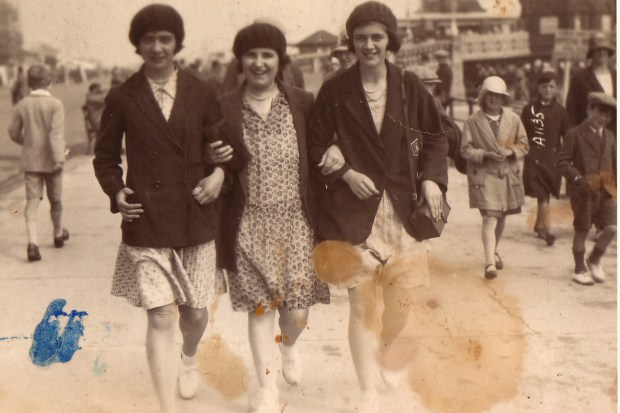
I will start with the obvious – The Family Album. These are typical of the photos I use for inspiration for my work. Click on any image to see my recent work inspired by the Family Album or go to the image galleries at my website.

family album 2               image of chilren

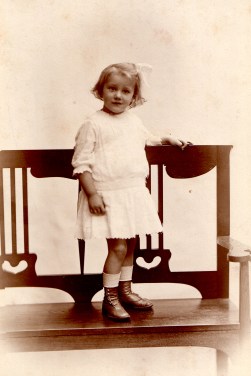
fred harry and madge stone                    image of Muriel May Smith

girls in berets ( ida spencer)Working with the family album is a way of remembering who I am and where I came from. The inspiration for a new piece of work can come from any aspect of these photographs, these snapshots of a moment in time, from the composition of the snap itself to the character of its subject whether I know them well or they are unfamiliar to me. My mum, my dad, my grandparents, my sister, my husband and my children have all been featured in my work.

muriel may stone

The photos I like best are the small, faded sepia or black and white photos with very little information in them. That gives me the scope to use my own knowledge and imagination to bring in my own detail, colour and texture and to create partial narratives that leave to viewer to complete. My interest in an unknown subject goes beyond the purely visual, I inquire into who they were, their relationships and how they lived.

 Much of my work alludes to the passing of time, merging disparate images from the past with those from the present. The family album provides me with me a rich resource. It enables the use of people as a device to portray the past and allows me to combine their images with my own photos of the present.

I hope you have enjoyed this look at my family album. The next in this series will look at my love affair with the East End of London, graffiti and street art.

Ebb & Flow • Behind the Scenes

image of Portrait of a Grimsby Girl

Portrait of a Grimsby Girl

The opening of the 62 Group Ebb & Flow exhibition is getting closer but the project itself has been almost two years in the planning. 

It started with an invitation from Grimsby Minster to show our work in the Minster which is a busy and vibrant resource for the people of North East Lincolnshire, an “architectural gem” tracing its history on this site for more than 900 years. I soon realised, however, that because we are such a large group of very diverse artists that there would not be enough suitable hanging space and display for smaller 3D work in the Minster for all of our work to be shown.

A second venue was sort and we were offered the upper floor, the mezzanine, of the Muriel Barker Gallery at the Fishing Heritage Centre in Grimsby. The Grimsby Fishing Heritage Centre was purpose built and opened in 1991. Its permanent exhibition tells the story of the Grimsby Fishing Industry in its heyday in the1950s. The white-walled space at the Fishing Heritage Centre contrasts nicely with the grandeur of the Minster.

image of All at Sea

Lucy Brown
All at Sea

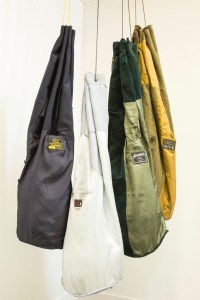
The Ross Tiger, GY398, is an ex-working 1950’s trawler and the largest item in the heritage collections. Lucy Brown, one of our exhibiting members has made site specific work to be shown on board the Tiger. The image left shows Lucy’s ‘sea bags’ which will be installed around the living quarters on the Tiger. Once the venues were in place we worked on the detail of the project and funding bid to Arts Council England by Grimsby Minster which was successful. This enabled us to work with freelance writer and curator, June Hill who has been on hand to advise the group throughout the project and who will be opening the exhibition on 13th September. It also helped the group to put together a full education programme and to produce a full colour catalogue with professional photography which will be on sale at both venues.

Details of our education programme can be found here. Many of our members visited Grimsby in February when we were given a tour of both venues and of the museum collections store. All of our exhibitions are selected by a selection panel of 5. The panel is different for each exhibition and can include a representative from the venue. The selection process has now been completed and 37 pieces of work were selected for the exhibition made by 28 artists.

Photography

Photography Day at the Minster

This week we also completed the photography for the catalogue which is now in the design stages. The catalogue will be on sale at both venues.

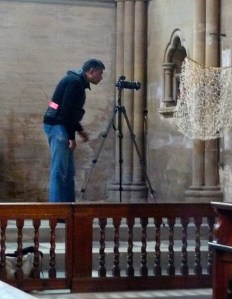
The photographer for the majority of the pieces is David Ramkalawon who came to Grimsby from London for 2 days to photograph work at both venues.

The snap left shows David photographing work in Grimsby Minster. 

Next week the hanging process begins. Watch this space for more ‘behind the scenes’ glimpses of Ebb & Flow.

Figurative Textile Workshop – Unlocking the Family Album

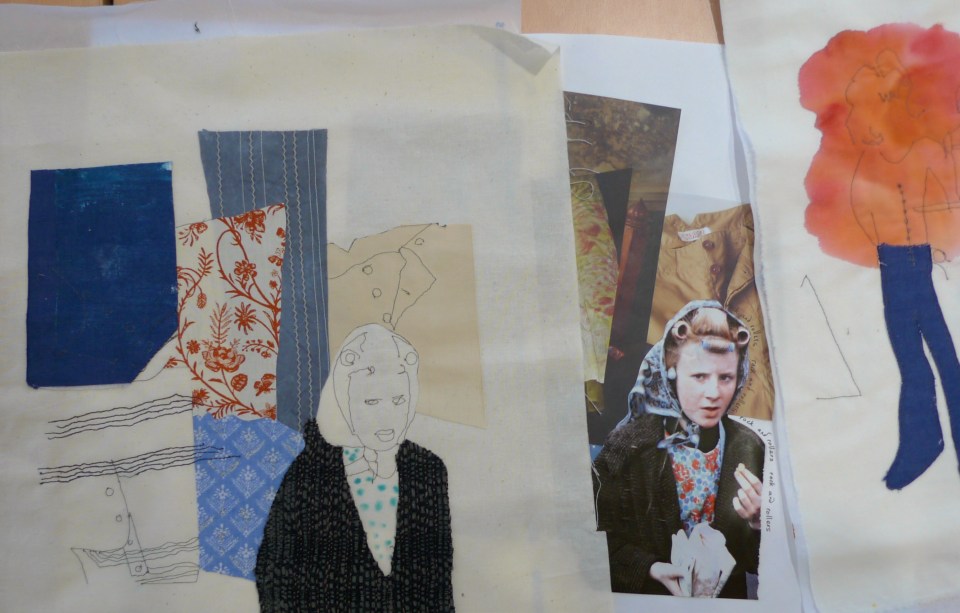
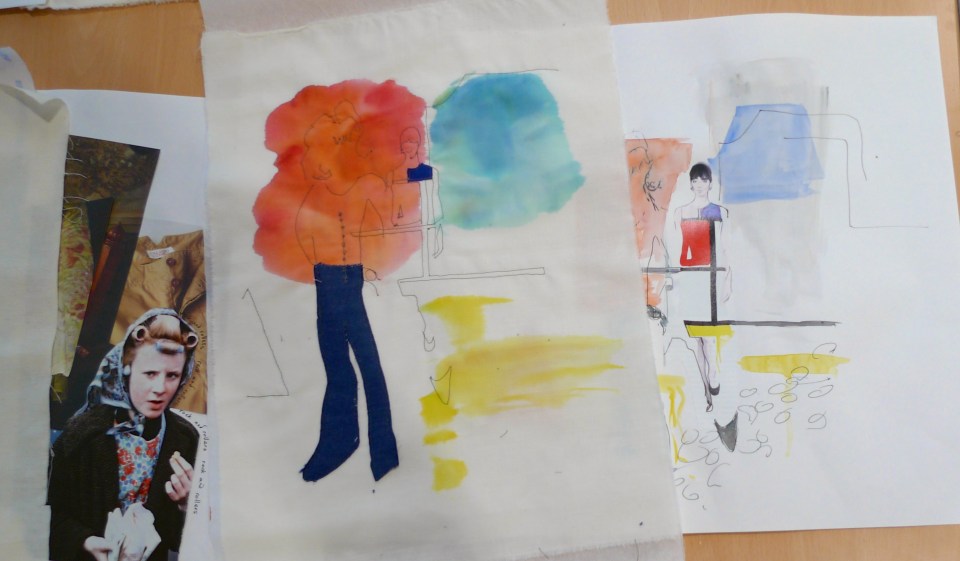
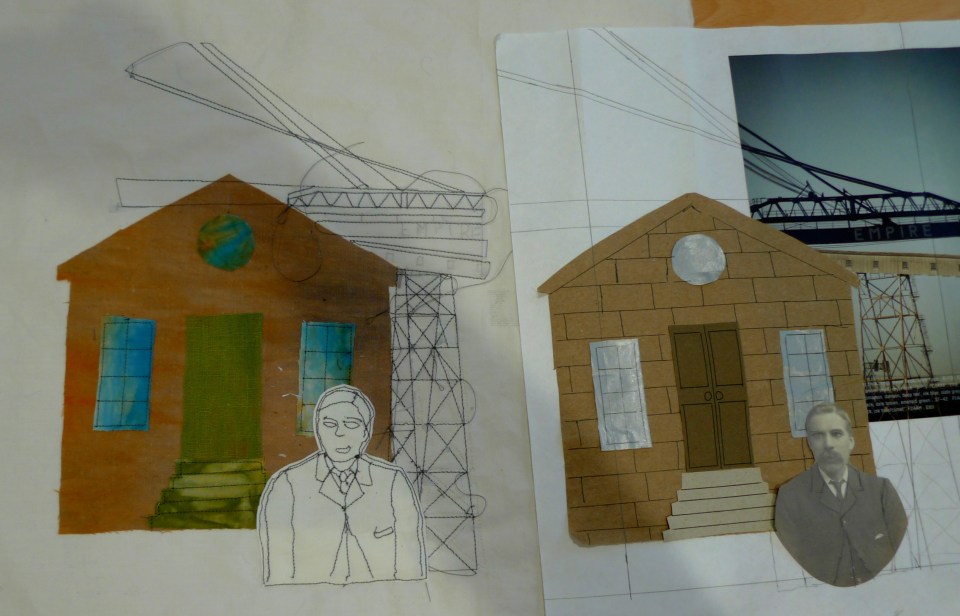
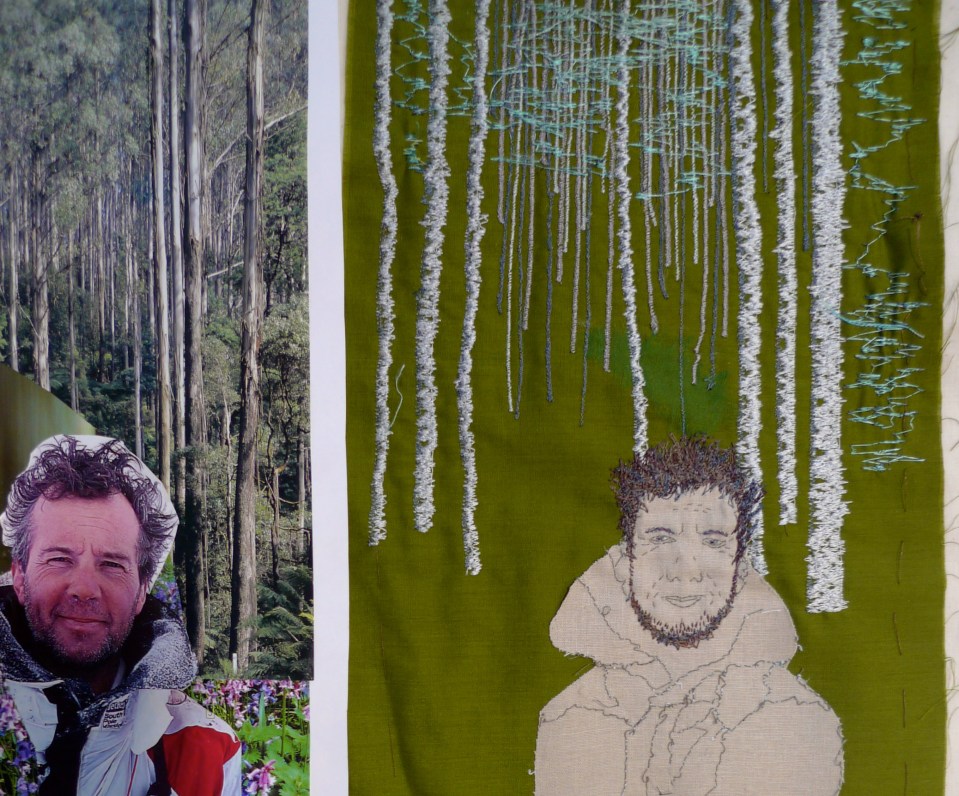
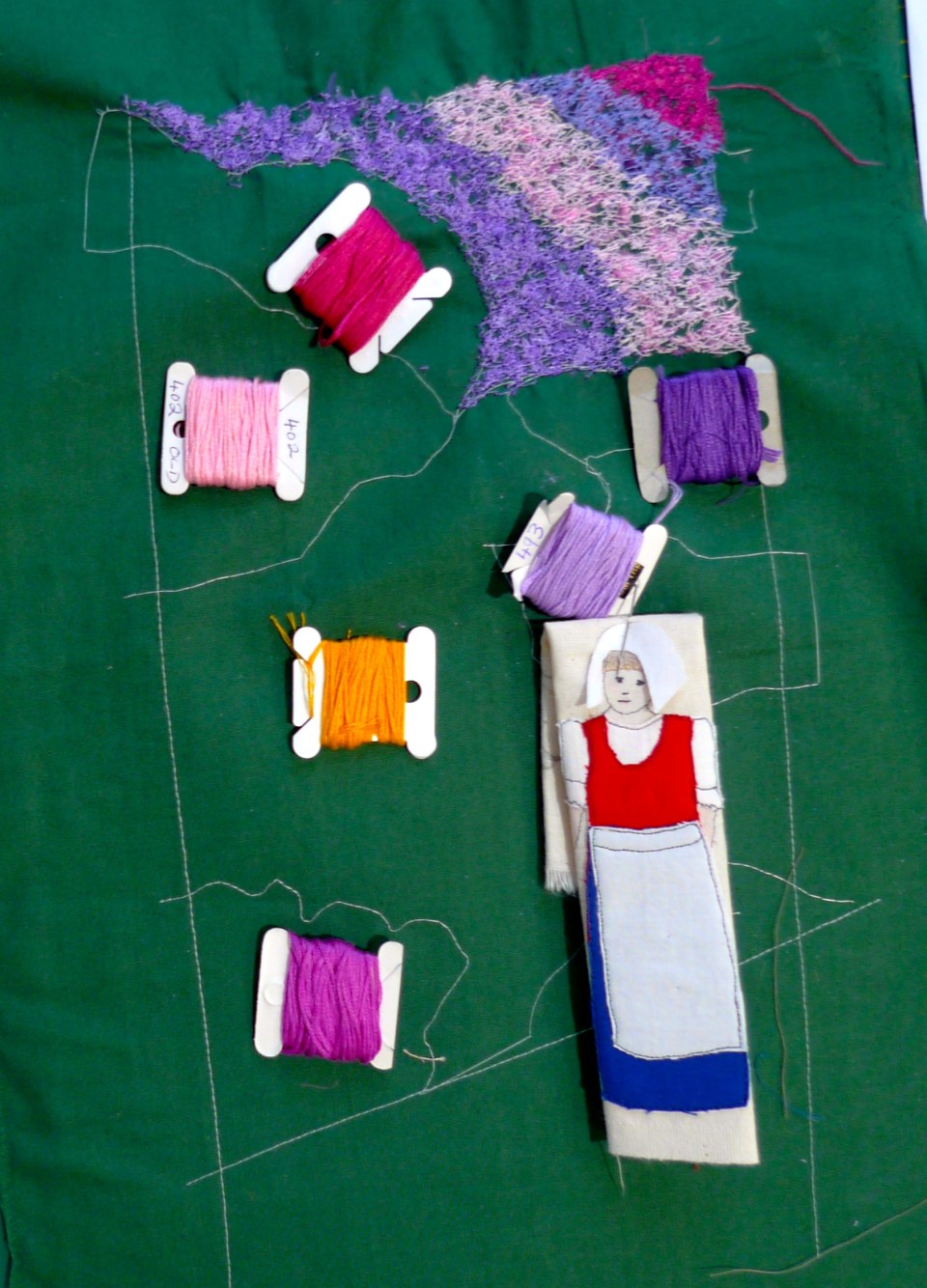
A couple of weeks ago I travelled to Durham to deliver a figurative weekend workshop to the very friendly and welcoming ‘Embroidery 15’ group. Many of the group had never worked figuratively before so I was pleasantly surprised by the resulting work. The workshop started with my presentation about the way different textile artists use the figurative image and by looking at my own handling collection which comprises of lots of small samples of different techniques that can be used for figurative textile work. We continued by experimenting with composition in collage and finally started to work with fabric and thread, mixing hand and machine stitch with appliqué and paint.

Here is a selection of the student’s work that was produced over the weekend.

student's work 17

student's work

student's work 1
student's work 2P1090112
student's work 6

student's work 9
student's work 11 student's work 12

student's work 13

The Ultimate Guide to Building Your Own Artist Website – TextileArtist.org

A great guide for artists who would like to build their own website.

The Ultimate Guide to Building Your Own Artist Website – TextileArtist.org.all_books

A new art fair inspires the North

I have just finished sorting out my work for the Same but Different Art Fair which has been organised by the Bowery Gallery on Saturday 12th & Sunday 13th April 2014 at Temple Newsam Walled Gardens in Leeds, West Yorkshire, UK. I will be showing lots of small studies  one of which is shown. Read more about SBD Art fair.

Image

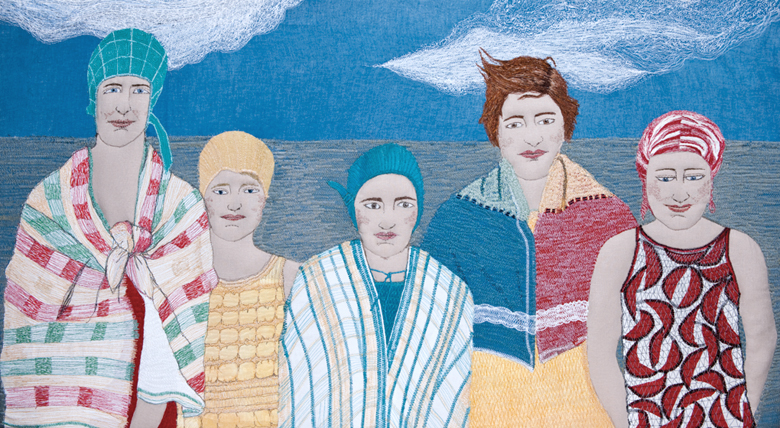
It’s always challenging finding a box into which it will all fit but that is done and I can now move onto my next deadline and my next box for the ‘Beside the Sea’ exhibition at Bilston Craft Gallery in Wolverhampton which runs from 12 April – 14 June 2014. I will be showing some of my ‘Life on the Coast’ series at this exhibition including ‘Bathing Belles shown below.

Read more about the exhibition.

Steve Thornton

10 Things to be Proud of

fred-and-harry-on-the-ponto


Our hometowns and familiar environments can be taken for granted and I have to confess that I am guilty of doing this to a certain extent. Something happened just recently to make me look at my own hometown, Grimsby, N E Lincolnshire, UK  through fresh eyes. So what was it that made me do this? Well, the 62 Group of Textile Artists came to town for a Members’ Research Day.

Later in the year the group, of which I am the current chair, are having an exhibition in the town which will run concurrently at two very different venues, the first, Grimsby Minster is an “architectural gem” tracing its history on this site for more than 900 years. The second venue is the Muriel Barker gallery at the purpose built Fishing Heritage centre which opened in 1991.

I decided to try and find 10 things about my hometown which would fill me with pride. The town was once the largest and busiest fishing port in the world and was known as the ‘Klondyke of the East  Coast’ and in the 1980s it was also known as ‘Food Town, Europe so the obvious place to start was with food so here goes.

1. Grimsby Traditional Smoked  Haddock.

In 2009 Grimsby Traditional Smoked Fish was awarded a Protected Geographical Indication from the European Union. This means that only fish produced in Grimsby using the traditional method can be called Grimsby Traditional Smoked Fish.

Find out more : http://gtfsgroup.co.uk/

13679_1607001

2. Grimsby Fish Market

Grimsby is of course famous for it’s fish, Grimsby Fish Market is the focal point of the local industry and its importance is recognised by the UK and EU Fishing Industries.

Find out more : http://www.grimsbyfishmarket.co.uk/

slider4

3. Local Fish & Chips

When I was a child we ate fresh fish 2 or 3 times a week . Fish so fresh it still tasted of the sea. Today the Captain’s Table fish restaurant in Cleethorpes serves sustainable fish which tastes just as fresh. In my opinion better the Magpie café in Whitby and I’ve tried both.

Find out more : http://www.thecaptainstable.co/

4. Lincolnshire Sausages

The John Pettit’s butchers has been making sausages for over 100 years. Their Lincolnshire sausage, is  still made to an original family recipe dating back to 1810.

Find out more: http://www.johnpettitbutchers.co.uk/category/sausages

5. Grimsby Minster

Grimsby Minster is known for being the only parish church in England to have its own Choir School, St James’ School. The building has been changing and evolving over many centuries.

Find out more: http://grimsbyminster.com/

Image

6. The Fishing Heritage Centre.

Opened in 1991 the FHC has a permanent exhibition depicting the Grimsby deep sea fishing industry in its heyday of the 1950s. It also has a temporary exhibition space. Over the last 5 years it has housed the ‘Unlocking the Collection’ series of exhibitions. The current one ‘ Treasures from the Collection runs until 21st April 2014.

Find out more : https://www.facebook.com/FishingHeritageCentreGrimsby

7. The Museum Collection of N E Lincolnshire

For about 10 years I volunteered to work with the fantastic costume collection.The collection represents the history of North East Lincolnshire, from its geological origins to the modern day. It currently consists of approximately 60,000 artefacts across Archaeology, Natural Sciences, Local and Social History, Costume, Art and Maritime History.

Find out more : N E Lincs Museum Collection

8. The Great Grimsby Ice Factory

This grade 2* listed building was was built in 1901. Its purpose was to supply ice to preserve fish on its journey from the deep sea fishing grounds to the nation’s plates. It closed its doors in 1990. The Great Grimsby Ice Factory trust are fighting to save this fantastic building.

Find out more : http://ggift.co.uk/

To help to save this important building donate : http://ggift.co.uk/make-a-donation/

Image

9. The Dock Tower

For 137 years Grimsby Dock Tower has dominated the town’s skyline and is a well known landmark. The 309ft high tower has played a fascinating role in the town’s industrial history.

Find out more :  Dock Tower

10. Cleethorpes

Most of my life, apart from a brief sojourn in London, I have lived within 6 miles of the East Coast of England. Its huge skies and vast beaches are second to none. Cleethorpes developed as a fishing village but with the coming of the railways in 1863 it soon became a popular seaside resort. The town adjoins my hometown of Grimsby.

Find out more : Cleethorpes history and heritage

Now I have taken a fresh look at my hometown and surrounding area why don’t you do the same. It’s amazing what you’ll see.