Tag Archives: textile artist

Tilleke Schwarz: For the love of threads – TextileArtist.org

Threads-featuredTilleke Schwarz: For the love of threads – TextileArtist.org.

Interesting article by Tilleke Schwarz on textileartist.org. Tilleke will be showing work at the Knitting and Stitching show.
I am looking forward to giving a helping hand on her stand at Alexandra Palace in October.

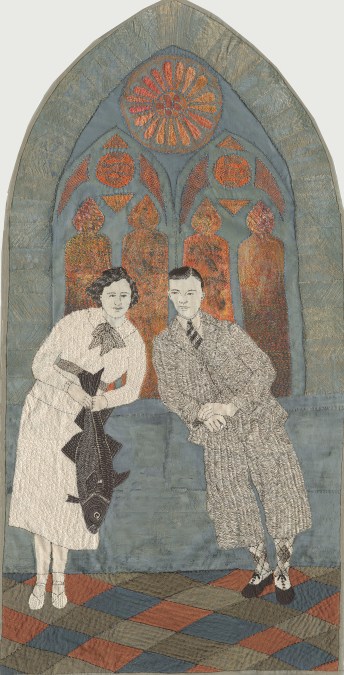
image of study for double take

‘Kilter Kelter’ at Cupola Gallery, Sheffield

Well, what I thought was going to be a quiet month turned out not to be so! I was contacted out of the blue by Cupola Gallery in Sheffield to see if I had any work available for their next exhibition ‘Kilter Kelter.’ The exhibition on a recycling theme is an intercontinental collaboration between Cupola Gallery in Sheffield and Spaza Art Gallery in Johannesburg, South Africa and runs from 26 July to 8 September 2013.
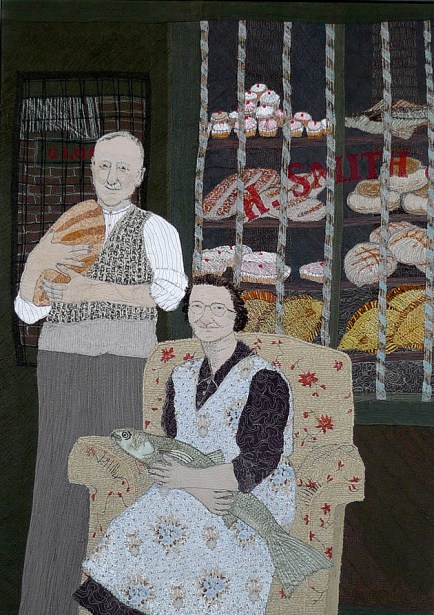
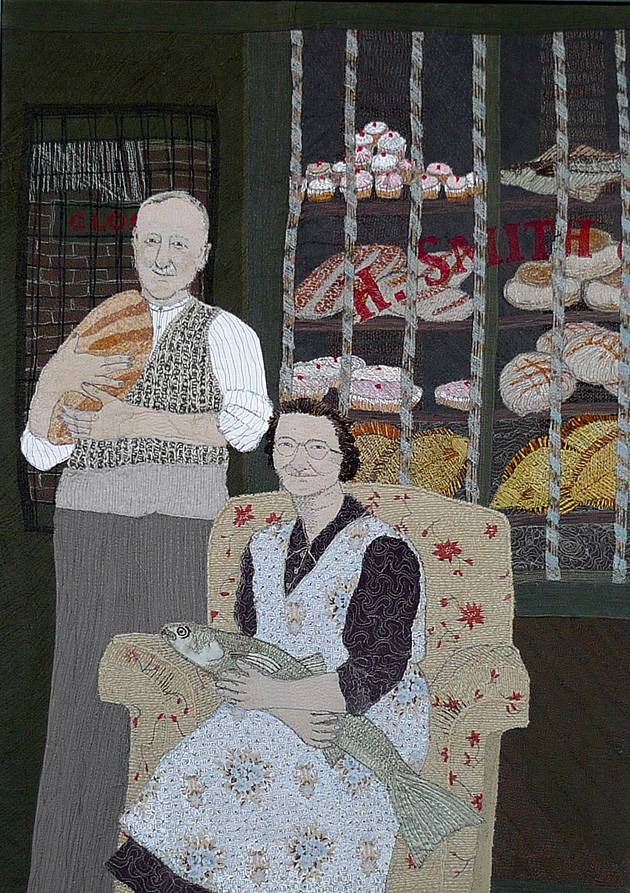
 Image of Loaves and Fishes

I work a lot with recycled clothing and upholstery fabrics as a base for my stitching so I was delighted to be asked to be part of this exhibition. I also recycle images from my family and friends’ photo albums. ‘Loaves and Fishes’, made in 2010 is portrait of my Grandparents Harry and Annie Jane Smith. The title refers not only to their religious bent (they were both staunch  Methodists) but also to the fact that Harry was a Master Confectioner and Baker who ran the village shop in Saxilby, Lincolnshire for many years. The ‘Closed’ sign refers to the demise of the village shop with the advent of supermarkets and my signature fish on Annie’s lap refers to their hometown of Grimsby, once the busiest fishing port in the world. The piece is made from applied recycled fabrics with hand and machine stitch. Even the wool used for Harry’s jumper is recycled, unravelled from an old cardigan!

I will also be showing some small studies including two pieces made from tray cloths embroidered by my Mum, Muriel May Stone.
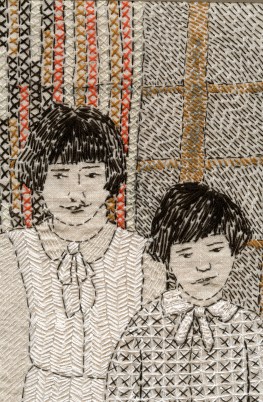
images of study of 2 girls

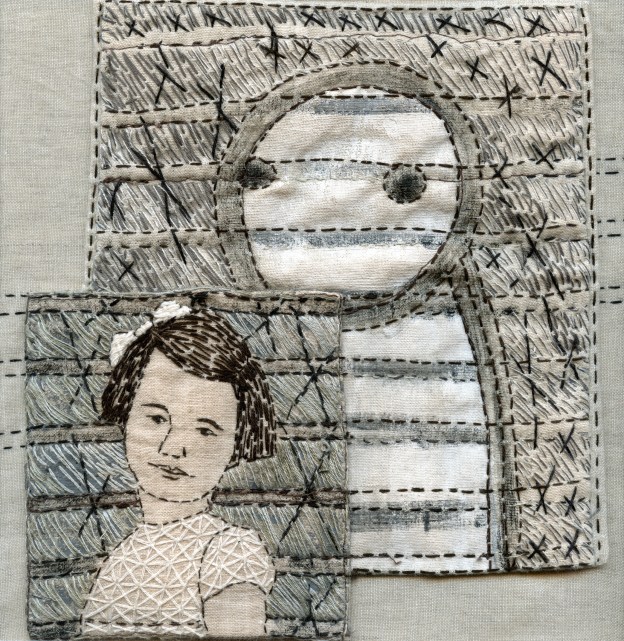
study for the girls they left behind


‘Kelter’ is a local Yorkshire slang work for rubbish and ‘Takataka’ is Swahili for rubbish. So ‘Kilter Kelter’ meets ‘Take Takataka’ and on the opening night 26th July from 7.30 pm Cupola will set up a large screen and live web link so artists can share ideas and talk to each other across continents. Some of the smaller African Art works will also be available to order via Cupola.

Exhibiting Artists from the Spaza Art Gallery. https://www.facebook.com/Spaza.Art Jacob Ramaboya, Andrew Lindsay Dionne Macdonald, Gift Mangena, Justin Wells, Karel Miles, Imbali Arts, Hiltrud Aliber, Evil Jon, Stacey Macdonald, Bethuel, and many others.. I am particularly intrigued to hear that they have a sound piece. Recycled sounds!”

Cupola’s exhibiting artists include: Inguna, Susan Waters, Karin Walland, Jason Heppenstall (HeppoArt), Gavin Darby, James Lake,  Lawrence Simonson, Ros Ingram, Klaus Pinter, Evelyn Albrow, Sue Stone, Sue Carter, Josie Beszant, Kimberly Werner, Hayley lock, Ella Robinson, Anne Menary, Aiden Spencer, Rachael Bennett

Work ranges from dresses made from salmon skins and old maps and elegant reclaimed steel scuptures, stunning portraits made from cardboard boxes to amazing paper and textile collages, miniature paintings on bottle tops and jewellery made from old colouring pencils.

Wise words from Karen Sherwood is the Founder, Director and Curator, Cupola Contemporary Art. “Next time you go to throw something away, just consider that thought and talent can transform almost any object into a thing of beauty and wonder.  I hope you enjoy both exhibitions, even if you can only experience one of them ‘virtually’!”

http://www.cupolagallery.com/

9th Baltic Minitextiles Trienniel , Poland

My mini textile: ‘Study for Some Things Never Change’ (below) has been selected for the 9th Baltic Mini Textile Trienniel at the Museum of Gydnia, Poland . Exhibition runs from 28 June to 1 September 2013. The piece was hand and machine embroidered onto a recycled cotton Damask tablecloth.

image of study for Some Things Never Change

Sue Stone • From Sketch to Stitch • Stitch magazine June/July

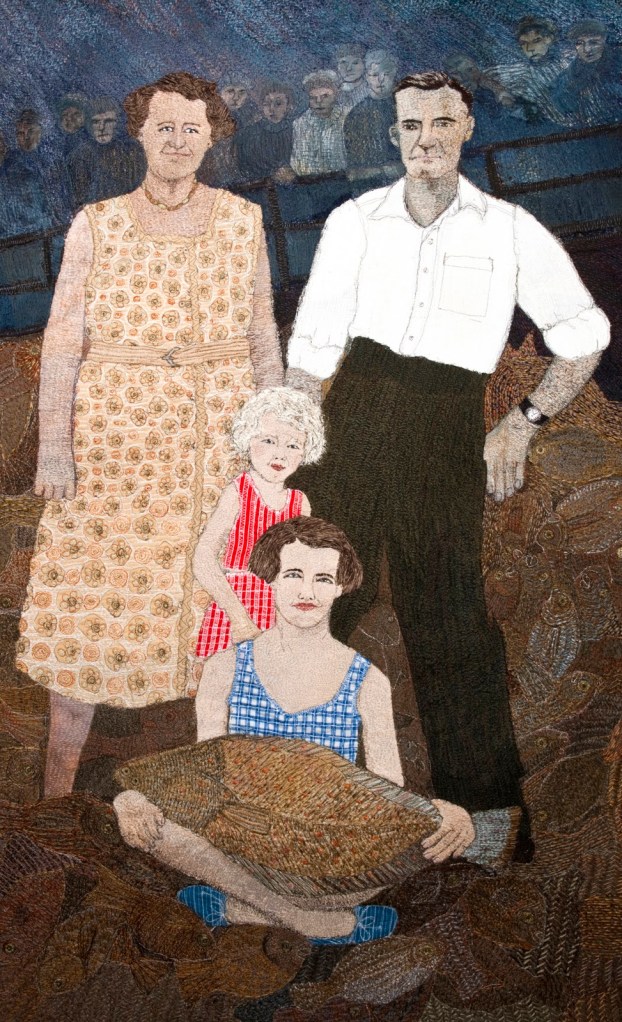
Stitch magazine has published my ‘From Sketch to Stitch article in Issue no 83 June/ July 2013. The article explores the way I work and how my pieces are put together focussing on my work ‘Family with Fish’ 2011. Click here to Buy Stitch magazine  More images of the work in progress 

I also have an ebook for sale which documents the full making of this piece.  Preview or buy the ebook. The ebook is available for iPad and iPhone only at the present time. To hear about my news and events and to be informed when the ebook will be available in other formats please sign up to my monthly newsletter

This piece is also featured in the 62 Group of Textile Artists 2012 ‘Radical Thread’ Book. Edited by Lesley Millar the book was produced to celebrate the group 50th anniversary. Preview or Buy Radical Thread

image of Family with Fish

62 Group exhibition • Small Talk opens today 4th June 2013

The latest 62 Group of Textile Artists’ exhibition opens today at the Constance Howard Gallery which is housed in the old Deptford Town Hall building on New Cross Road, London, SE14. 

The 62 Group has a strong link with Goldsmiths as many of the exhibiting members were past students and indeed teachers. “Small Talk”, as the title suggests, brings together new small-scale work in a range of mediums in response to the gallery space.

For more information about the exhibition dates, opening hours and accompanying talks from 62 Group members see: http://womanwithafish.com/Small_Talk_info.html

My piece ‘Do you come here Often?’ can be seen in this exhibition. For more information about this mixed media work which combines embroidery and appliqué with acrylic paint see: http://womanwithafish.com/Do_you_come_here_often.html

image of Do you come here often?

Craft & Design Selected Silver Award

Congratulations to Carol Naylor who has just been awarded the Craft & Design Silver selected award 2013. Carol was selected for this award by judge Kaffe Fassett whose fantastic exhibition ‘A Life in Colour’ runs until 29 June 2013 at the Fashion and Textile Museum in Bermondsey. http://ftmlondon.org/ftm-exhibitions/kaffe-fassett/
See more of Carol Naylor’s work at : http://www.carolnaylor.co.uk/

carolnaylortextiles's avatarCarol Naylor

Certificate Silver textiles_CarolNaylor copy

Here’s the certificate for the Craft and Design Award. The award means I will get coverage in the magazine in the Autumn and also an image will be used on their 2014 calendar. Interestingly earlier this year I was short listed for a calendar in Japan, big project, I didn’t get it but it doesn’t seem to matter now!

View original post

Lichtenstein, Chuck Close, Kurt Schwitters and me

http://http://www.tate.org.uk/whats-on/tate-modern/exhibition/lichtenstein

First to the Lichtenstein at Tate Modern on Friday. I really enjoyed this but having read a review saying that all rooms looked the same I wasn’t sure I would. This review was grossly unfair.

Perhaps I am a bit sentimental about Lichtenstein because his work reminds me of time spent in London in the late 60s/early 70s but I particularly enjoyed the later collages and also the small drawings and of course the old favourites such as Whaam!


Then on to the White Cube in Bermondsey to see Chuck Close’s print exhibition. His work is fantastic and to see the prints broken down into there individual colours was amazing. An enthralling exhibition for anyone who is into the technical side of printmaking .

http://whitecube.com/exhibitions/chuck_close_prints_process_and_collaboration_bermondsey_2013/

On Saturday I gave a talk to the Contemporary Quilt AGM at the American Church in Tottenham Court Road. They were a great group of people who made me feel really welcome. Contemporary Quilt are a specialist group of the Quilters Guild of the British Isles.

http://www.contemporaryquilt.org.uk/

On Sunday the highlight of the weekend which was a visit to the Kurt Schwitters exhibition at Tate Britain. I’m a big fan of collage so it was a treat to see Schwitters small collages which were definitely the best part of this exhibition. I had seen his work first at the Armitt museum in Ambleside a few years ago but I knew nothing of his period of internment on the Isle of Man so it was fascinating to see the work from that period as well.

http://www.tate.org.uk/whats-on/tate-britain/exhibition/schwitters-britain

Now I’m back in GY and all cultured out!

My 5 Favourite Sewing Machines

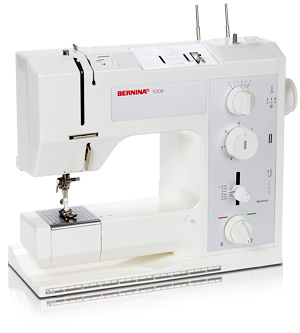
I was going to write about my 5 favourite sewing machines but then I realised there is only one for me.The Bernina 1008 is the best mechanical sewing machine in the world, unless you can tell me different. To have one of these is great, to have two, as I do is fantastic. One can be set up for free machine stitch with the darning foot and the feed dropped whilst the other is ever ready for dressmaking techniques with the standard foot and the feed raised. I’m sure there are lots of great fancy digital machines out there but for me nothing beats the control I get with a basic mechanical and the hands-on drawing skills that it allows me to employ.

Long live the Bernina 1008!

Image

My 5 Favourite Embroidery Stitches

There are so many great embroidery stitches so why do I use so few of them?

The answer is that the ones I do use are so versatile. These are my 5 favourites. 

straight stitch

1 • Running Stitch

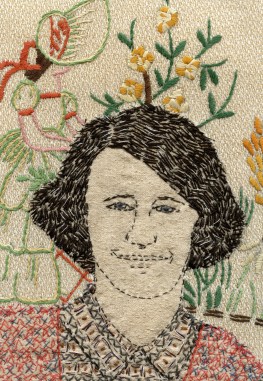
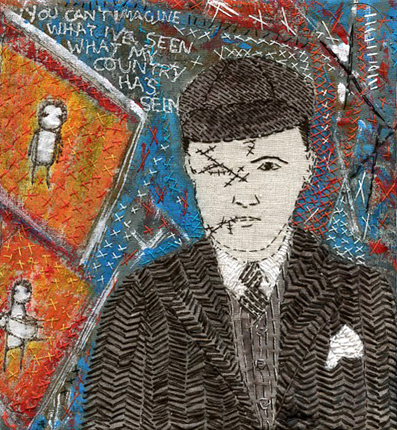
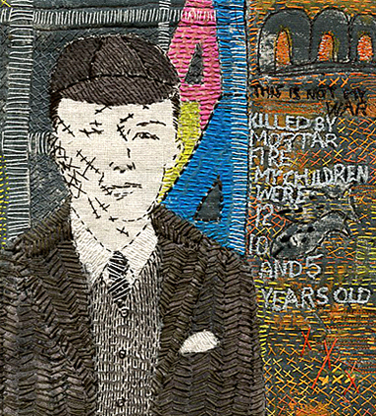
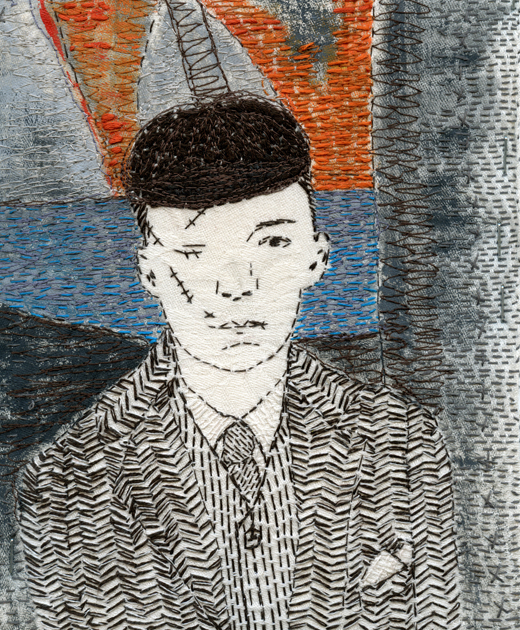
Possibly the most useful of them all, Running Stitch is a basic, straight stitch that can be used in so many ways. By varying the length of the stitch and the thickness of the thread so many different effects can be achieved. I use it most frequently for drawing portraits using just a single strand of stranded cotton thread.This stitch is also good for hair as just changing the direction of the stitch can give a wave or a curl effect. Patterns can easily be created on clothing by using the stitch in different directions to draw squares, stripes, triangles and zigzags. Here are some examples of how I have used running stitch.

study2 for tea party in tokyo 2
study of a young man

Another of my frequently used straight stitches is Arrowhead Stitch. I often use this simple straight stitch to form a ‘mock’ herringbone pattern which evokes the look of a woven herringbone tweed fabric. This is achieved by combining 2 different colours of thread in the same needle. It’s so useful for making patterns on coats and jackets as seen below.

arrowhead stitch
arrowhead stitch 2

3 • Cross Stitch

More recently I have been using a lot of Cross Stitch in a free, non-formal way to create patterns on dresses and also  a colour filling stitch on my Graffiti series. Vary the size and of the stitch and the thickness of the thread for for more variety of finished surfaces.

cross stitch
cros stitch
x stitch

darning

4 • Darning Stitch ( Needleweaving)

Darning Stitch or Needleweaving as I prefer to call it is a great stitch effect for drawing house bricks. A long straight stitch forms the warp for the area you want to fill and then using the needle to weave your thread in and out of the warp stitch to form the weft building it up until the whole area is filled.


darning 2

5 • Couching

This versatile stitch is used to hold a thicker thread onto a background by stitching it down to form shapes or to fill an area. Vary it by using a different colour, a cross stitch or an angled stitch on the top instead of a straight stitch.

Enjoyed seeing my favourite stitches? Let me know what yours are.

couching
couching


couching
x stitch couching