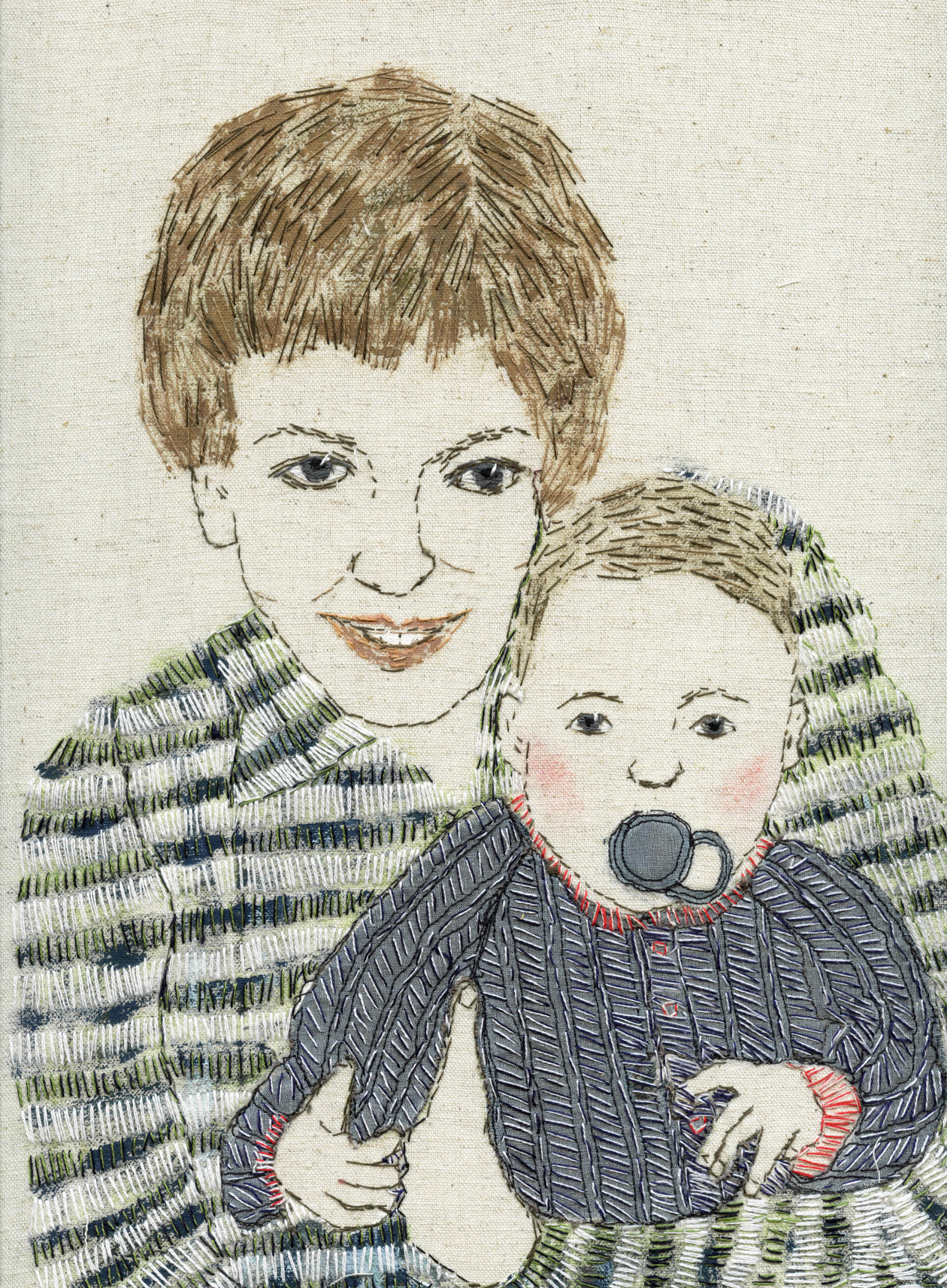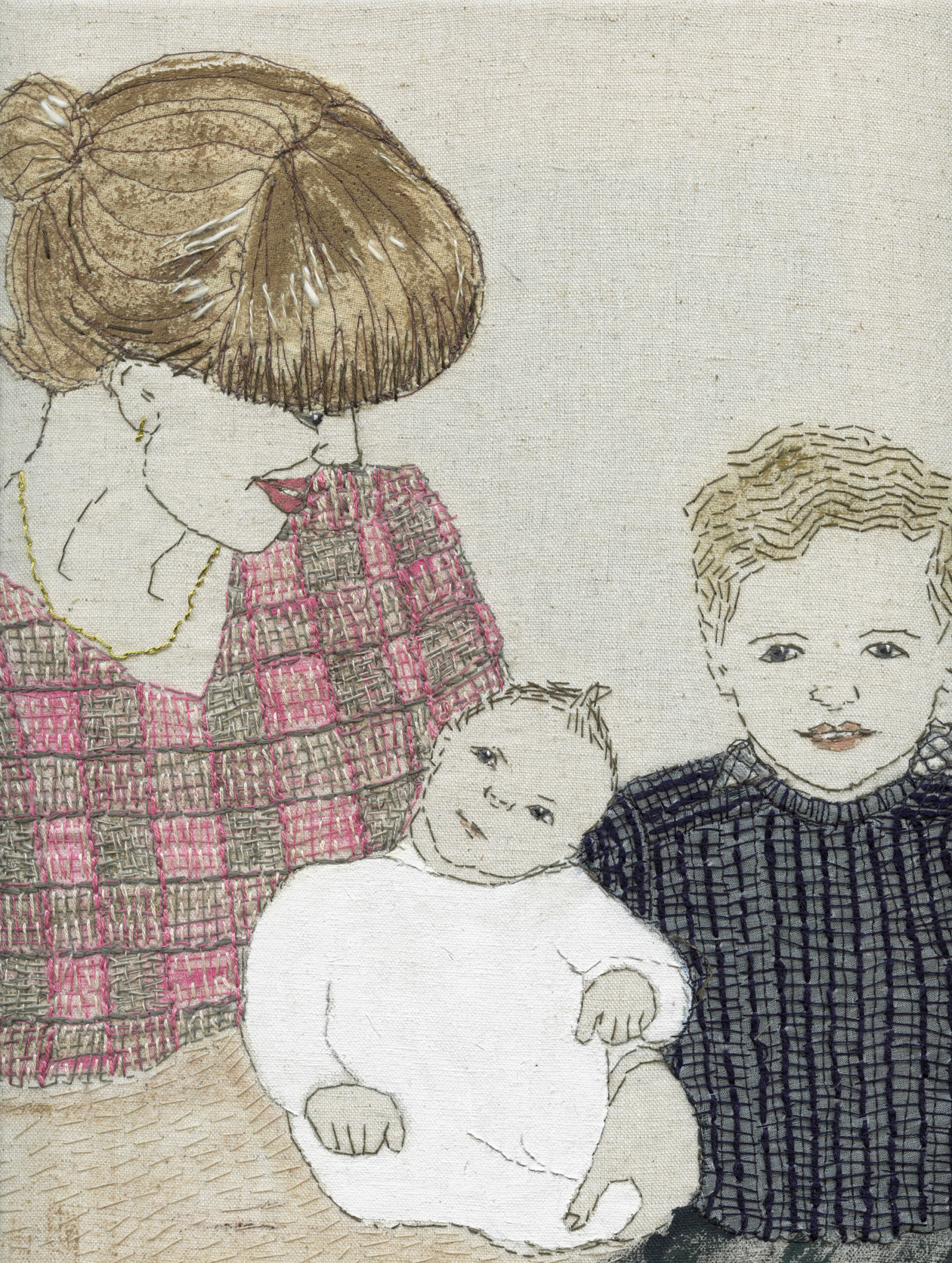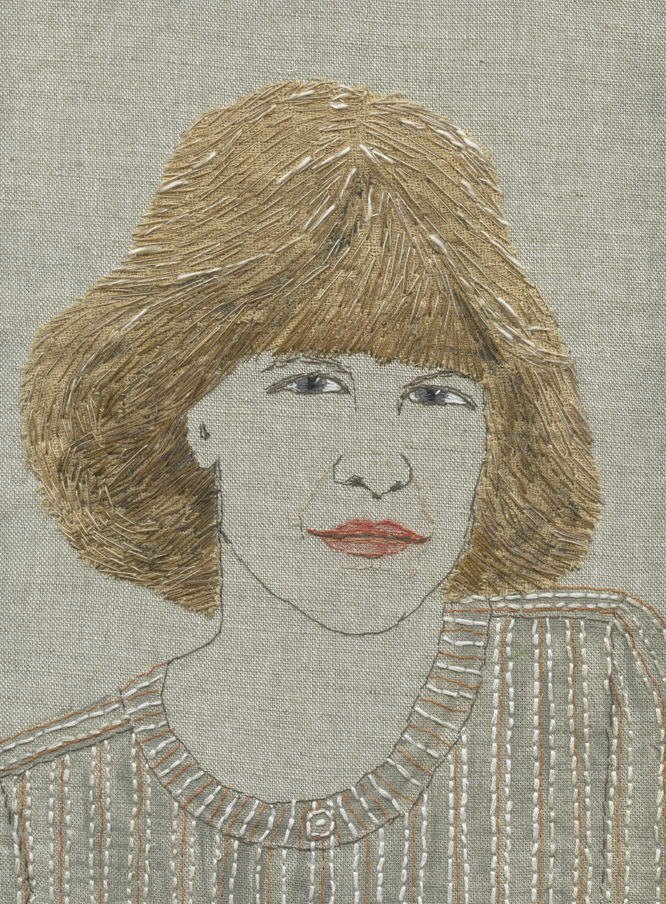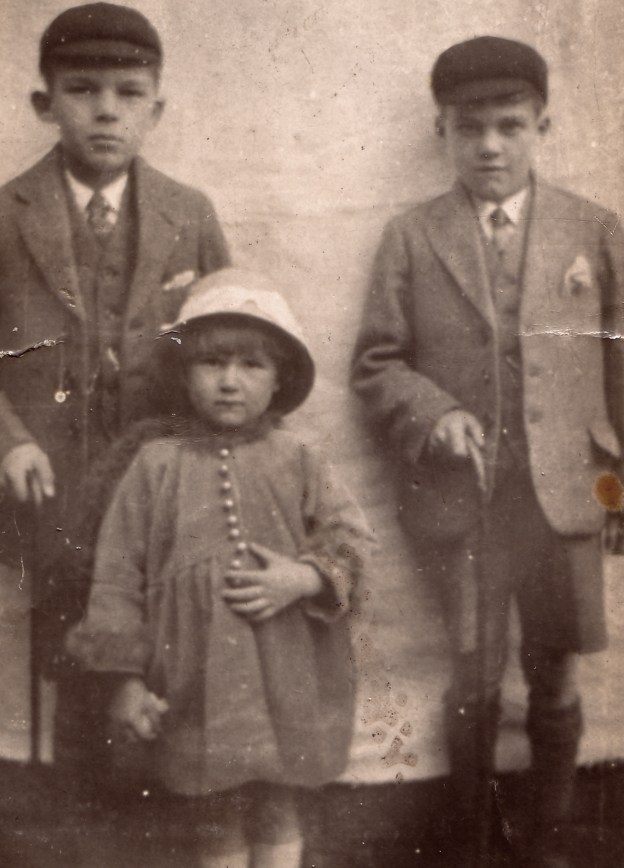
Do You Remember Me? Book for sale here
I have just added a series of small studies for sale on my website.
Small Studies for sale here
More small studies for sale here
Small Mounted Studies for sale here
Small mounted studies for sale here
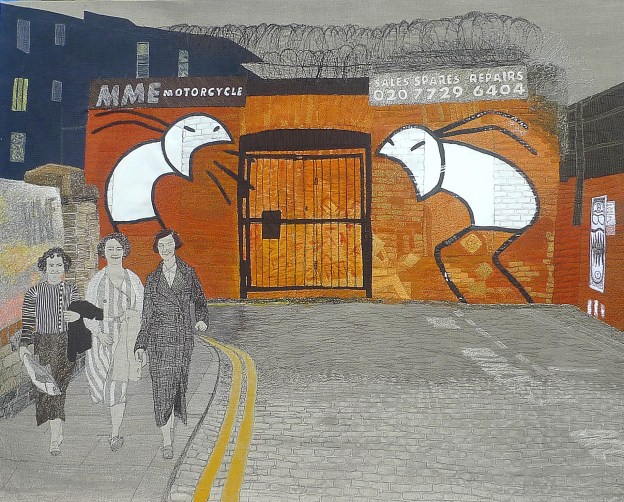
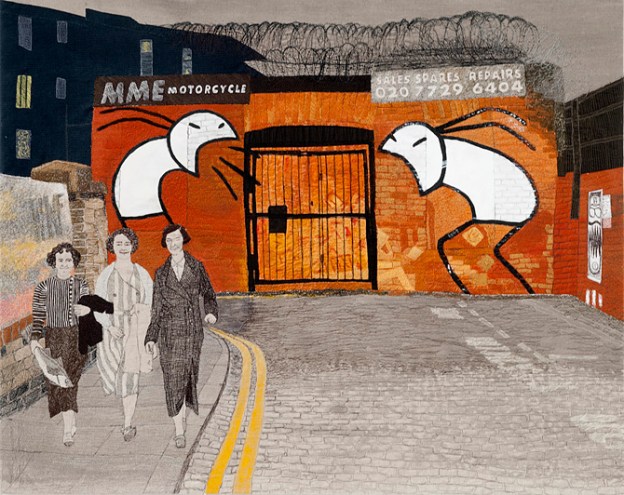
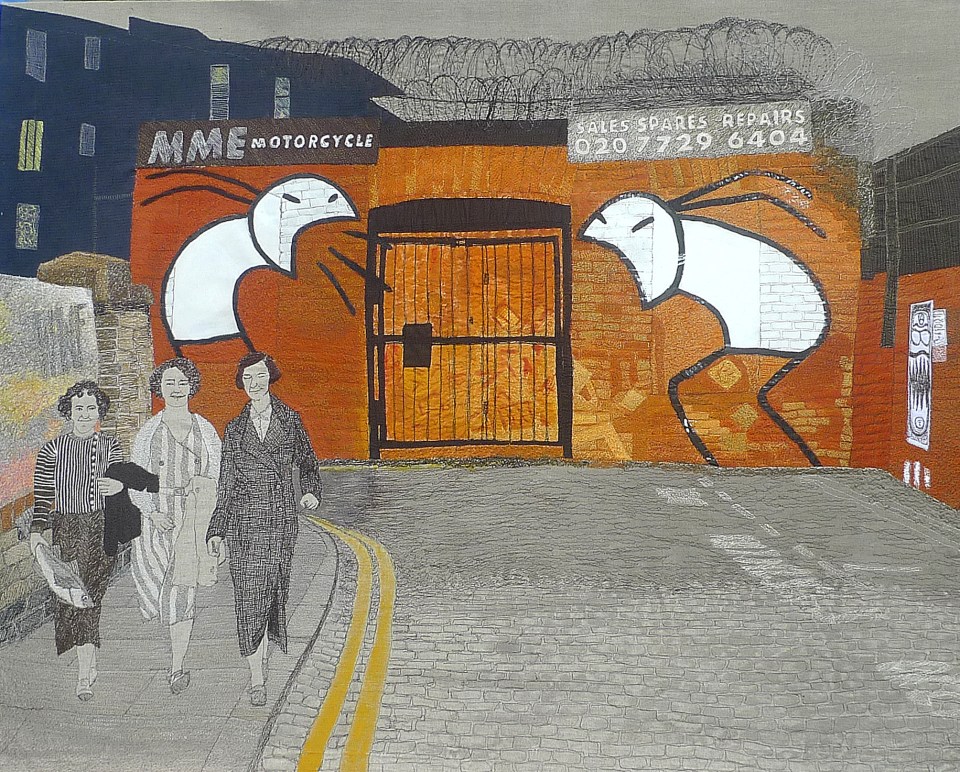
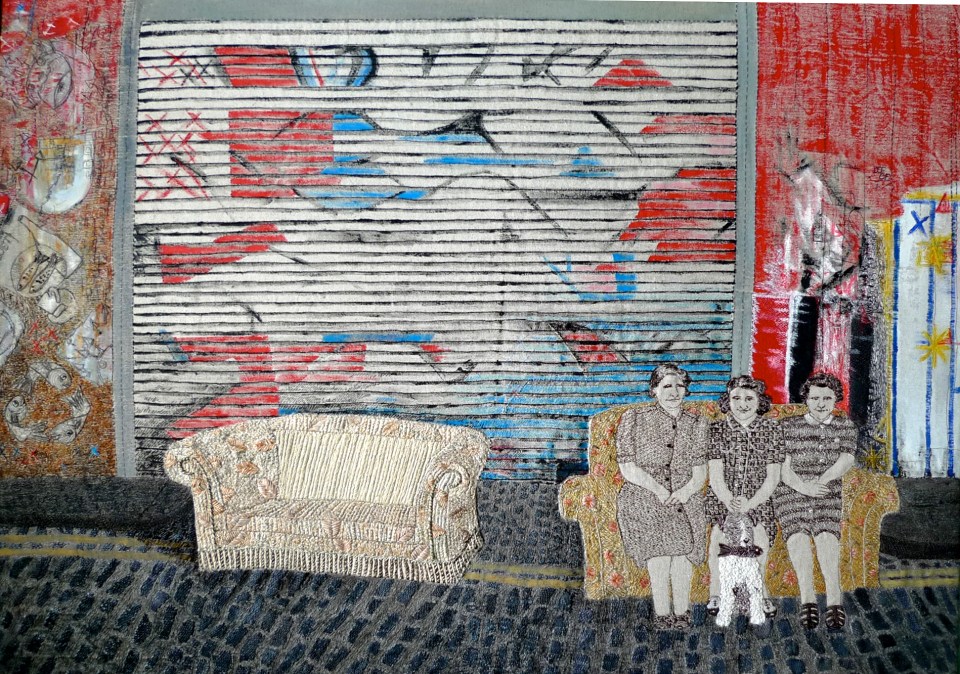
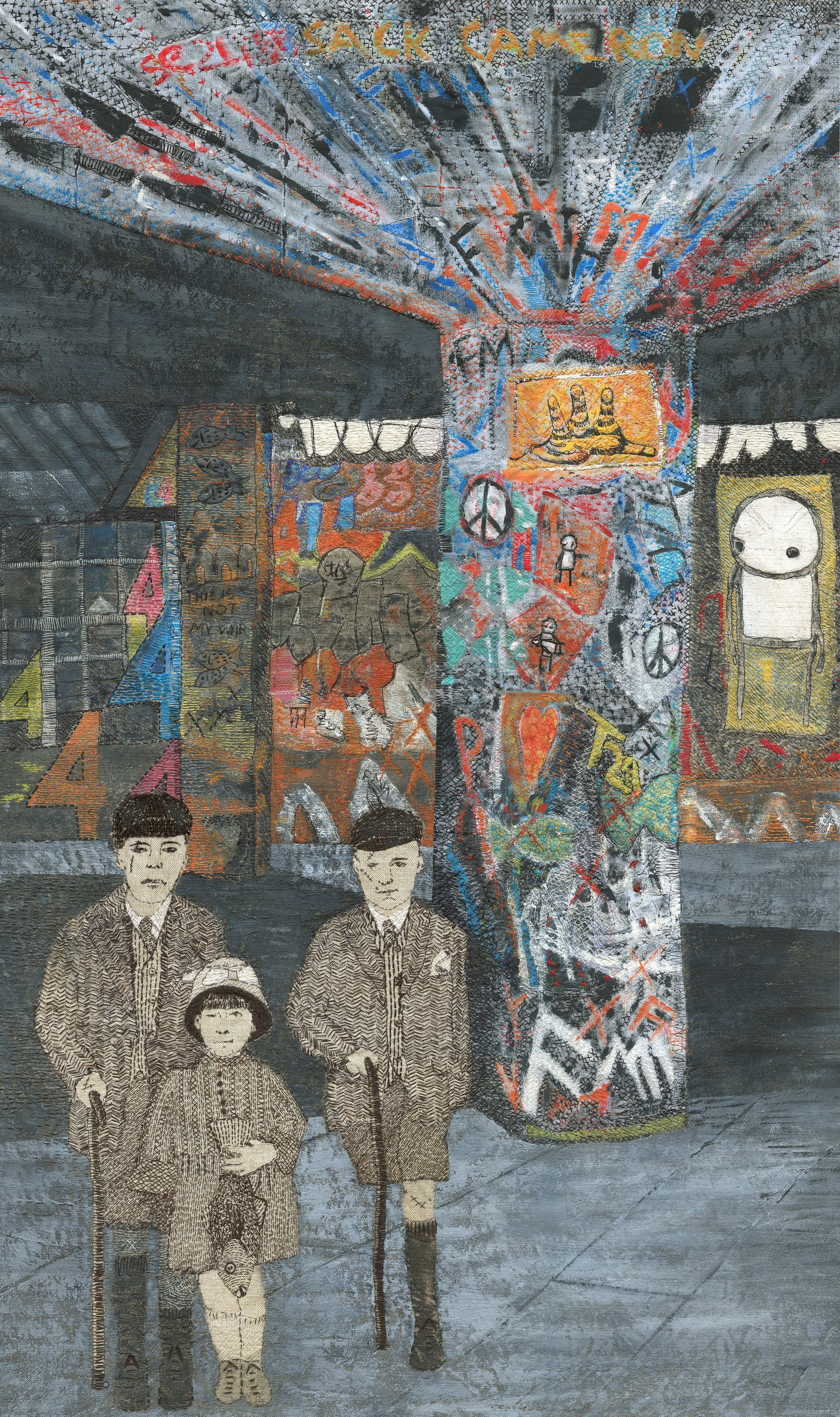
A Girl’s Day Out in the East End for Hilda, Nellie and Ida
mixed media • hand and machine stitch with acrylic paint
size 128 x 102 cms
Yesterday I delivered this piece to its new home in the North East of England. I was sad to see it go so I decided to revisit how I made it, however, I am very happy that it has gone to such a good home with new owners who love it so much. It was made in 2012 for one of the 50th Anniversary exhibitions by the 62 Group of Textile Artists ’62@50′ at the Holden Gallery at Manchester School of Art.
This is my Artist Statement for that exhibition.
Exploring displacement using old family photographs, images of distant relatives I never knew, cut into to a modern day environs, Girls Day Out enquires into and questions, the sense of belonging/not belonging whilst referencing the passing of time and the transience of life itself.
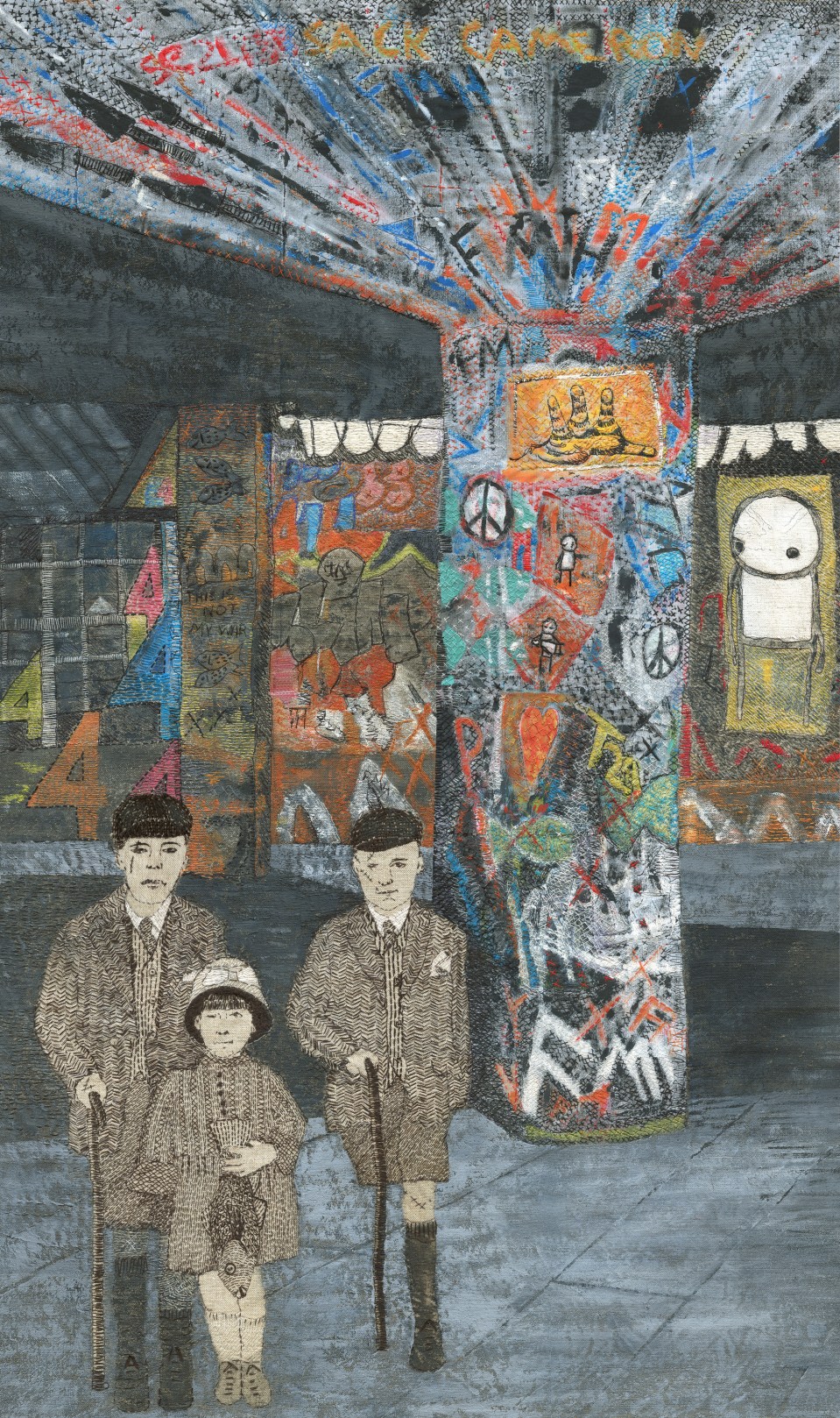
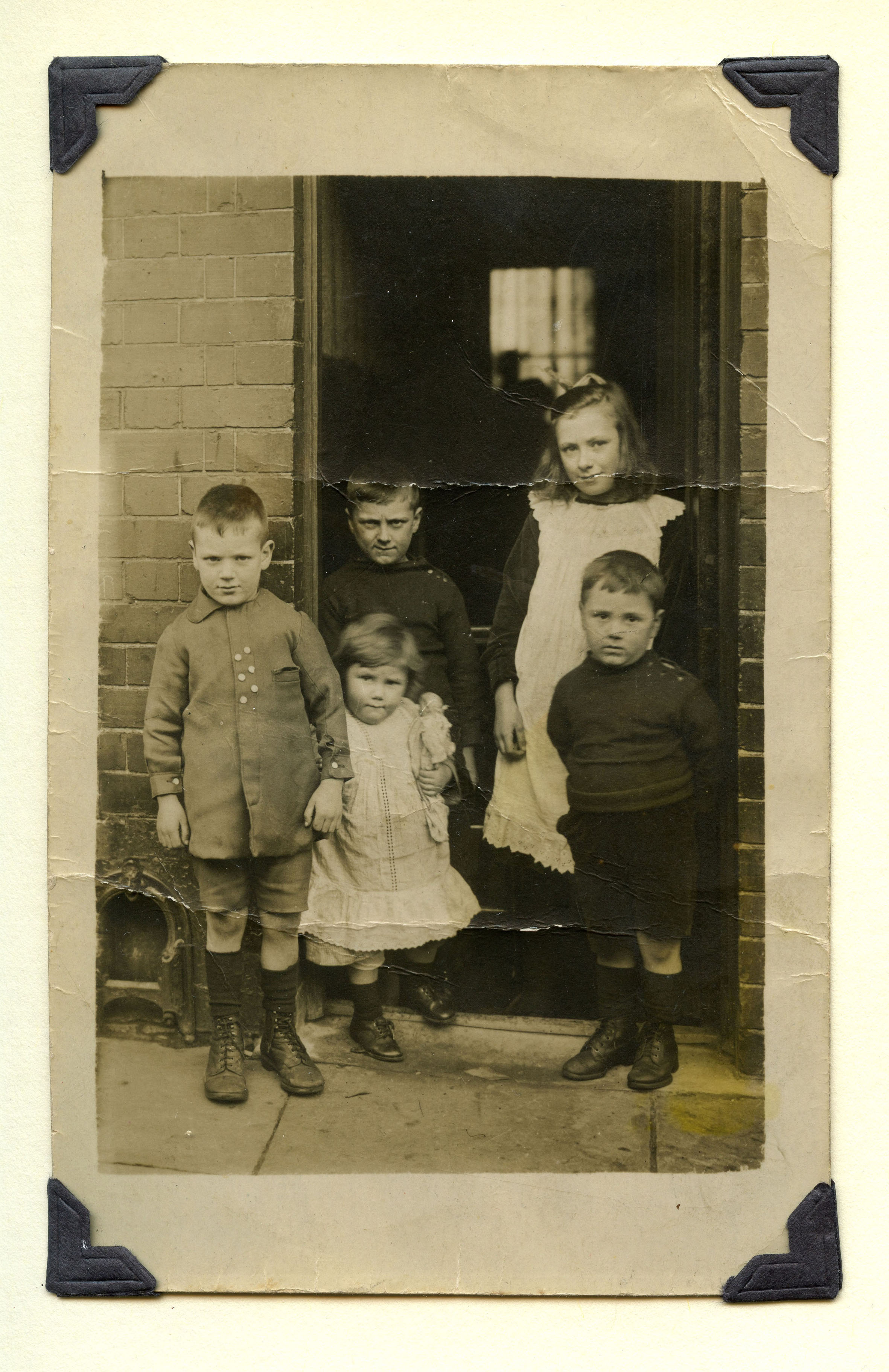
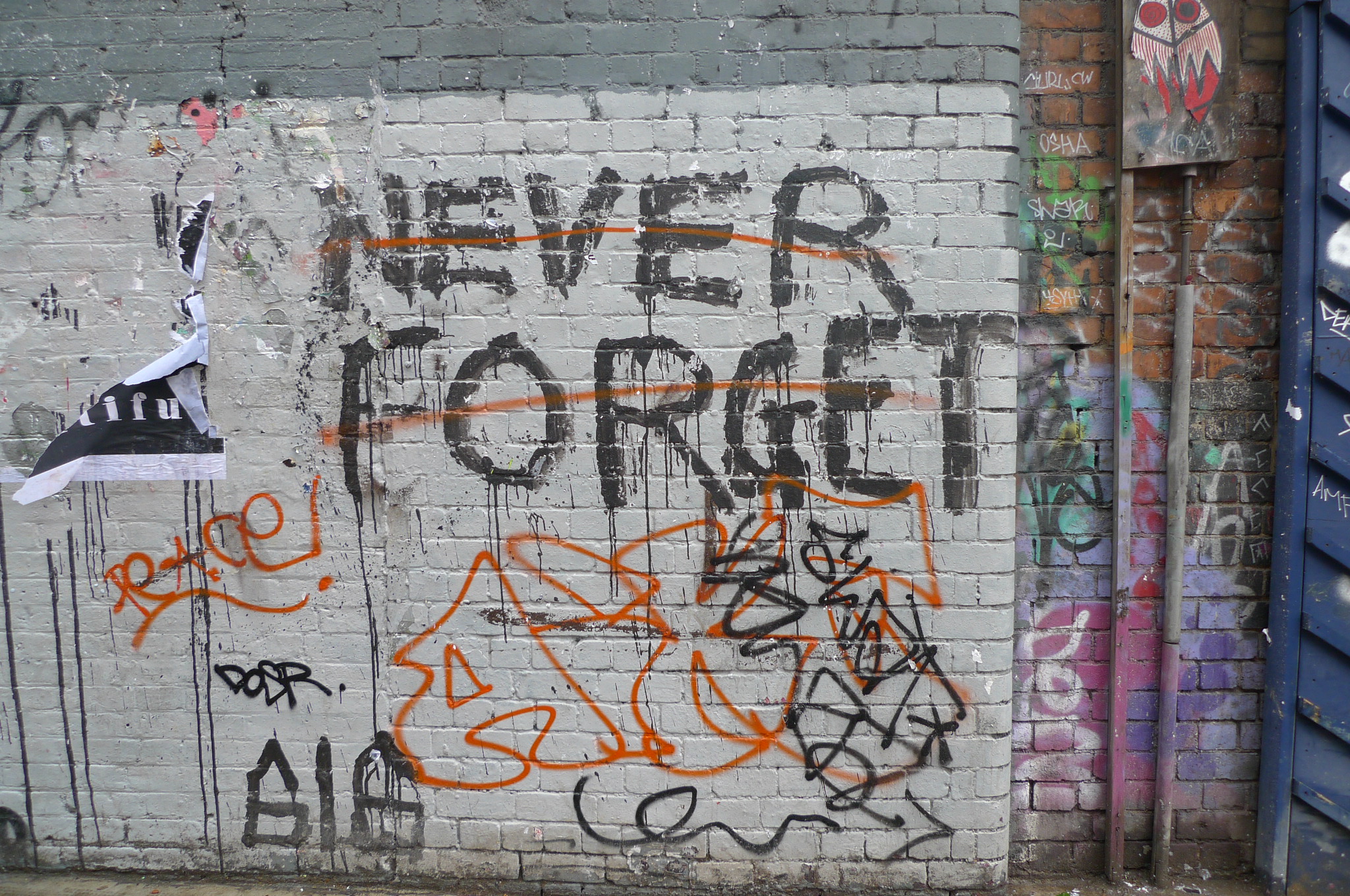
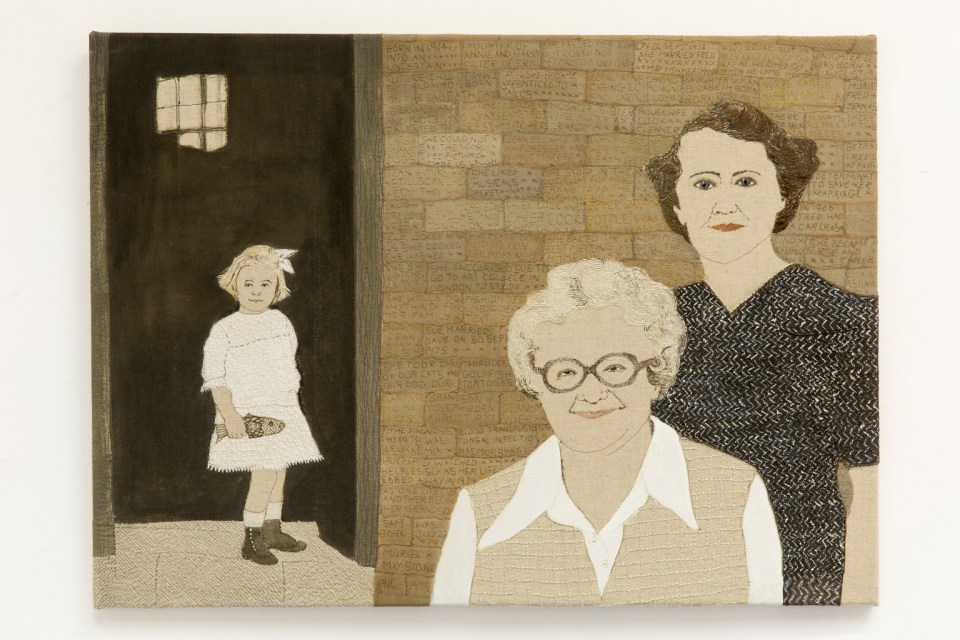
Hilda, Nellie and Ida were 3 sisters and Ida, the tall, elegant one on the right was my sister’s mother-in-law. This piece combined the then, the now and alludes to a journey in-between. The street art in the background is by an artist called Stik and was found in Grimsby St London, E2 in 2011. The images above are the original images I combined to make the work and those below are of the work in progress.
I am delighted to be showing my work in ‘Making Space’ an exhibition by the 62 Group of Textile Artists. The exhibition at Macclesfield Silk Museum runs until 3 September 2016.
A Gallery of Work made in 2015
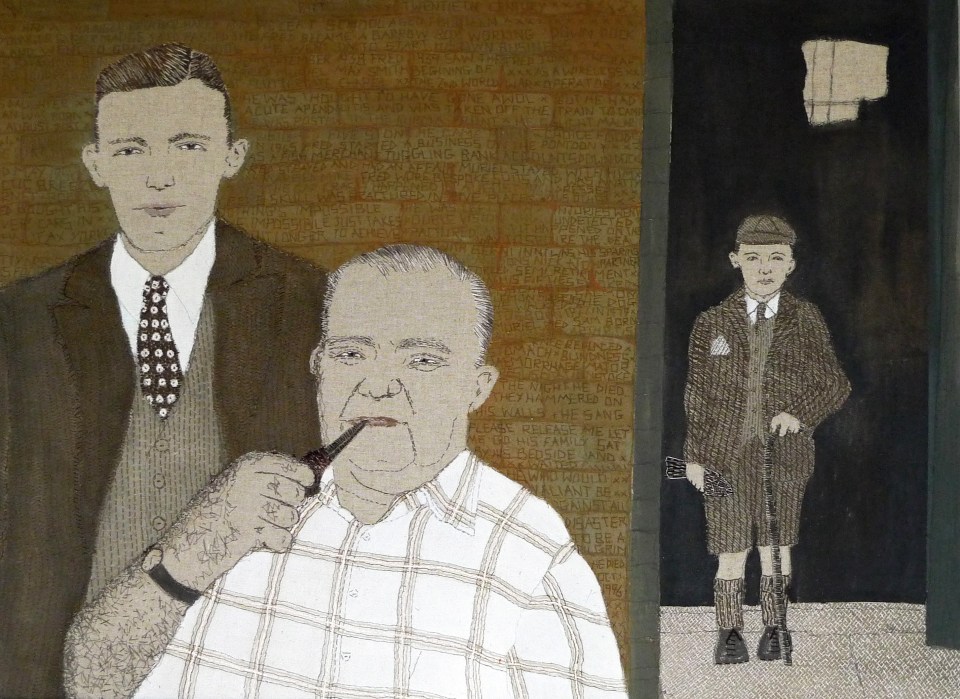
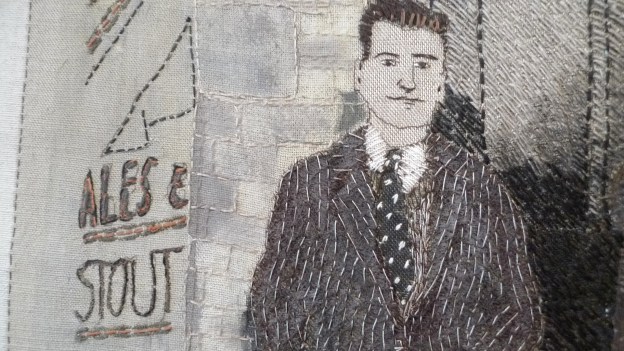
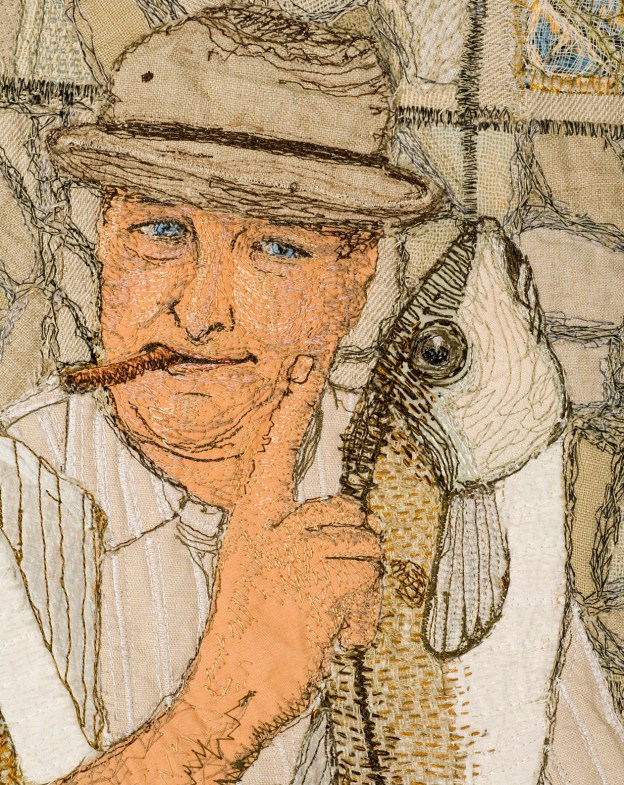
Most of the year 2015 was taken by the making of 63 • a Self Portrait made up of 63 images but I did manage to fit in a couple of other pieces. I began the year by making a partner piece for Portrait of a Grimsby Girl 2014 which was called Portrait of a Lincolnshire Lad a triple portrait of my Dad. It measures 76 x 55 cms and is mixed media : hand and machine stitch with paint.

Portrait of a Lincolnshire Lad 2015
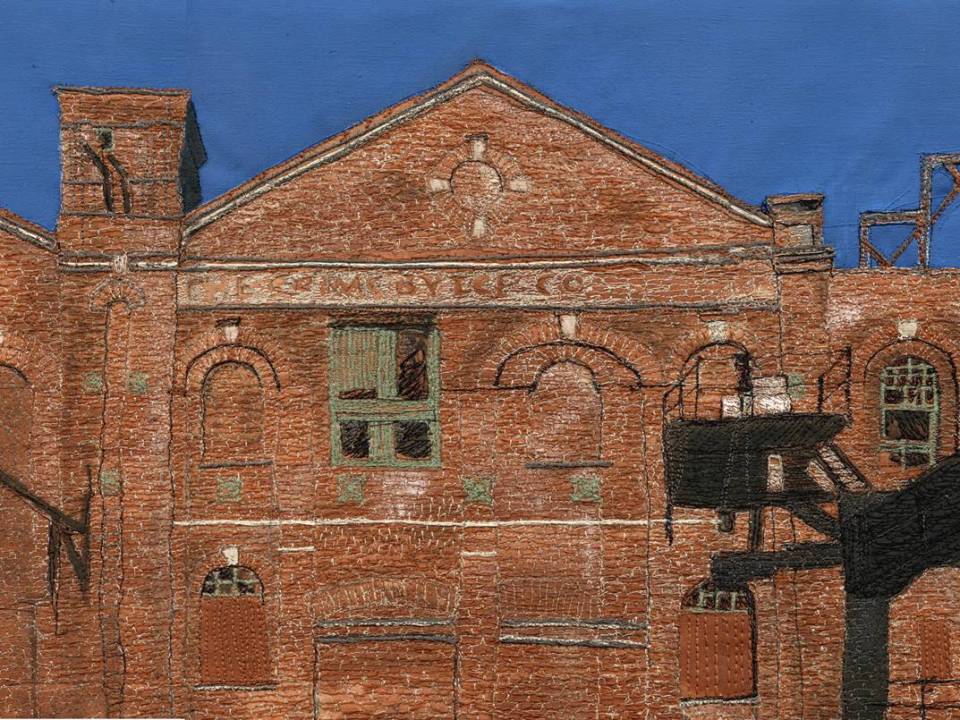
I also managed a commission of Great Grimsby Ice Factory.

Great Grimsby Ice Factory 2015
About 63
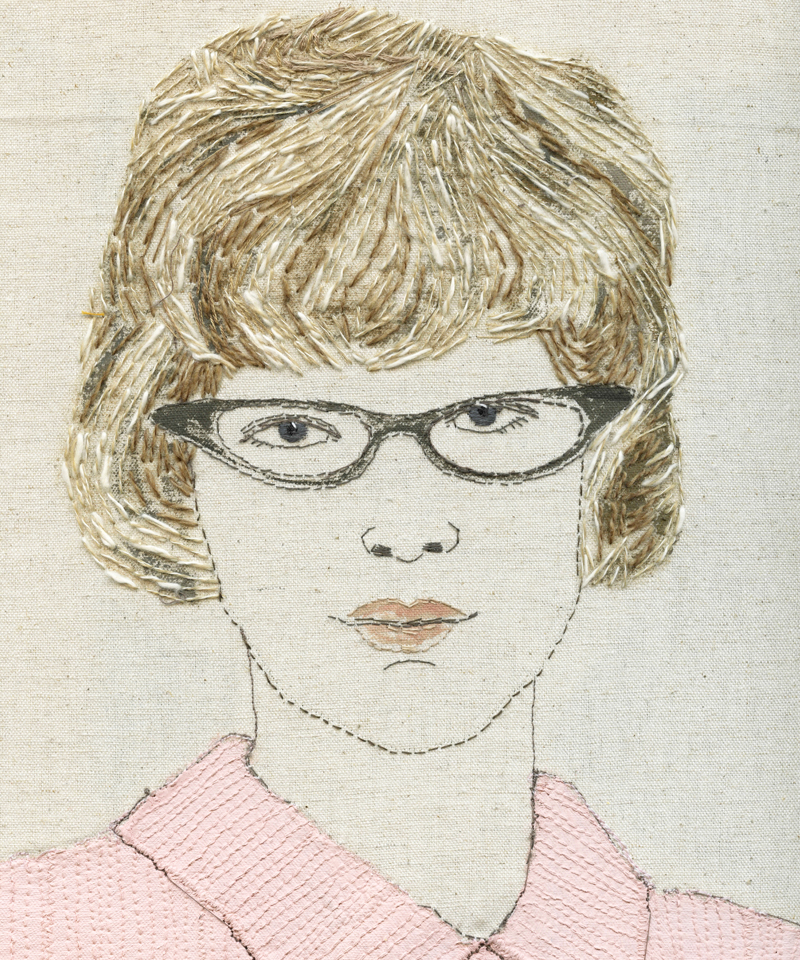
63 is a self-portrait made up of 63 images, one for each year of my life so far. So why put myself through all this work, and, to be perfectly honest, the angst of self examination, a replaying of all the ups and downs of life?
There were several reasons, but the main one was that I was asked to take part in a self-portrait exhibition in 2015 and I was given a 6 metre wall to fill!
For this I had to work to a deadline and that in turn forced me to look at the way I work and helped me find a simplification of my mark-making.
I didn’t finish it in time as my thought process was slower than expected and so it was shown as work in progress. Numbers 1 to 42 were shown.
Numbers 1 to 57 were completed in 2015 and are shown below.

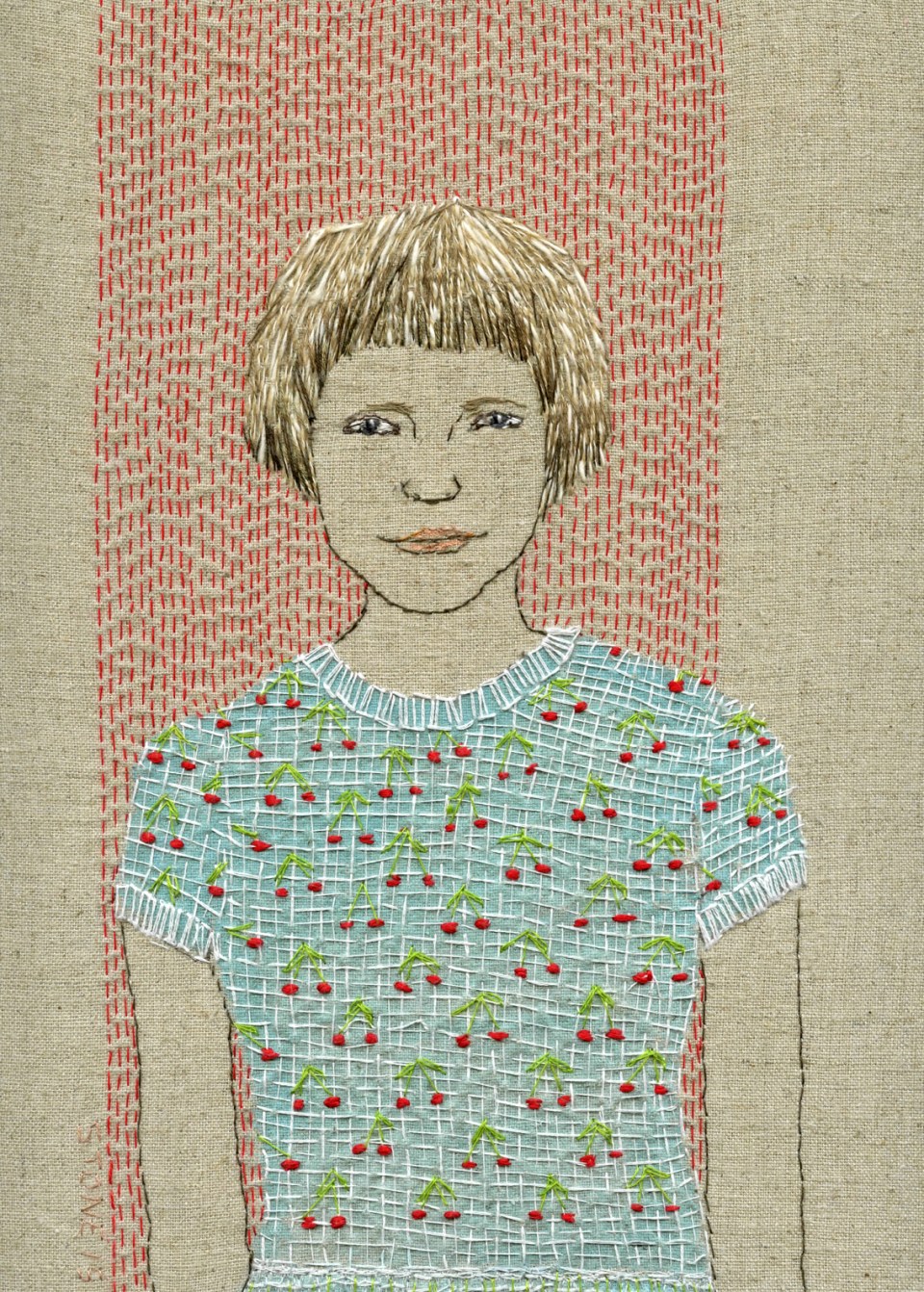
Life is Just a Bowl of Cherries
I’m proud to say that Life is Just a Bowl of Cherries 2015 shown above is now part of the prestigious Diana Springall Collection . It measures 25.5 x 30.5 cms.
Exhibitions 2015
Society of Designer Craftsmen Christmas Market – 14 – 20 December – Mall Galleries, London
Illustrative and Stitched Drawings – 28 November – 10 January 2016 , Customs House Gallery, South Shields, Tyne & Wear, UK
New Textiles Transformed – 3 October – 7 November – Mobilia Gallery, Cambridge, USA
Shifting Images – 8 September 2015 – 7 February 2016 FHC, Grimsby, N E Lincs, UK
Face the World – 12 October – 25 October Sam Scorer Gallery, Lincoln
Festival of Quilts – 6 August – 9 August – NEC Birmingham with Through Our Hands
62 Group • NOW! -17 March – 10 May Upfront Gallery Cumbria
Designer Crafts at the Mall – 8 January to 15 January, Mall Galleries, London
It’s been long time coming and we’ve been the butt of many a recent film and TV joke; in fact it goes all the way back to Music Hall days but as you can see from this fantastic new blog who have kindly featured my work, some of us are indeed trying to put the Great back in my hometown of Great Grimsby.
The straw that broke the haddock's back
Woman With a Fish, AKA Sue Stone, is a totally unique and original Grimsby voice. An artist and maker who works in hand stitch, machine embroidery and mixed media to juxtapose often gritty modern urban scenarios and graffiti art with between the wars, homely, nostalgia. The medium of thread making the contrast both jarring and engaging. It’s also funny, but in an odd sort of a way, as opposed to rolling round the floor in err… stitches. The quirky humour coming from a meme sewn into all of Stone’s work, which is the fact that at least one of her subjects is always carrying a fish. An all to common occurrence in this part of the world.
Big fish, little fish… hey we forgot the cardboard box again.
She is current chair and exhibiting member of the 62 Group of Textile Artists and Fellow of the Society of Designer Craftsmen. Born in Grimsby, Sue Stone studied Fashion at St Martins School of…
View original post 46 more words

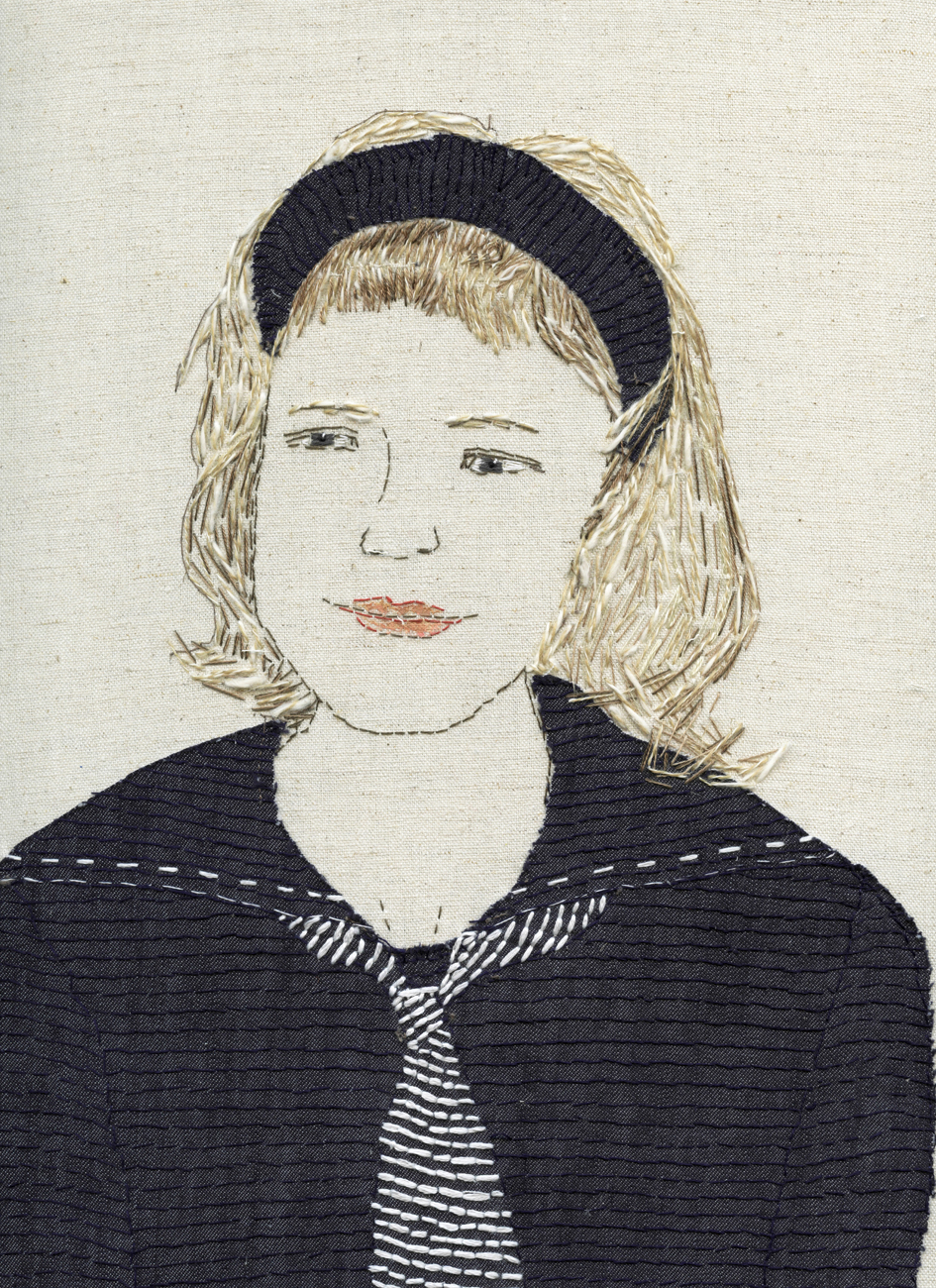
Portrait of a Grimsby Girl 2014
Portrait of a Grimsby Girl 76 cm x 55 cm + Book 29 cm x 26 cm
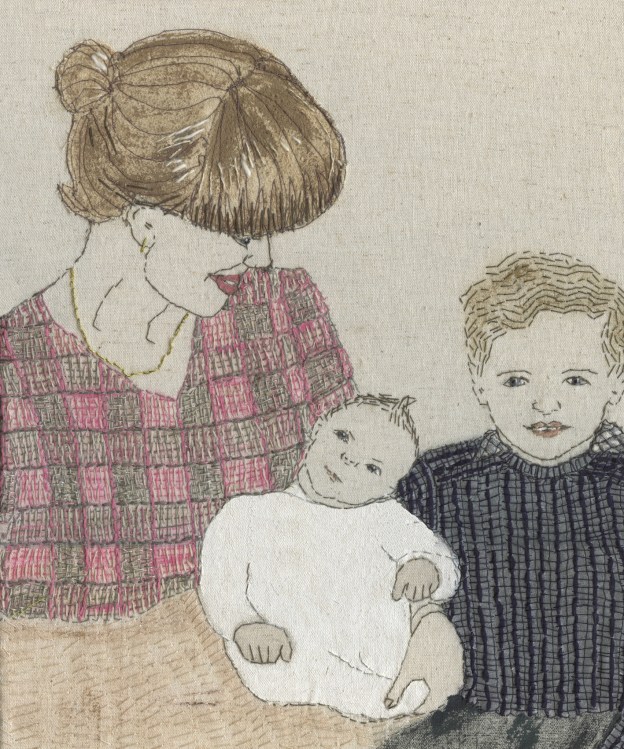
Statement about work 1: 2014 marks the centenary of her birth. The usual ups and downs of life preceded the diagnosis, in 1978 of a rare form of Leukaemia. In 1979 her family watched helplessly as her life ebbed away. As one life ends another begins. 3 weeks later her grandson, Sam was born.
Materials: cotton/ linen fabric, cotton threads, fabric and acrylic paints, bondaweb
Techniques: hand and machine embroidery, painting, bonding
Photo credit: David Ramkalawon
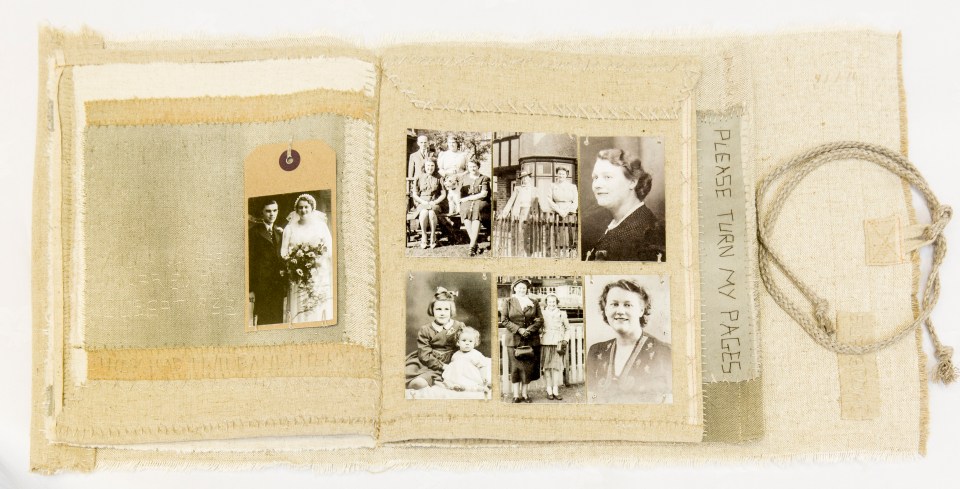
Portrait of a Grimsby Girl Book 2014
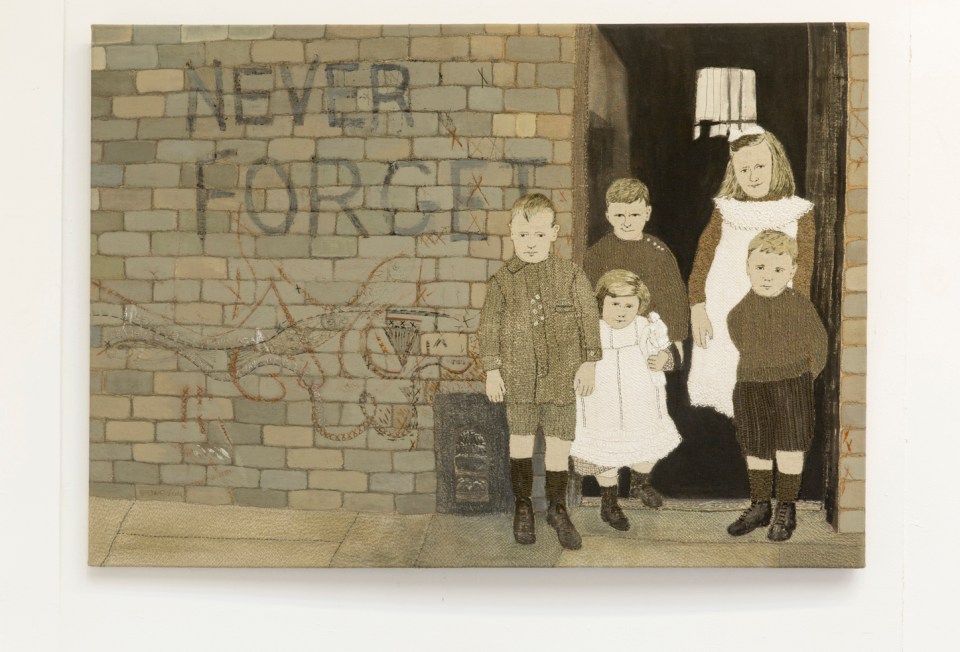
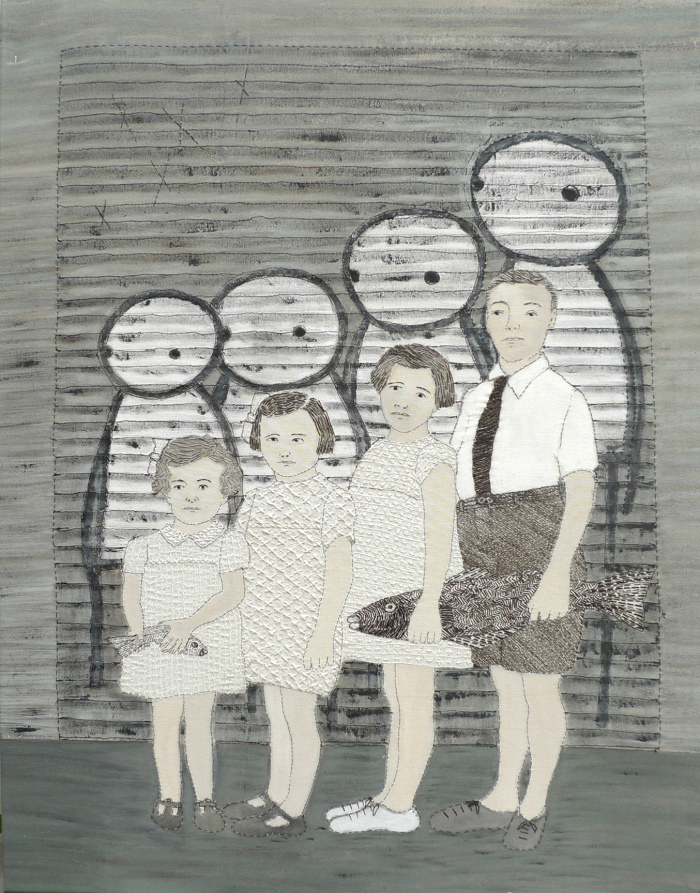
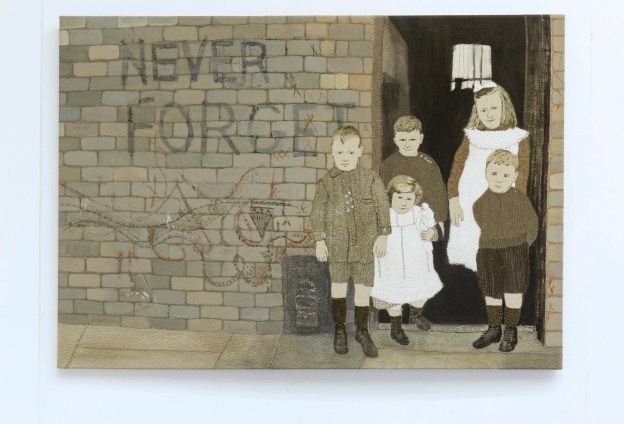
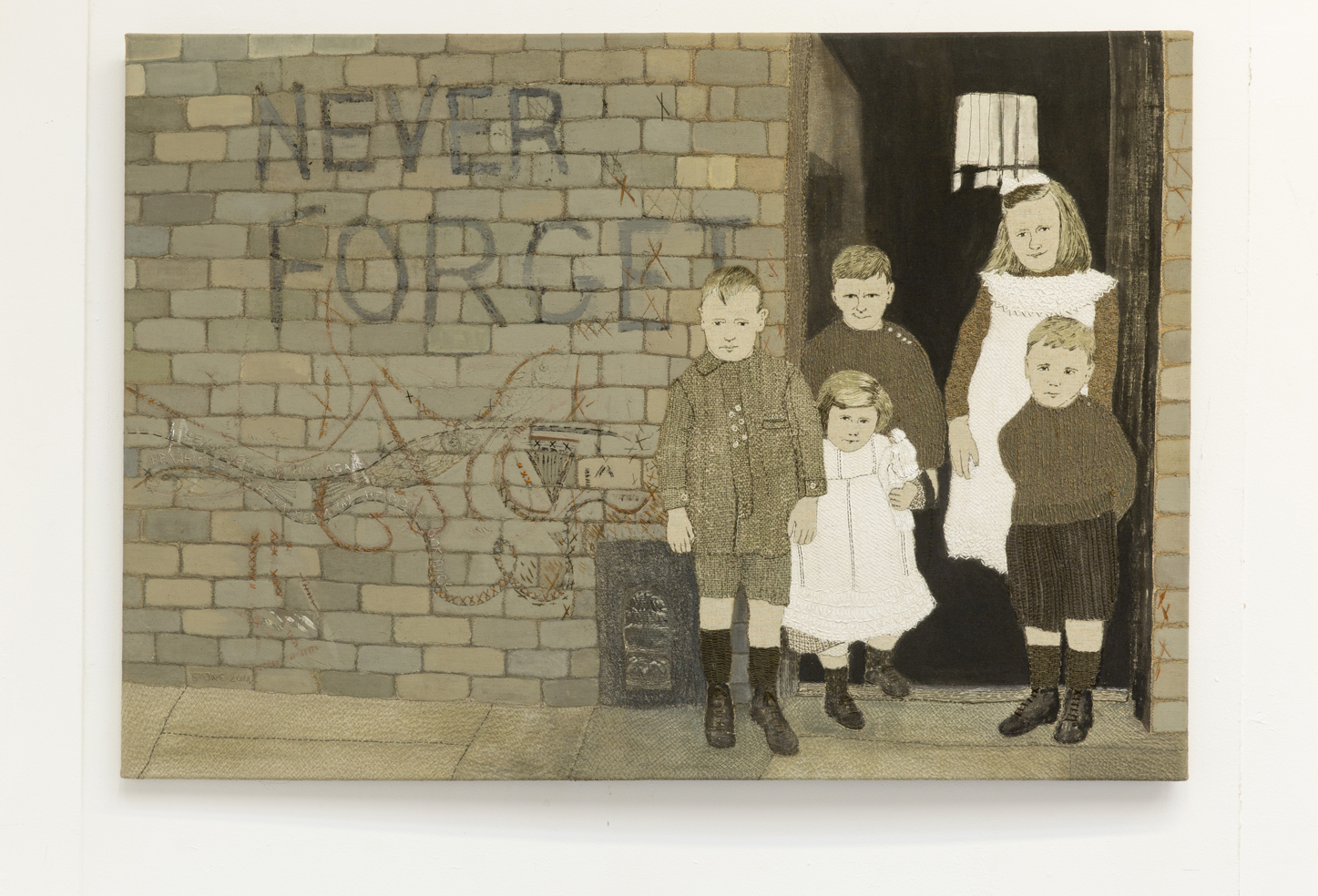
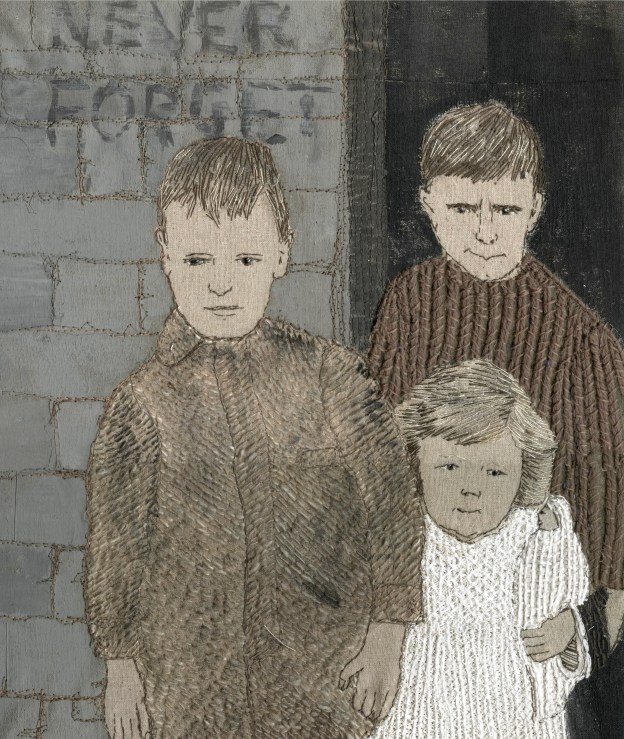
The Unknown Statistic
The Unknown Statistic 100 cm x 70 cm
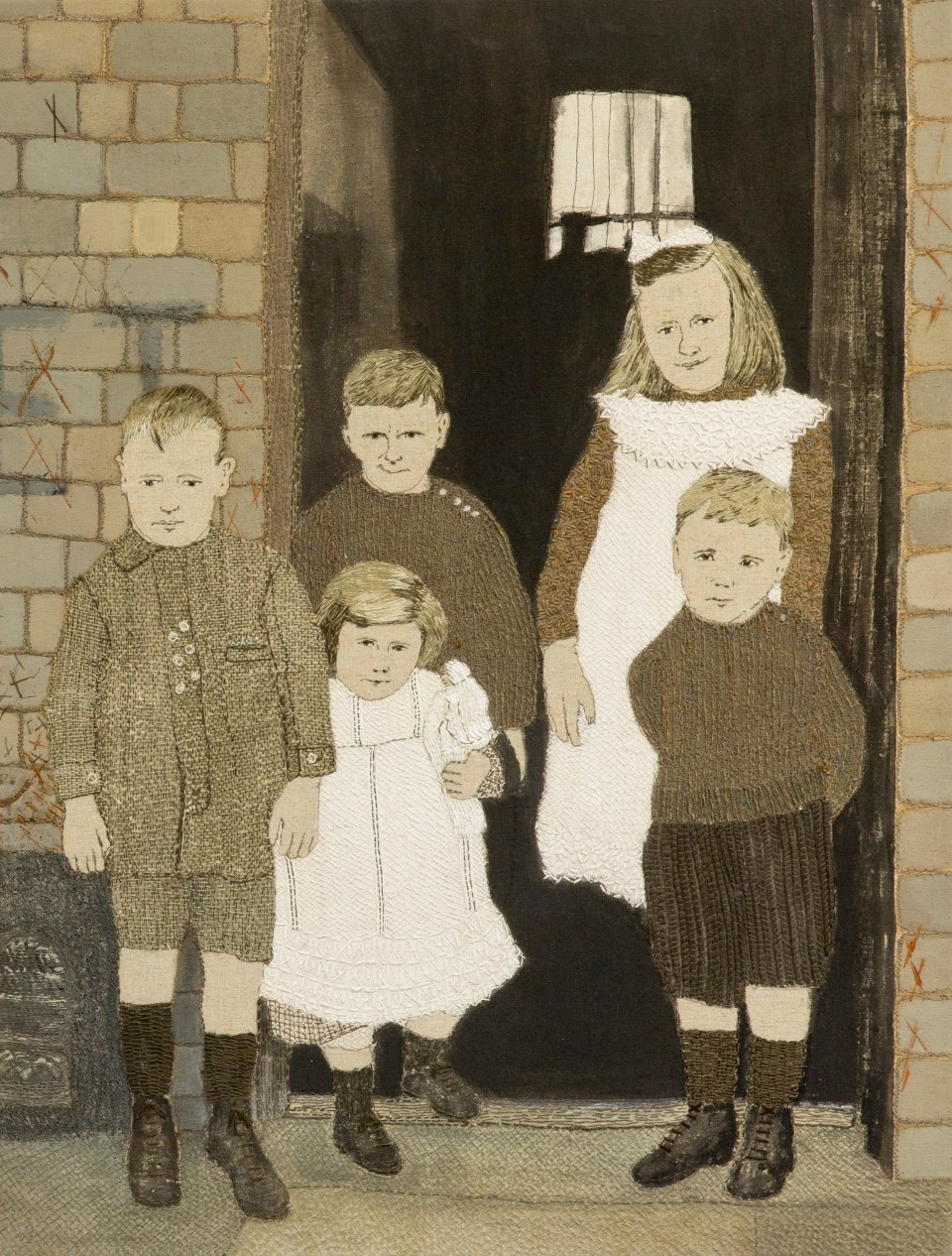
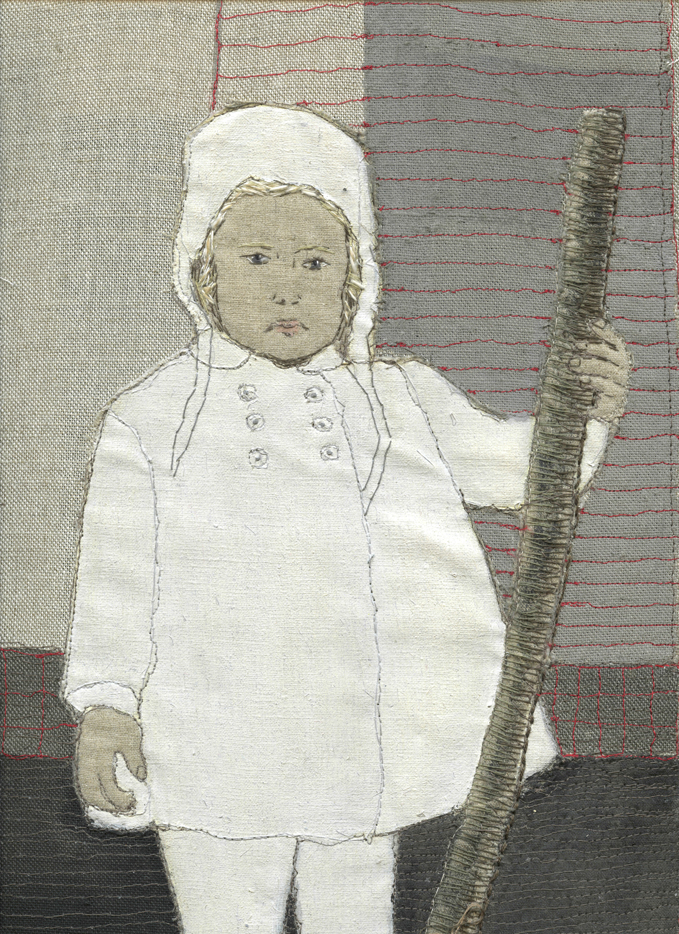
Statement about work: They stood in the doorway and watched. He whistled as he walked away. He didn’t look back and they never saw him again. The number of children left fatherless by WW1 was not accurately recorded either nationally or locally. Memories fade. Their young lives went on but were changed forever.
Materials: cotton/ linen fabric, cotton threads, fabric and acrylic paints
Techniques: hand and machine embroidery, painting
Photo credit: David Ramkalawon

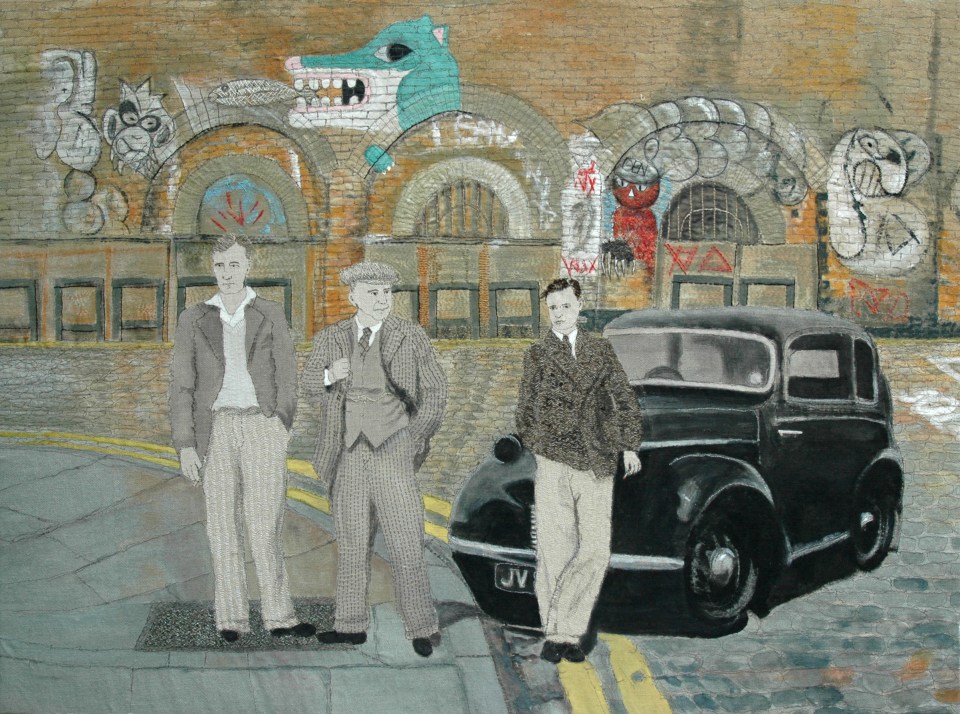
The Boys Go to London Town
mixed media • 122 x 92 cms
A Group of small studies made in 2013

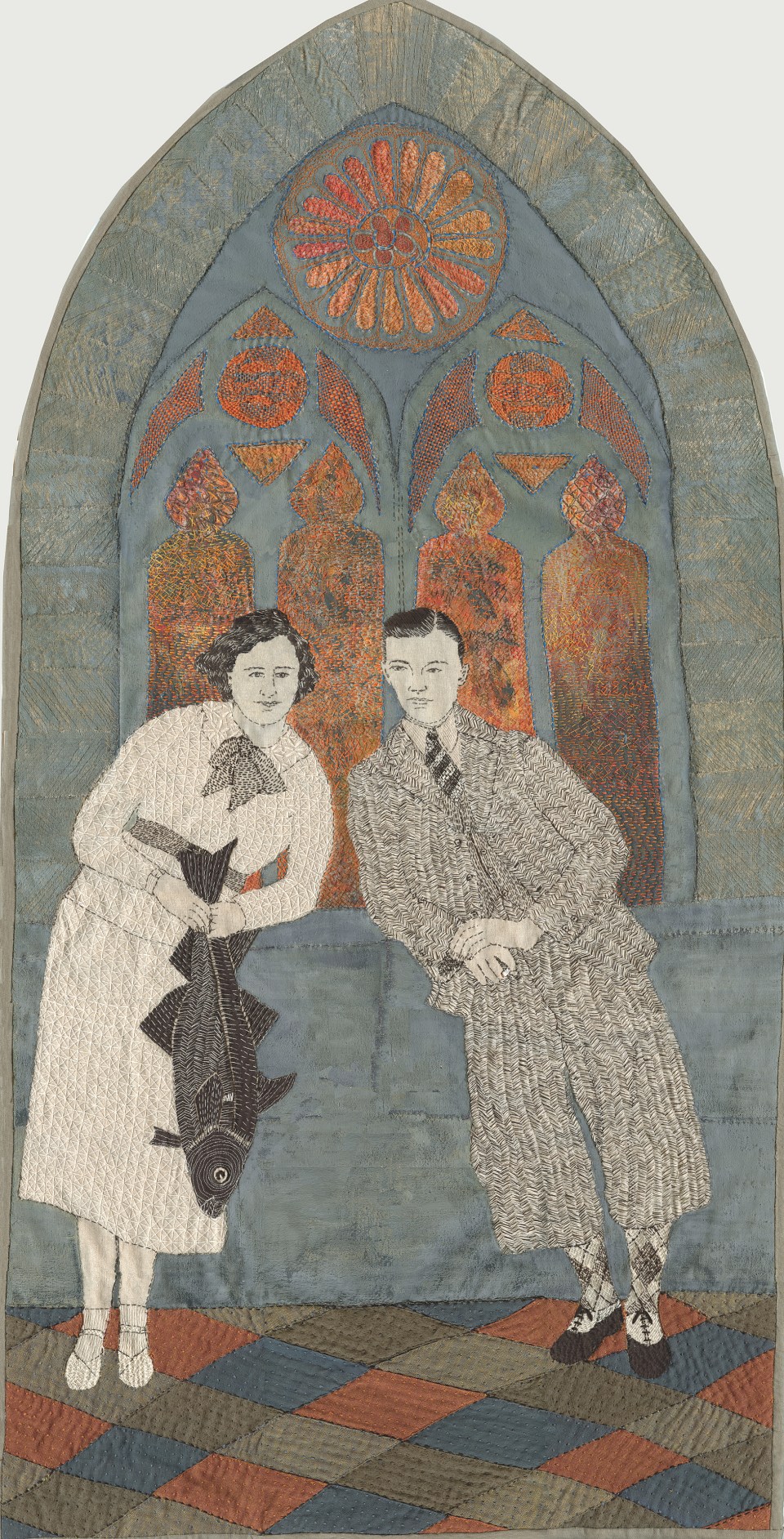
Do You Come Here Often? 2013
As usual my subject matter comes from close to home and I have combined three images. My Mum, my Dad and a church window are the component parts of the composition.
The piece is about my parents early courtship.
He was always a snappy dresser who was a Fish Merchant when Grimsby was known as the ‘Klondyke of the East Coast’. Working his way up he was first a barrow boy and then a filleter before starting his own business. She was a talented tailoress with a rich, and vibrant contralto voice and from a staunch Methodist family.They often met at Flottergate Methodist Church where she was in the choir.
My sister and I have a theory that he only joined the Men’s society so that he could court my Mum. They were married in 1939 when she was 25 years old.
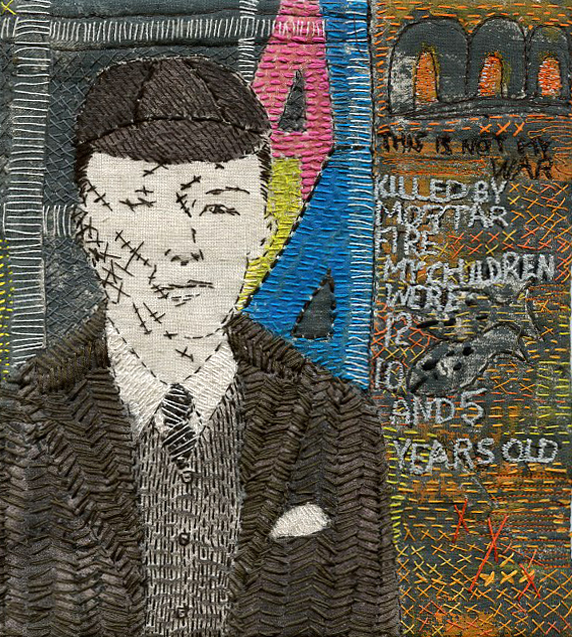
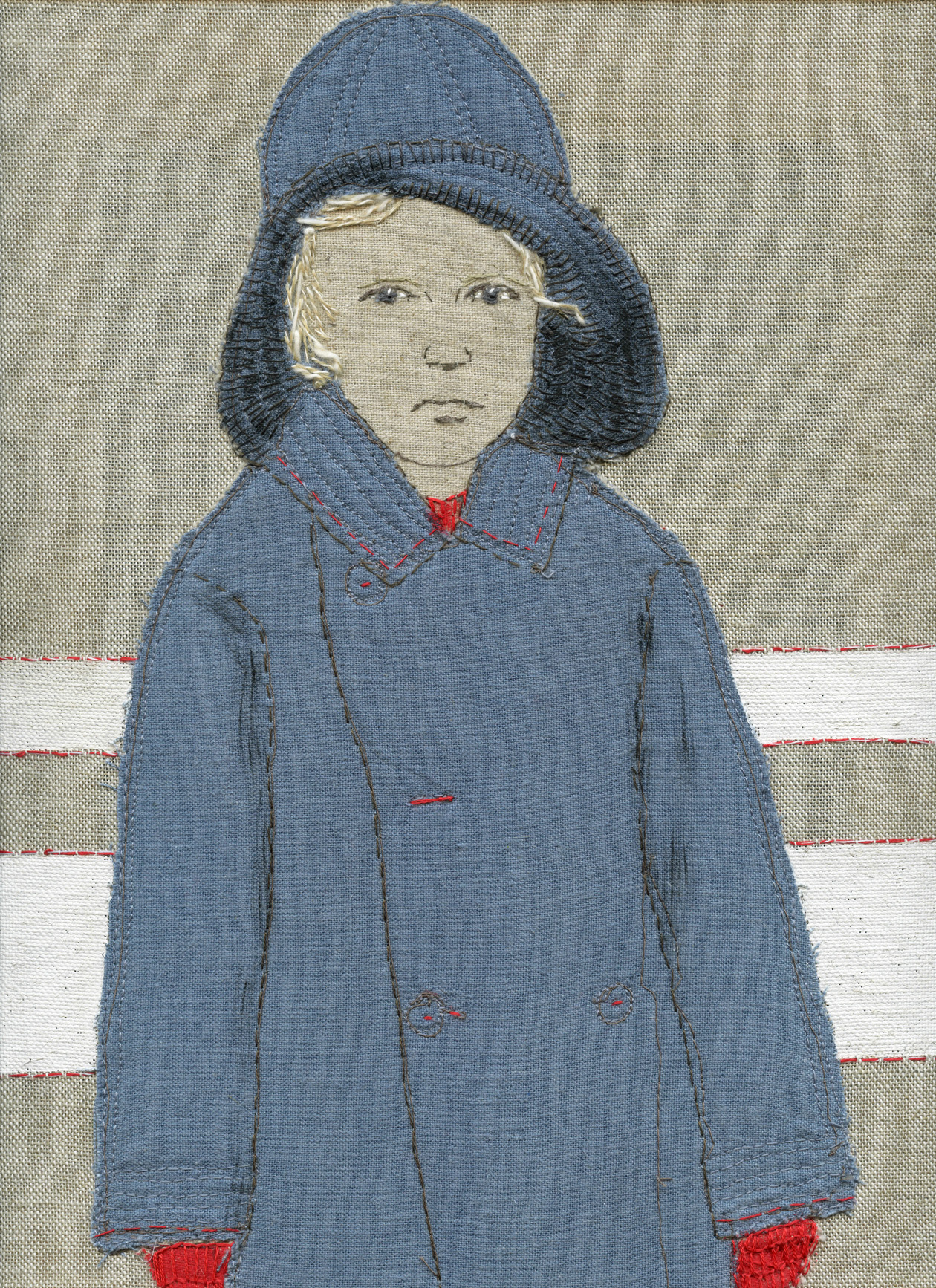
The Universal Child 2013
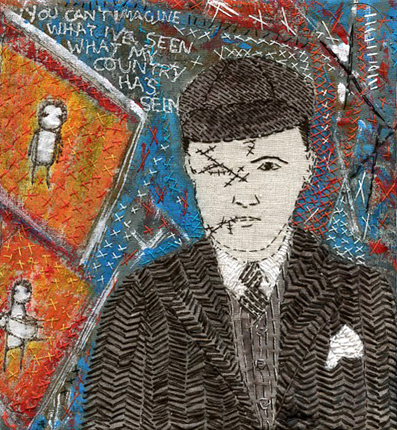
Statement for ‘The Universal Child’ and ’I listen to the radio and hear his voice’
Children are killed, maimed, physically and mentally scarred every day, caught up in the crossfire of senseless religious and sectarian wars
Each stitch on the recycled, linen fabric becomes a symbol of remembrance for the hundreds of thousands of lives lost. The cross-stitches used to represent the kisses those children will never receive.
On radio 4 the news is bad, the words of both bereaved mothers, and victims of horrific attacks are heartbreaking. Those words are depicted by machine embroidered graffiti.
Images of Fred, ‘The Universal Child’ and Harry,’I Listen to the Radio and Hear his Voice’ turn into a device to connect past with present and the materials used to portray them form the common link. The two boys are children of the first world war, the so-called war to end war. Almost 100 years on there is still no end in sight .
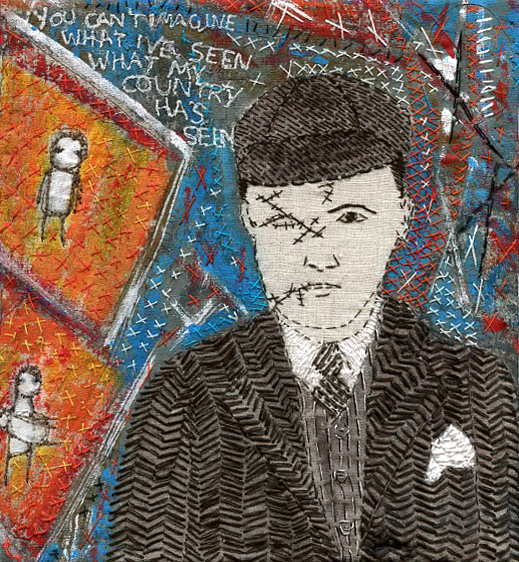
I Listen to the Radio and Hear his Voice 2013
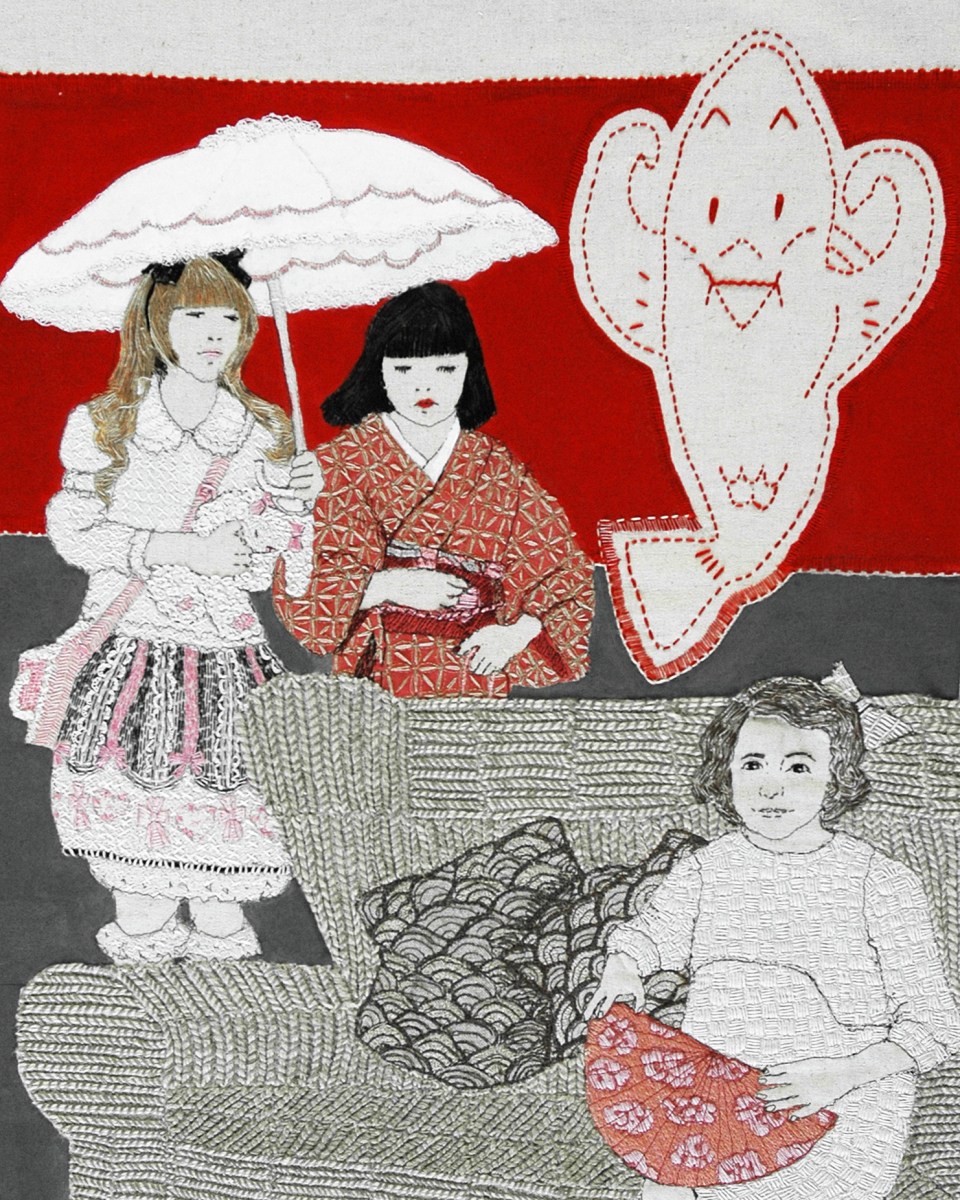
Grimsby Girl’s World Tour Stopover Tokyo 2013
A girl from Grimsby, a tuna from Tsukiji, a holiday in Harajuku combine. Travel through ethereal layers of time and place to Takeshita Street. The artist’s mother was born on 6th December 1914 in a fishing port in the UK. 99 years later this Grimsby girl meets modern day Tokyo.
Linen/cotton fabric, cotton threads, fabric paint. Hand and machine stitch, painting. 59 x 145 cms
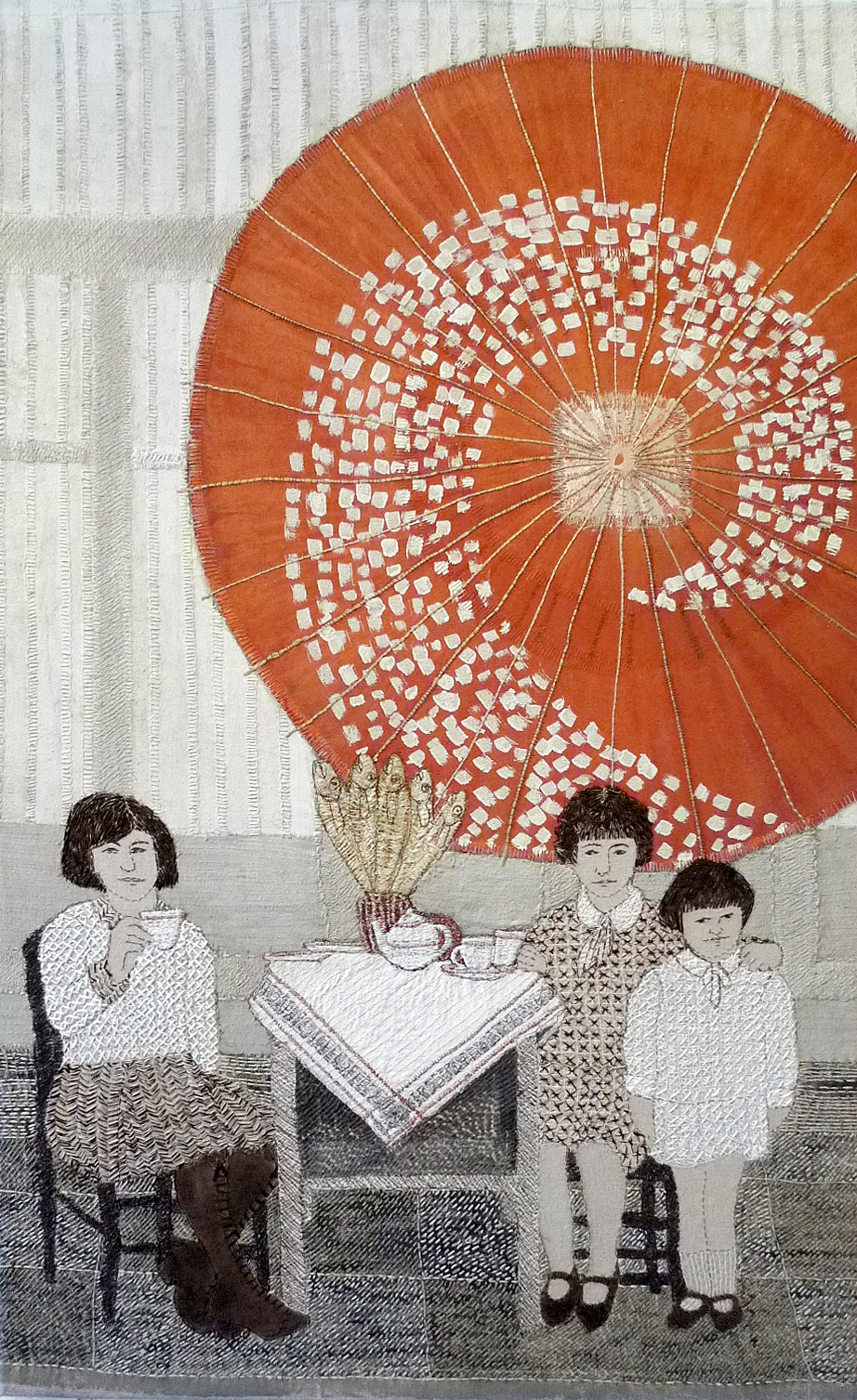
A Tea Party in Tokyo 2013
Grimsby, UK, once the world’s busiest fishing port, is the artist’s hometown. East, west, past and present, connect when three sisters from 1920s Grimsby have a tea party in Tokyo. The youngest of the three, Irene, the artist’s mother-in-law was an avid tea drinker all her life.
Linen/cotton fabric, cotton threads, fabric paint.Hand and machine stitch, painting. 60 x 115 cms
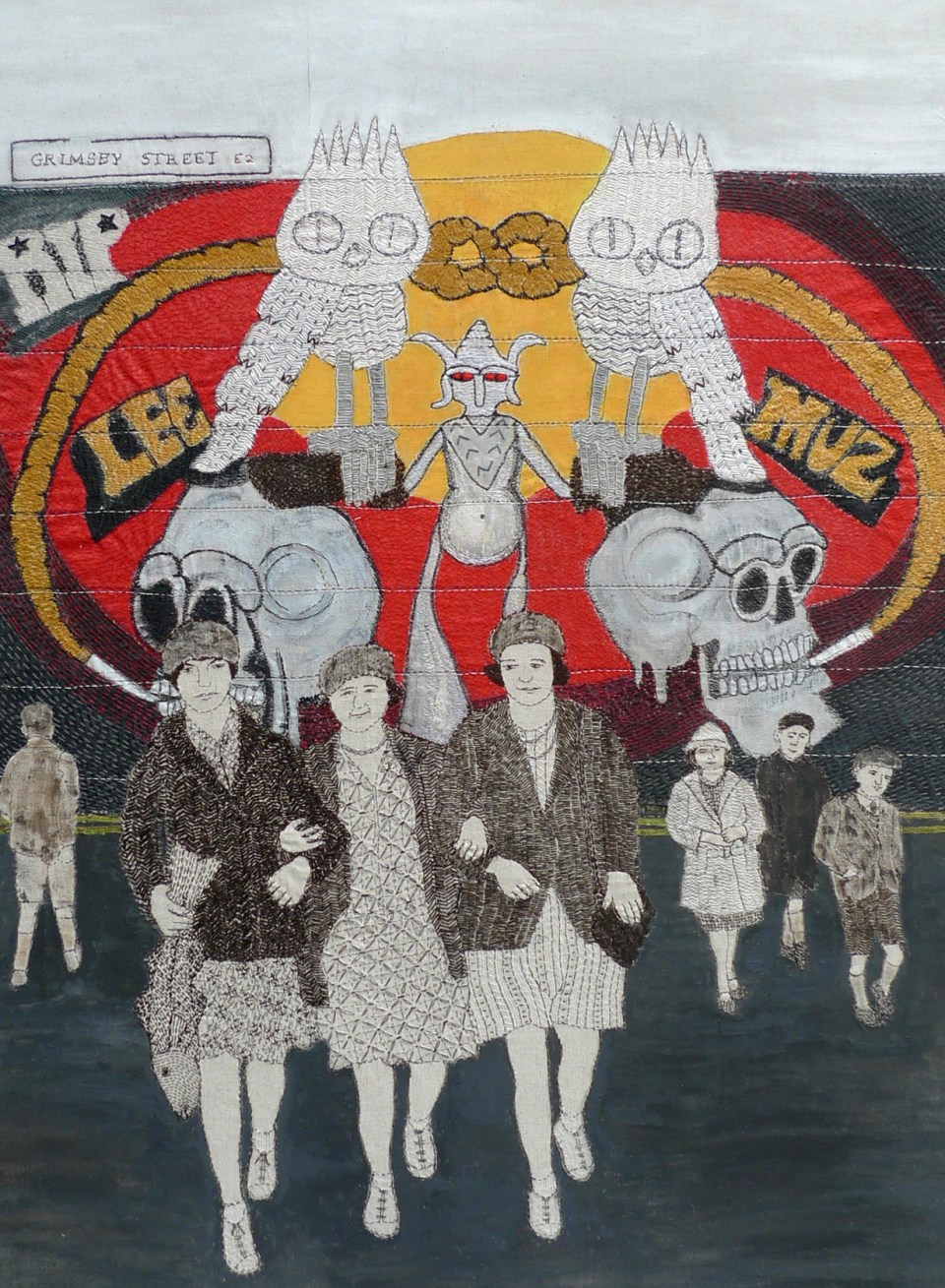
RIP Grimsby St E2 version 2 2013
Retrospective • an Archive of Work 2017
Retrospective • an Archive of work 2016
Retrospective • An Archive of work from 2015
Retrospective • An Archive of work from 2013/14
Retrospective • An Archive of work from 2011/12
Retrospective • An Archive of work from 2009/10
Retrospective • An Archive of work from 2007/8
Retrospective • An Archive of work from 2003 to 2006
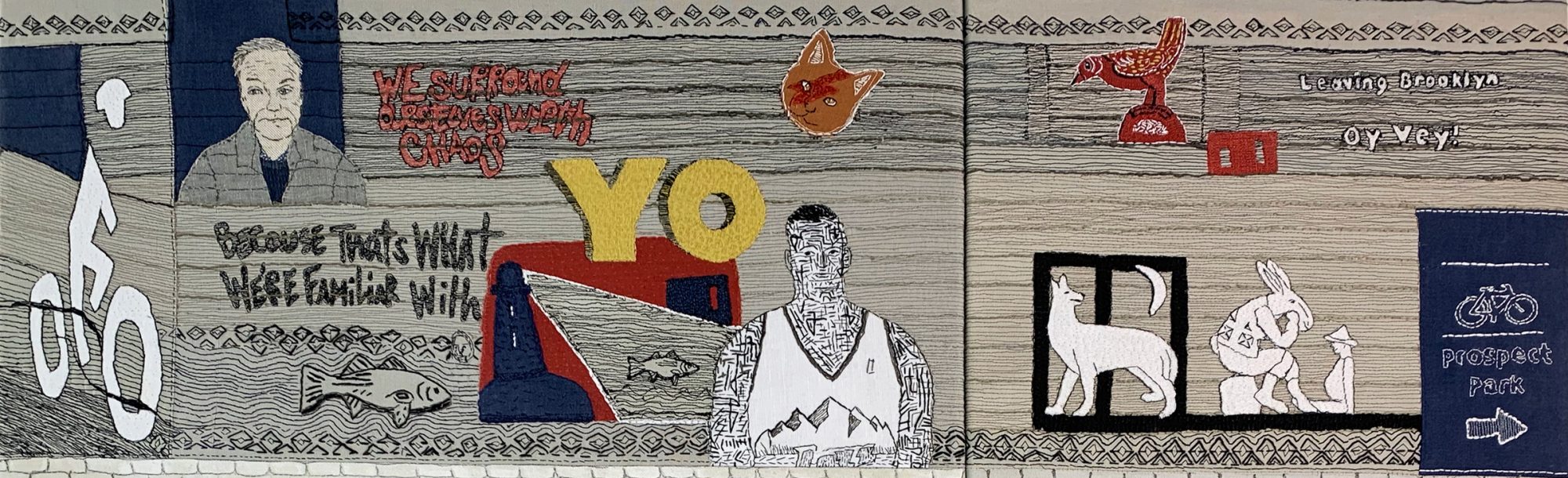
Some Things Never Change 2012
Children of the First World War, the so-called ‘war to end war’ commemorate the plight of children worldwide.
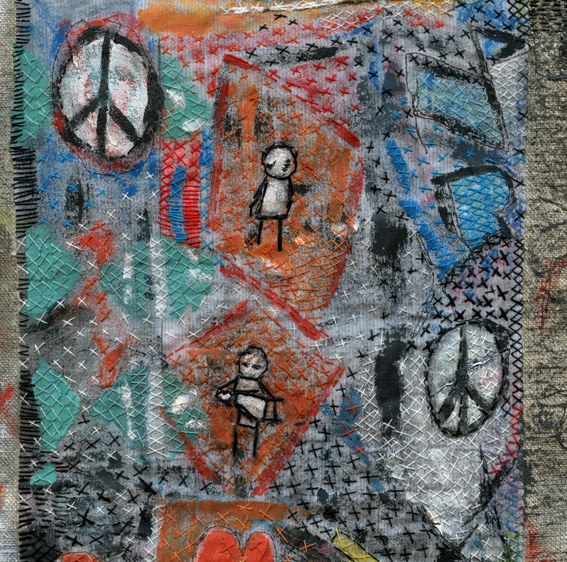
Thousands of kisses on a concrete pillar will never be received.
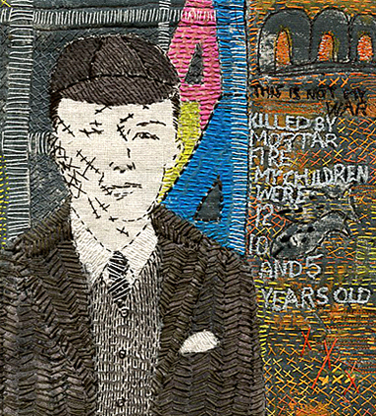
Cut to 2012. A mother sobs. This is not her war.
Killed by mortar fire, her children were 12,10 and 5 years old.
Materials: Window cleaning linen, applied recycled shirting.
Technique: hand and machine stitch, acrylic paint, appliqué.
First shown at the Knitting & Stitching Shows 2012.

Homage to Nicholson 2012

Weekend in Barcelona 2011
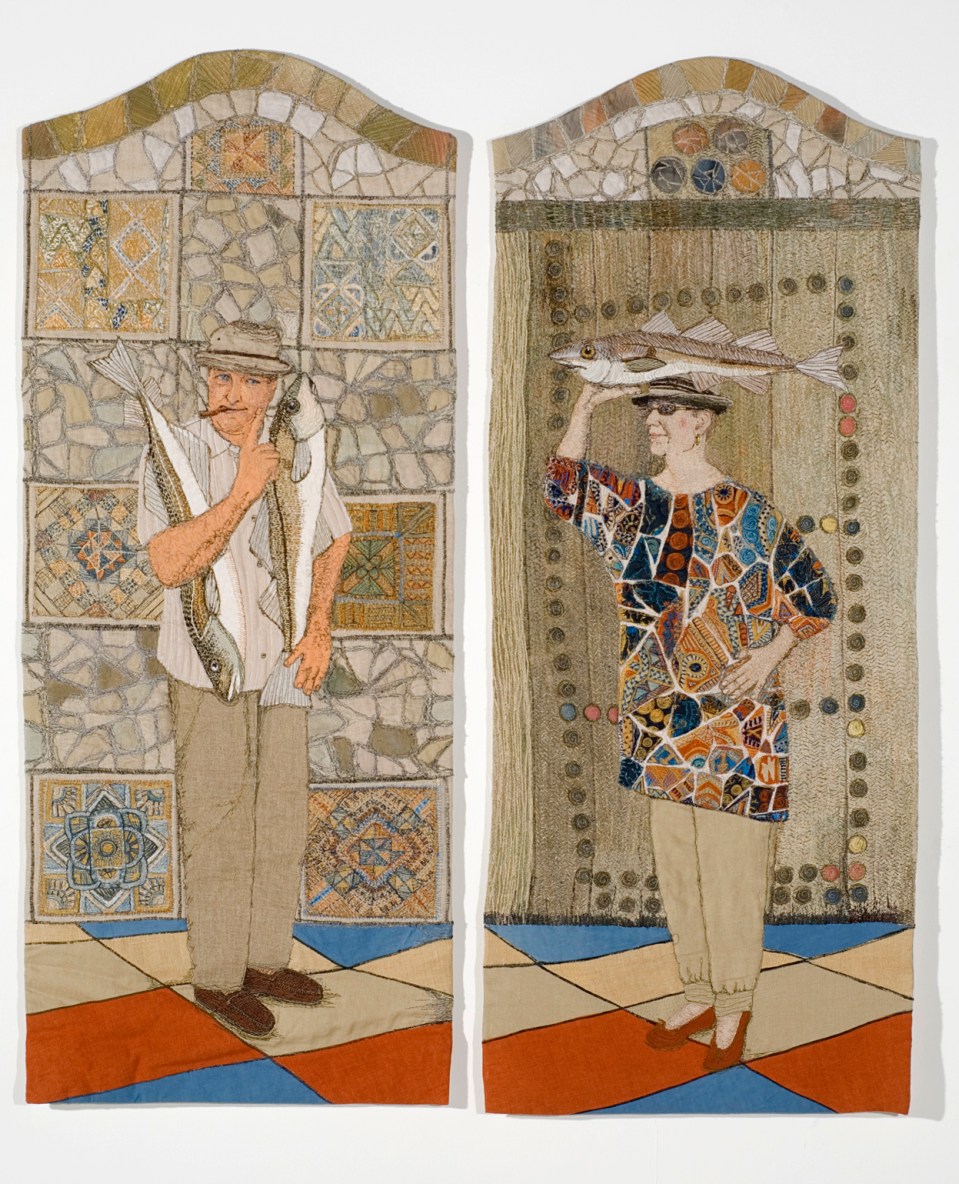
From Grimsby to Gracia • right and David as Dali • left were inspired by a recent visit to Barcelona, they reference cardboard cutouts of Dali seen outside the Dali Museum , the Gaudi mosaics and tiles in Parc Guell , a colourful tiled floor from a neighbourhood bar and fish from the artist’s hometown of Grimsby.

A Lot can Happen in 50 Years 2011
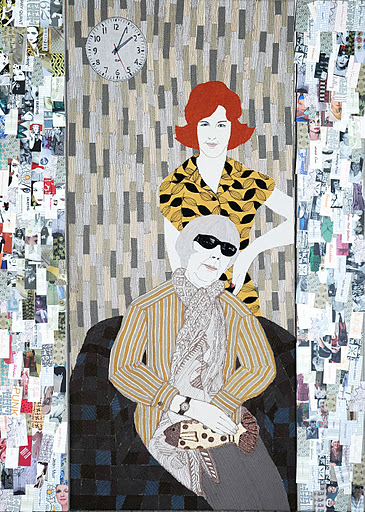
A Lot can Happen in Fifty Years • 2011 84 cms x 117 cms • hand and machine stitch
Referencing several items from the Manchester Museum’s costume Collection, including a button shaped like a fish, and a dress and jacket from 1962, the year the 62 group was formed this is a portrait of my sister, Jean, first aged 17, then aged 67.
The clock on the wall shows 2.05 am whilst the wrist watch is set at a later time to indicate the passing of time.
The side panels are made up from labels showing more items from the Collection .
They also reference personal, national and global events from the past 50 years .

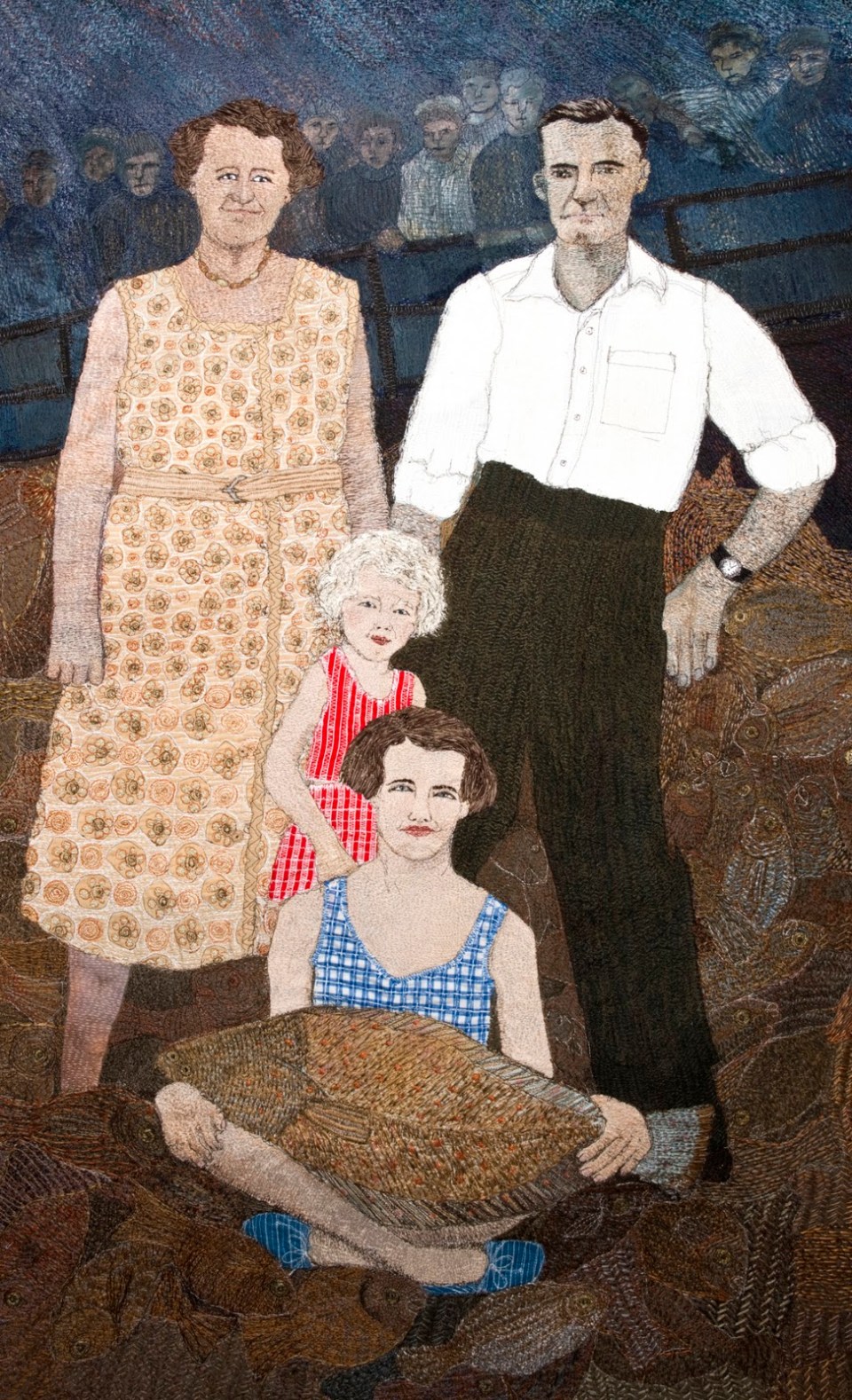
Family with Fish 2011

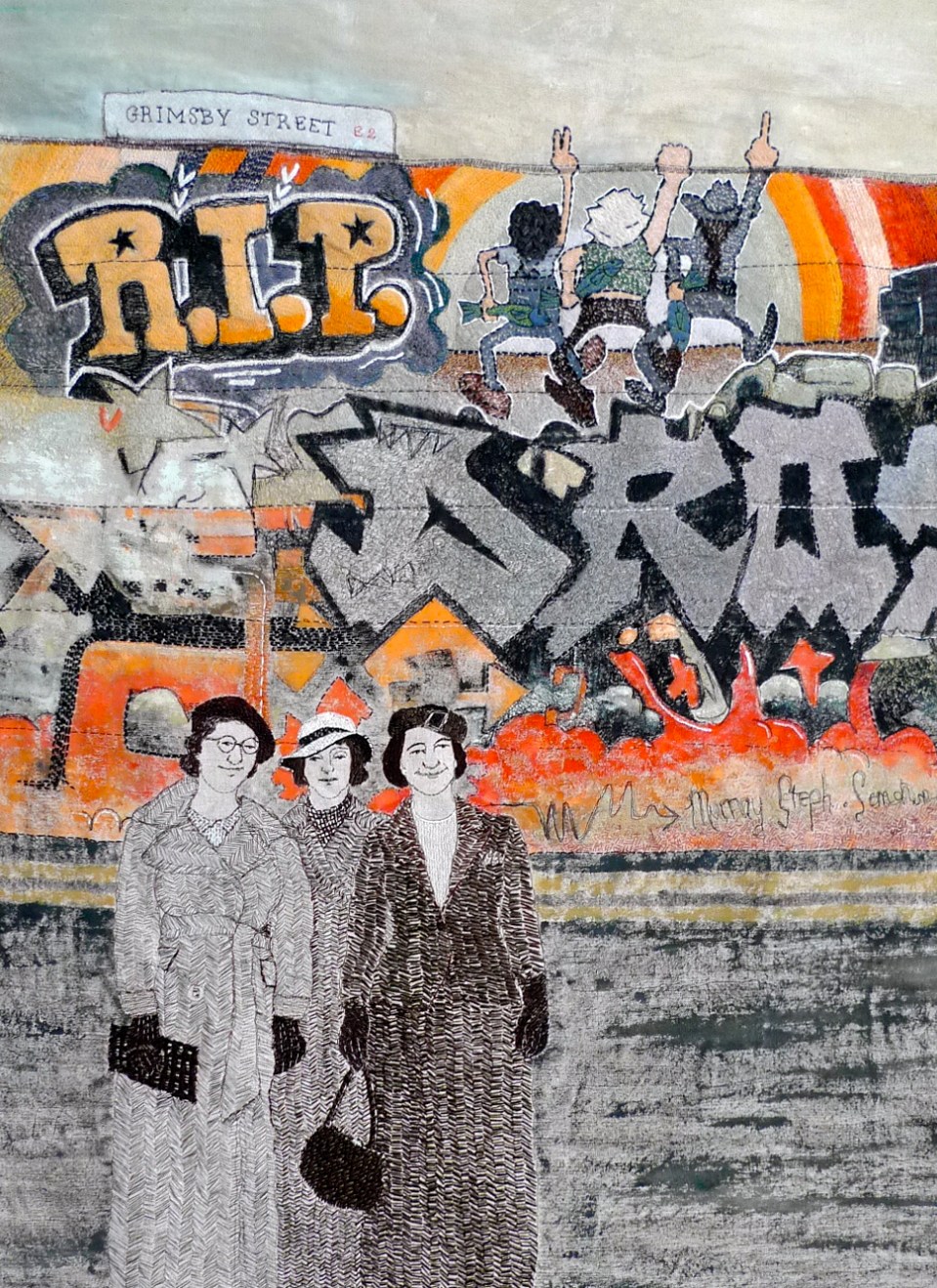
RIP Grimsby St E2
RIP Grimsby St E2
mixed media • hand and machine stitch with acrylic paint
size 70 x 100 cms
An analogy between two different eras and two different environments, which nonetheless share a name and a sense of loss. Three friends, one carrying a fish, explore one lost environment, Grimsby Street, London, E2 whilst hailing from another. 1930s Grimsby (Lincolnshire) girls meet London 2012.

Girl’s Day Out for Hilda, Nellie and Ida
Girl’s Day Out in the East End for Hilda, Nellie and Ida 2012
mixed media • hand and machine stitch with acrylic paint
size 128 x 102 cms
Exploring displacement using old family photographs, images of distant relatives I never knew, cut into to a modern day environs, Girls Day Out enquires into and questions, the sense of belonging/not belonging whilst referencing the passing of time and the transience of life itself.

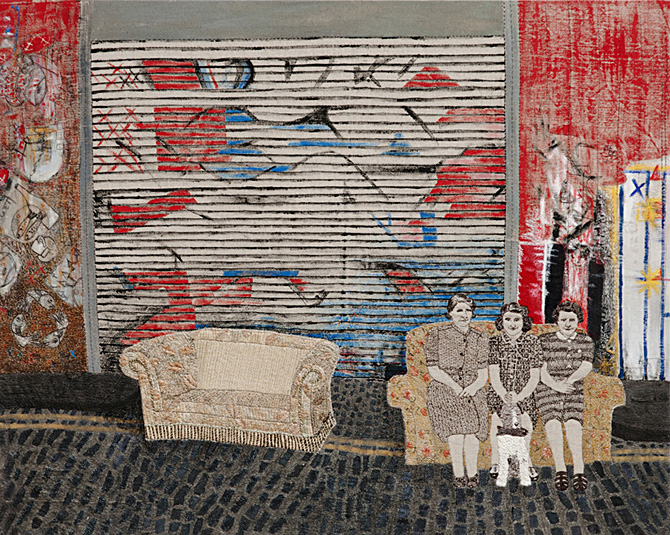
East End Girls
East End Girls • aka Alice, Madge and Muriel 2012
mixed media • hand and machine stitch with acrylic paint
size 128 x 102 cms
Combining the then and now, evoking a sense of the journey in between produces an ‘at first glance’, homely domestic situation, three women with their dog. On closer inspection abandoned sofas, graffiti, the dilapidation in the slightly surreal composition create an allusion to the circumstance of the women portrayed.
Retrospective • an Archive of Work 2017
Retrospective • an Archive of work 2016
Retrospective • An Archive of work from 2015
Retrospective • An Archive of work from 2013/14
Retrospective • An Archive of work from 2011/12
Retrospective • An Archive of work from 2009/10
Retrospective • An Archive of work from 2007/8
Retrospective • An Archive of work from 2003 to 2006
Read about the making of my piece ‘The Unknown Statistic’ at Textileartist.org

Detail of the Unknown Statistic
63 is a self-portrait which, when complete, will be made up of 63 images, one for each year of my life so far. So why put myself through all this work, and, to be perfectly honest, the angst of self examination, a replaying of all the ups and downs of life?
Well, there were several reasons, but the main one was that I was asked by Alf Ludlam, the curator of Shifting Images an exhibition of self-portraits at the Muriel Barker Gallery at Grimsby’s Fishing Heritage Centre, to produce something other than a straight forward self-portrait and this was the idea I came up with. I also thought it would benefit me personally because I would be working to a deadline which, in itself, would force me to look at the way I work and help me find a simplification of my mark-making.
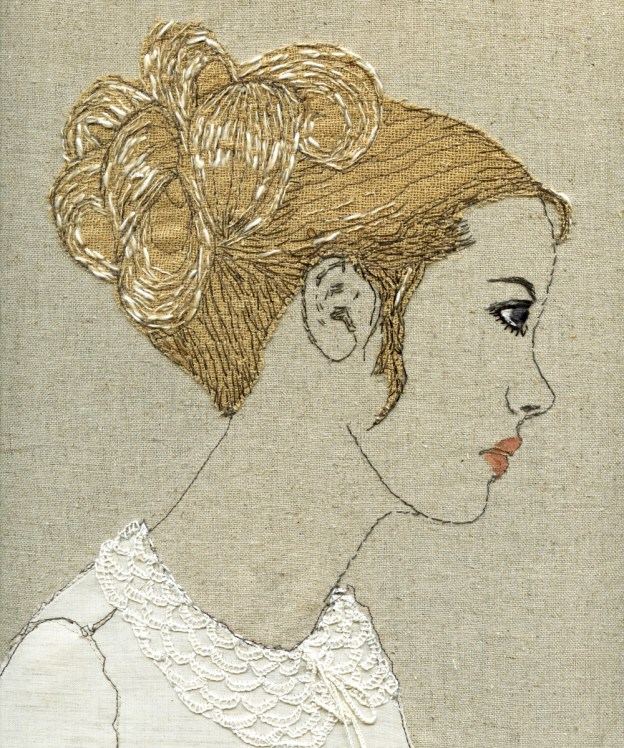
Although I work in mixed media I consider myself primarily an embroiderer, more specifically a hand embroiderer and because I find hand stitching a therapeutic process, I have a tendency to overstitch. I’m hoping that, in this piece, the viewer will find that my stitching have been given more breathing space and as a result more status. My stitch vocabulary is considered and limited. I don’t use many different types of stitches and but I try to get the most out of those stitches by using them in an original way. I was once given some advice by Constance Howard, when I was studying at Goldsmith’s College in London who said that “you don’t need to know a vast array of stitches but you need to know how use the ones you do know well” so that’s what I try to do.
I don’t really look at the work of other embroiderers in an inquisitorial way. This is deliberate, an attempt to keep my own work fresh. One of the ways I do this is by mixing different colours and different weights of threads in the needle leaving the eye to mix the colour. You can read about my favourite stitches here.
I have deliberately tried to be sparing with my stitching of the faces in this piece to produce a more illustrative style. Mood, quality, expression, character can all be changed by the position of each stitch and a lot of drawing and re-drawing, stitching, unpicking and restitching has been done before moving on.
I am a ‘glass half full’ sort of person but the process of making this piece has, so far, and I am only just over half way there, been an convergence of mixed emotion. The process has, at times, evoked difficult and even desperately unhappy emotions, the reliving of all that teenage angst, hurt, heartbreak, and loss, the business problems and burglaries, but alongside that the uplifting and happy memories of friends and family and an optimism for the future.
Overall it is proving to be a quite cathartic process.
63 will be shown as a ‘work in progress’ in Shifting Images from 8 September 2015 to 6 March 2016. – contemporary self portraiture
Working in partnership with Abbey Walk Gallery the Muriel Barker Gallery at the Grimsby Fishing Heritage Centre will host an Exhibition of of self – portraiture by Lincolnshire Artists past and present.
The inspiration for my work can come from anywhere and everywhere and it sometimes takes on a more serious note. I turned on the radio and heard her voice and the words I will never forget “This is not my War”. They were the words spoken by a Syrian mother whose children aged 5,10 and 12 had just been killed by mortar fire in a war she did not understand. The sound of her voice will stay with me forever.
Some Things Never Change commemorates those children and the many others like them that have lost their lives, or have been mentally or physically scarred by war. The lives of those who have survived war and atrocity are changed for all time.
My Dad and his siblings Harry and Madge were children of the First World War, born just before and during so called ‘war to end war’. I have used their images to represent the universal child. The concrete pillar in the background is inspired by the concrete architecture of the skate park on the South Bank of the Thames and the graffiti of street artist Stik and is covered with cross stitches representing the kisses those Syrian children will never receive.

I listen to the Radio and hear his Voice again recalls something I heard on Radio 4. A 10 year old boy was talking to the reporter “You can’t imagine what I’ve seen, what my country has seen”. The Universal Child uses an image of my Dad to represent children affected by war worldwide.
The Unknown Statistic comes from my research into the First World War during the run up to the centenary in 2014 of the start of the war. A photograph is of some children, unknown to me, but in my husband’s family album was my starting point. I have had this image waiting to be used for many years but it was only when I saw the graffiti in the East End of London I knew how I was going to use it. The children have a poignancy to them. They look as though they are watching someone walking away. I decided to use their images as a way of commemorating all the children left fatherless by the First World War. The exact number of children is unknown as it was not recorded accurately either locally or nationally. I imagined their father was one of the brave Grimsby fishermen whose trawlers went minesweeping the coast with very little protection and little recognition. He walked away and never looked back. It was bad luck for a fisherman to turn around and look back as they walked away to sea. They never saw him again. My own Great Grandfather, Harry Conder died during the first few weeks of World War One when the trawler Fittonia, of which he was skipper, was blown up by a mine in the River Humber. He was survived by a widow and several children. His eldest son Charles Conder died during the last weeks of the war of Spanish Flu, the virus that would be responsible for more than five times as many deaths as the war itself.